
Workholding · Bench Vises
Best Bench Vises for Woodworking: 10 Models Compared for Grip, Fit and Everyday Shop Work
From quick-release woodworking vises that glide open in one motion to heavy cast-iron general-purpose vises that never budge, here is how the most popular bench vises compare — and which one belongs on the front of your workbench.
The Complete Buyer’s Guide
The Modest Tool That Transforms Every Other Tool
A bench vise is the least glamorous purchase in a woodworking shop and one of the most consequential. Saws get the attention, routers get the upgrades, but it is the vise that decides whether you can hold a workpiece steady enough to use any of them well. Planing a board edge, chiseling a mortise, sawing a tenon cheek, sanding a curved part — every one of these operations is a fight against the workpiece moving, and a good vise ends that fight before it starts.
The trouble is that “bench vise” covers a surprisingly wide range of tools. There are woodworking-specific face vises with wooden jaw liners and quick-release mechanisms, general-purpose machinist vises built from cast iron with serrated steel jaws, compact hobby vises for small benches, and heavy-duty swivel base vises designed for fabrication work. Put the wrong one on your bench and you will spend years either avoiding it or compensating for it.
This guide sorts ten of the most widely available options into four honest categories and then evaluates them on what actually matters to woodworkers: gripping power without crushing your stock, speed of adjustment, mounting practicality, build quality, and how the vise feels in daily use. Every product gets its own review block so you can see exactly who it suits. If you are building a shop from scratch, our introduction to what woodworking is and our roundup of essential woodworking tools will give you useful context for where the vise fits.
Start Comparing Options
See current bench vise listings and availability.
Browse Bench Vises on Amazon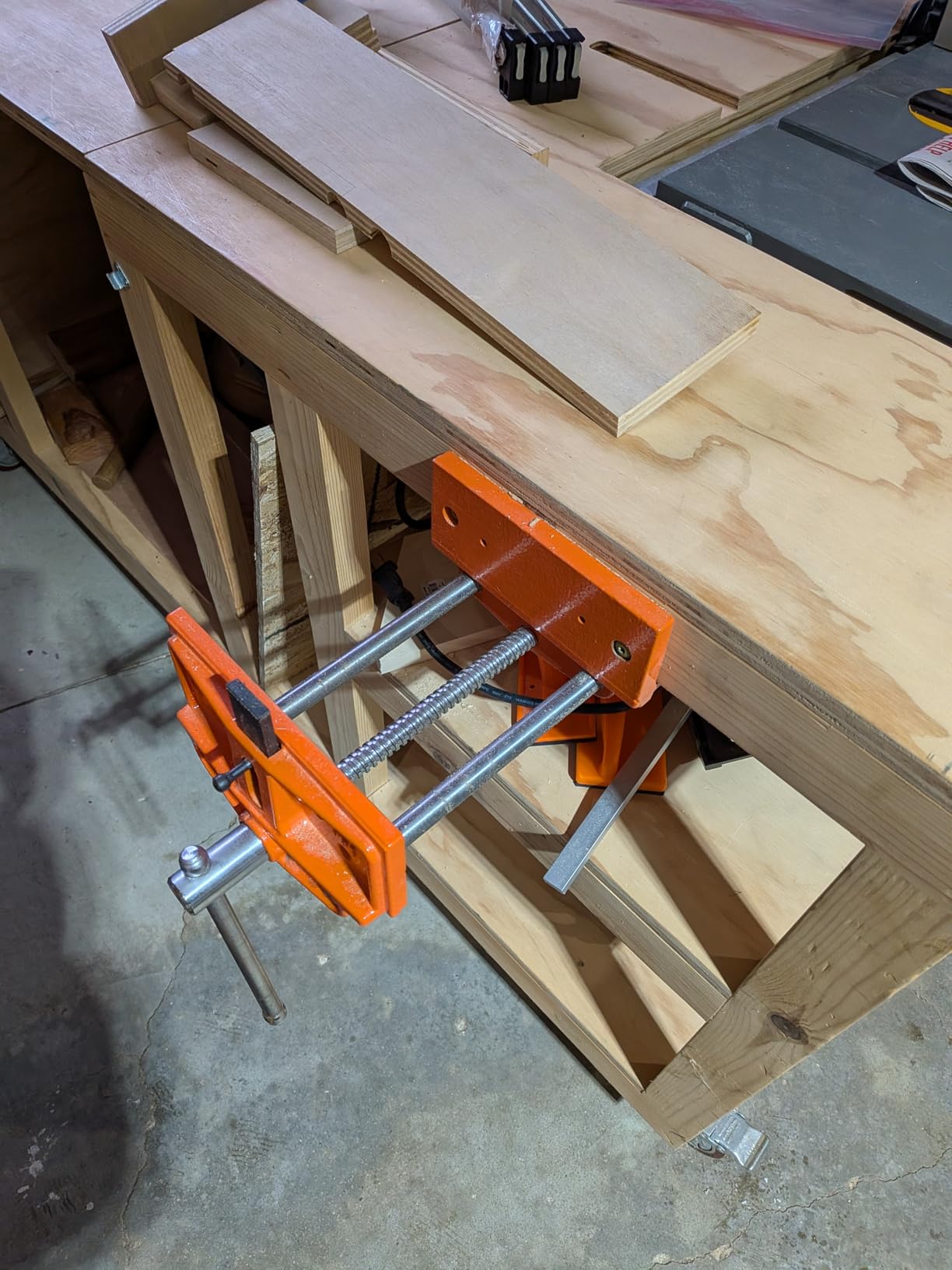
At a Glance
Quick Comparison: Our Top Picks
Every vise in this guide is listed below. Read the “Best For” label first — it tells you immediately whether a model is built for woodworking workholding or general shop use — then follow the review links further down for the details on each one.
| # | Image | Product | Key Specs | Verdict | Check Price |
|---|---|---|---|---|---|
| Top Pick 1 |
 |
Yost M9WW 9″ Rapid Action Woodworking ViseBest Overall |
|
Fast, confident grip for everyday bench work. | Check Price on Amazon |
| 2 |  |
Eclipse EWWQR7 7″ Quick Release Woodworking ViseBest Quick Release |
|
Opens and closes in seconds between operations. | Check Price on Amazon |
| 3 |  |
Pony Jorgensen 27091 Woodworker’s Vise (9″ x 7″)Best Classic Woodworking Vise |
|
A traditional design woodworkers have trusted for years. | Check Price on Amazon |
| 4 |  |
Groz 9″ Rapid Action Woodworking ViseBest Heavy Rapid Action |
|
Serious clamping pressure with quick adjustment. | Check Price on Amazon |
| 5 |  |
IRWIN Woodworker’s Vise 6-1/2″ (226361)Best Budget Woodworking Vise |
|
An affordable, no-nonsense first bench vise. | Check Price on Amazon |
| 6 |  |
COGNATIVE 7″ Quick Release Woodworking ViseBest Value Quick Release |
|
Quick-release convenience at an accessible level. | Check Price on Amazon |
| 7 |  |
WEN BV456 6″ Heavy-Duty Cast Iron Bench ViseBest Heavy-Duty Cast Iron |
|
Rigid, reassuring grip for demanding holding tasks. | Check Price on Amazon |
| 8 |  |
Wilton 11106 General Purpose 6″ Bench ViseBest General Purpose |
|
A versatile all-round vise for mixed shop work. | Check Price on Amazon |
| 9 |  |
Kitvance 6″ Bench Vise (Swivel Base)Best Swivel Base |
|
Rotate the work instead of walking around the bench. | Check Price on Amazon |
| 10 |  |
VEVOR 6″ Heavy Duty Bench ViseBest Budget Heavy Duty |
|
Solid clamping muscle without the premium price. | Check Price on Amazon |
Section 01
Why a Bench Vise Changes How You Work
Most woodworkers can point to the moment they realized their hands were the bottleneck. You are holding a board with one hand, sawing with the other, and the board shifts halfway through the cut. You clamp the work in a quick-grip clamp, and it flexes. You ask a friend to hold it steady, and now both of you are working around each other. A bench vise ends all of that by turning your workbench into a proper workholding platform — one hand free, both eyes on the line, and the workpiece exactly where you need it.
Two hands beat one, every time
The simplest benefit is also the biggest. When the vise holds the work, you can use both hands on the tool, which improves accuracy, control, and safety in equal measure. Sawing, planing, chiseling, and carving all become dramatically easier when your holding hand is no longer part of the equation. It is the kind of upgrade that quietly improves every project you build afterward.
Hand tools depend on it
If you have any interest in hand-tool woodworking, a vise is not optional. Chiseling a mortise, paring a tenon, cleaning up a joint, planing an edge straight — each of these operations transmits force directly into the workpiece, and that force has to go somewhere. A workpiece held firmly transfers it into the bench; a workpiece held loosely bounces, slips, and produces poor results. Our guide to hand tools versus power tools covers how the two approaches complement each other, and the vise is the piece of equipment that makes the hand-tool side of that equation viable.
It improves machine work too
Even if you are primarily a power-tool woodworker, the vise earns its keep. Holding parts for sanding, dry-fitting assemblies, routing with a handheld router, applying glue, and cleaning up machine-cut joints are all faster and more accurate when the part is fixed in place. Tools like those in our wood router picks produce their best results when the workpiece is properly secured rather than balanced on a table edge.
Jigs and fixtures start at the vise
A huge amount of woodworking accuracy comes from simple jigs — shooting boards, sanding blocks, honing guides, assembly fixtures — and most of them are built and used with a vise involved somewhere in the process. Understanding how jigs work is a real turning point for developing woodworkers; our explainer on what a jig is in woodworking is worth reading alongside this guide.
It is the cheapest major upgrade in the shop
Compared with a table saw, a planer, or a router table, a bench vise is a modest purchase with outsized impact. It requires no power, no dust collection, no blades or bits, and it lasts for decades with basic care. For anyone assembling their first shop — see our advice on setting up a beginner woodshop — the vise is usually the first purchase that immediately changes how the work feels.
Upgrade Your Workholding
Find the bench vise that fits your bench and your work.
Shop Bench Vises on AmazonSection 02
How We Evaluated These Vises
Vise reviews often boil down to a single question — “does it hold things?” — which is a bit like reviewing a saw by asking “does it cut?” Every vise on this list holds things. The differences that matter live in the details: how quickly you can adjust it, how evenly the jaws close, how it mounts to your particular bench, and how it behaves after a few years of use. These are the criteria we applied.
Gripping performance and jaw behavior
A good vise closes parallel and grips evenly across the full jaw surface. Uneven jaw contact means the workpiece is held at one corner while the rest of the jaw floats, which damages stock and reduces holding power. We favor vises whose jaws meet squarely and whose screw mechanism delivers pressure efficiently rather than requiring excessive handle force.
Speed of adjustment
Woodworking involves constant repositioning: holding a board on edge, then flat, then at an angle. A quick-release or rapid-action mechanism turns that repositioning from a chore into a two-second action. This is the single feature that most changes how often you reach for the vise, and we weight it heavily for woodworking-specific models.
Build quality and long-term accuracy
Cast iron, well-machined screws, and solid guide rods translate into a vise that still closes true years later. Sloppy tolerances show up as jaw racking and side play, which gets worse over time. We look for construction that suggests the tool will hold its accuracy through years of regular use.
Mounting practicality
A vise has to be installed on your specific bench, and that installation determines whether the tool works for you. Under-mount versus face-mount, jaw depth relative to the benchtop, handle clearance, and bolt access all matter. We favor designs that install cleanly on a standard woodworking bench without major modification.
Value and intended use
A heavy general-purpose vise is not “better” than a compact woodworking face vise — it is built for different work. We judge each vise against its intended role and against what you pay for it, and we describe capabilities generally rather than quoting numbers we cannot verify. If you want to understand how workholding fits into the wider picture of tool investment, our comparison of how to improve your woodworking skills covers the habits that matter most.
A note on honesty: we have not invented prices, ratings, review counts, or precise measurements. Where a specification could not be confirmed, we describe the characteristic in plain language instead of guessing. Always confirm current details on the product page before buying.
Compare the Full Category
Browse current options and read buyer feedback.
Browse Bench Vises on AmazonSection 03
Best Quick-Release Woodworking Vises
Quick-release vises are the modern answer to the slowest part of workholding: winding the screw open and closed dozens of times a day. A trigger or lever disengages the screw so the jaw slides freely, then re-engages instantly when you apply pressure. For woodworking — where you reposition constantly and rarely need enormous clamping force — it is the mechanism that makes a vise feel effortless rather than slow.
| # | Image | Product | Key Specs | Check Price |
|---|---|---|---|---|
| Top Pick 1 |
|
Eclipse EWWQR7 7″ Quick Release Woodworking ViseBest Quick Release |
|
Check Price on Amazon |
| 2 | |
COGNATIVE 7″ Quick Release Woodworking ViseBest Value Quick Release |
|
Check Price on Amazon |
Eclipse EWWQR7 7″ Quick Release Woodworking Vise
Eclipse is a name that comes up constantly in conversations about woodworking vises, and the EWWQR7 shows exactly why. This is a purpose-built woodworking face vise with a quick-release mechanism that eliminates the tedious winding that makes traditional vises feel slow. You slide the jaw to the workpiece, engage, apply pressure, and you are working — then release and reposition in seconds.
The 7-inch jaw width is a practical middle ground: wide enough to hold furniture parts and panels securely, compact enough to mount on a bench without dominating the front edge. For woodworkers who value workflow speed — the difference between grabbing the vise and avoiding it — this is the design that makes workholding feel natural.
Key Features
- Quick-release mechanism for instant jaw repositioning
- 7-inch jaw width suited to furniture parts and panels
- Woodworking-specific face vise design for bench mounting
- Parallel jaw closing for even pressure across the workpiece
- Accepts protective jaw liners to prevent marking finished surfaces
What We Like
- Repositioning takes seconds rather than a minute
- Purpose-built for woodworking rather than adapted from metalwork
- Compact enough for small and mid-size benches
- Encourages frequent, precise repositioning of work
Keep in Mind
- Not intended for heavy fabrication-style clamping
- Requires careful mounting to perform at its best
Check the Eclipse EWWQR7
Our top pick for quick-release woodworking workholding.
Check Price on Amazon
COGNATIVE 7″ Quick Release Woodworking Vise
Quick-release convenience usually comes at a premium, which is why the COGNATIVE stands out. It brings the same workflow advantage — a jaw you can slide freely and lock instantly — to woodworkers who want the feature without paying for a heritage brand name. The 7-inch format matches what most home and small professional benches need.
This is the vise that makes sense when you are outfitting a first serious bench or adding workholding to a second station. It covers the everyday tasks well: holding boards for edge work, securing parts for sanding, gripping assemblies during glue-up, and keeping small pieces steady for detail work.
Key Features
- Quick-release jaw for fast, tool-free repositioning
- 7-inch jaw width for typical woodworking parts
- Bench-mount design that installs on standard workbench tops
- Straightforward operation with minimal learning curve
- Compatible with protective jaw covers for delicate surfaces
What We Like
- Brings quick-release speed to an accessible price point
- Practical size for home and small professional shops
- Simple to install and to start using immediately
- Good entry into proper woodworking workholding
Keep in Mind
- Refinement level reflects its positioning
- Best matched to regular woodworking rather than heavy clamping
Want Fast Workholding?
Compare quick-release vises sized for woodworking benches.
Shop Quick-Release VisesSection 04
Best Rapid Action Woodworking Vises
Rapid-action vises solve the same problem as quick-release models through a different mechanism: a screw design that opens and closes far faster than a conventional single-start thread while still delivering strong, controlled clamping pressure. For woodworkers who like the feel of a screw-driven vise but not the wait, this category is the sweet spot. These are among the most popular vises in working shops for exactly that reason.
| # | Image | Product | Key Specs | Check Price |
|---|---|---|---|---|
| Top Pick 1 |
|
Yost M9WW 9″ Rapid Action Woodworking ViseBest Overall |
|
Check Price on Amazon |
| 2 | |
Groz 9″ Rapid Action Woodworking ViseBest Heavy Rapid Action |
|
Check Price on Amazon |
Yost M9WW 9″ Rapid Action Woodworking Vise
Yost has been making vises for a long time, and the M9WW reflects that experience in the ways that count. The rapid-action screw mechanism moves the jaw quickly through its range while still allowing fine, controlled pressure at the moment of contact — exactly what woodworking requires. You can close the gap fast and then snug the work without crushing it.
The 9-inch jaw width is generous for a woodworking face vise, giving you room to hold wider boards, panels, and assemblies comfortably. That width, combined with the speed of the mechanism, is what makes this our overall pick: it handles the widest range of everyday woodworking tasks without asking you to compromise on either grip or convenience.
Key Features
- 9-inch jaws for holding wide boards, panels, and assemblies
- Rapid action screw that closes the gap quickly and applies pressure smoothly
- Woodworking-specific face vise design for bench mounting
- Solid construction built for regular, long-term shop use
- Jaw liners can be added to protect finished and delicate surfaces
What We Like
- Generous jaw width handles furniture-scale workpieces
- Fast adjustment without sacrificing clamping control
- Confident, rigid feel during planing and chiseling
- Versatile enough to be the only vise on a bench
Keep in Mind
- Wider jaws need adequate bench space and mounting depth
- Heavier than compact hobby vises
Groz 9″ Rapid Action Woodworking Vise
Groz builds tools with a reputation for taking clamping seriously, and their 9-inch rapid-action woodworking vise continues that approach. It combines a wide jaw with a fast-acting screw, which means you get both the capacity to hold substantial workpieces and the speed to adjust quickly between operations. For heavy hand-tool work — aggressive planing, chopping, and sawing — that combination is exactly what you want.
What distinguishes a heavier-built vise like this is how it feels under load. There is less flex, less chatter, and more of the reassuring rigidity that makes hand-tool work feel controlled. If you regularly work with larger pieces and put real force into your tools, that stiffness matters more than any single feature on a spec sheet.
Key Features
- 9-inch jaws for substantial workpieces and wide boards
- Rapid action mechanism for fast, efficient jaw movement
- Woodworking-focused build designed for bench mounting
- Rigid construction that minimizes flex under heavy hand-tool work
- Jaw liners can be fitted to protect workpiece surfaces
What We Like
- Strong, rigid hold under aggressive hand-tool work
- Wide jaws suit furniture and larger project parts
- Fast adjustment keeps workflow moving
- Built for woodworkers who use their vise hard
Keep in Mind
- More vise than occasional hobby work requires
- Demands a solid, well-built bench for mounting
Prefer Screw-Driven Clamping?
Compare rapid-action woodworking vises side by side.
Shop Rapid Action VisesSection 05
Best Classic and General-Purpose Vises
Not every vise needs a quick-release trigger. Classic woodworking vises have been holding work on benches for generations, and general-purpose vises bring a level of brute clamping versatility that woodworking-specific models do not attempt. This group covers both: the traditional face vise built for wood, and the multi-purpose bench vise that handles whatever the shop throws at it.
| # | Image | Product | Key Specs | Check Price |
|---|---|---|---|---|
| Top Pick 1 |
|
Pony Jorgensen 27091 Woodworker’s Vise (9″ x 7″)Best Classic Woodworking Vise |
|
Check Price on Amazon |
| 2 | |
IRWIN Woodworker’s Vise 6-1/2″ (226361)Best Budget Woodworking Vise |
|
Check Price on Amazon |
| 3 | |
Wilton 11106 General Purpose 6″ Bench ViseBest General Purpose |
|
Check Price on Amazon |
Pony Jorgensen 27091 Woodworker’s Vise (9″ x 7″)
The Jorgensen name carries real weight in woodworking, and the 27091 is the kind of straightforward, well-proven face vise that has been mounted to workbenches for decades. With a generous jaw face and a design intended specifically for holding wood rather than steel, it does the fundamental job — holding work flat and steady — without unnecessary complexity.
There is real appeal in a tool this simple. Fewer mechanisms means fewer things to adjust, fewer things to wear, and a vise that behaves the same way in year ten as it did in week one. For woodworkers who appreciate traditional equipment and want a dependable face vise that simply works, this is an easy recommendation.
Key Features
- 9″ x 7″ jaw face for holding wide boards and furniture parts
- Woodworking-specific face vise design for bench mounting
- Simple, proven screw mechanism with minimal maintenance
- Solid clamping pressure for planing, chiseling, and sawing
- Accepts jaw liners for protecting finished surfaces
What We Like
- Generous jaw face handles wide and awkward pieces
- Simple design that is easy to install and maintain
- Proven, traditional approach to woodworking workholding
- Feels at home on a classic woodworking bench
Keep in Mind
- Screw-driven adjustment is slower than quick-release designs
- Requires adequate bench space for the wide jaw face
Check the Pony Jorgensen 27091
A classic woodworking face vise with a proven design.
Check Price on Amazon
IRWIN Woodworker’s Vise 6-1/2″ (226361)
Every woodworking bench has to start somewhere, and for a lot of people that starting point is the IRWIN 226361. It is a compact, affordable woodworking face vise that covers the fundamentals: it holds boards for edge work, keeps parts steady for sanding and assembly, and mounts to a bench without fuss. There is no shame in starting here — a modest vise that is used constantly beats an expensive one that sits on a shelf.
The 6-1/2-inch jaw width is best suited to smaller and mid-size workpieces, which makes it a natural fit for hobby benches, craft work, and shops where the vise handles detail work rather than large panels. If your projects grow, you can always move up; the skills you build holding work properly transfer directly.
Key Features
- 6-1/2″ jaw width suited to small and mid-size workpieces
- Woodworking face vise design for straightforward bench mounting
- Compact format that fits on smaller and hobby benches
- Simple screw mechanism with easy adjustment
- Works well with protective jaw liners for delicate parts
What We Like
- Accessible first vise for new woodworkers
- Compact size suits small benches and shared spaces
- Handles everyday holding tasks reliably
- Simple to mount and start using right away
Keep in Mind
- Jaw width limits larger panels and assemblies
- Best suited to lighter and occasional hand-tool work
Wilton 11106 General Purpose 6″ Bench Vise
Sometimes a shop needs a vise that is not exclusively for wood. The Wilton 11106 is a general-purpose bench vise designed to handle the mixed demands of a real workspace — holding parts for drilling, securing hardware during assembly, gripping odd shapes, and taking on the everyday clamping jobs that show up constantly. For a multipurpose garage or workshop bench, that flexibility is genuinely valuable.
Wilton is a name associated with serious vising equipment, and that heritage shows in the way this vise is built to be used. If your bench serves woodworking one day and household repairs the next, a general-purpose vise is often the more honest choice than a woodworking-only design.
Key Features
- 6-inch jaws for a wide range of everyday clamping tasks
- General-purpose design suited to mixed shop and household work
- Bench-mounted format for a permanent, stable workholding station
- Robust construction for repeated clamping and mechanical work
- Versatile enough to handle non-woodworking jobs around the shop
What We Like
- Handles far more than woodworking alone
- Solid, confident feel for mechanical and assembly work
- Good fit for garage and multi-use workshops
- Reliable everyday performer across many tasks
Keep in Mind
- Steel jaws require liners for finished wood surfaces
- Not specialized for delicate hand-tool woodworking
Looking for a Classic Vise?
Compare traditional woodworking and general-purpose models.
Shop Woodworking VisesSection 06
Best Heavy-Duty and Swivel Base Vises
When clamping force and adjustability matter more than woodworking-specific refinement, this is the category to shop. Heavy-duty vises deliver serious gripping power for demanding work, and swivel base models add the ability to rotate the vise to the angle you need rather than repositioning yourself around the bench. Together they cover the toughest and most awkward holding jobs in a workshop.
| # | Image | Product | Key Specs | Check Price |
|---|---|---|---|---|
| Top Pick 1 |
|
WEN BV456 6″ Heavy-Duty Cast Iron Bench ViseBest Heavy-Duty Cast Iron |
|
Check Price on Amazon |
| 2 | |
Kitvance 6″ Bench Vise (Swivel Base)Best Swivel Base |
|
Check Price on Amazon |
| 3 | |
VEVOR 6″ Heavy Duty Bench ViseBest Budget Heavy Duty |
|
Check Price on Amazon |
WEN BV456 6″ Heavy-Duty Cast Iron Bench Vise
Cast iron is the material of choice for vises that need to stay rigid and accurate over decades of use, and the WEN BV456 is built from it in a heavy-duty format aimed at real clamping work. When you are holding something that needs to stay put under force — drilling, filing, sawing, or driving hardware — the mass and stiffness of a cast-iron vise makes the whole operation feel controlled.
For woodworking, a vise like this works best as a secondary station or with proper jaw liners fitted. Where it truly excels is the mixed work that fills a general shop: holding hardware during assembly, gripping jigs and fixtures while you build them, and taking on the rough jobs you would not want to subject a refined woodworking face vise to.
Key Features
- 6-inch jaws for a wide variety of clamping tasks
- Cast iron construction for rigidity and long service life
- Heavy-duty format built for forceful, repeated clamping
- Bench-mounted design for a stable, permanent station
- Accepts soft jaw covers for holding finished and delicate parts
What We Like
- Rigid, reassuring hold under heavy clamping force
- Cast iron build that resists wear and flex
- Handles rough jobs that would mar a woodworking vise
- Versatile across woodworking, assembly, and repairs
Keep in Mind
- Steel jaws need liners for finished wood surfaces
- Heavier build requires a sturdy, solid bench
Kitvance 6″ Bench Vise (Swivel Base)
The defining feature here is in the name: a swivel base that lets you rotate the vise to the angle your work demands. Anyone who has fought with an awkward piece held at the wrong angle understands the value immediately. Instead of walking around the bench or wrestling the workpiece into position, you unlock the base, swing the vise where you need it, and lock it down.
For woodworking, that adjustability is especially helpful during assembly, dry-fitting, and detail work where the part needs to present itself at a particular angle. Combined with the standard 6-inch jaw capacity, it makes a versatile general-purpose station that adapts to whatever the project calls for.
Key Features
- 6-inch jaws for everyday clamping and holding tasks
- Swivel base for positioning the vise at the working angle you need
- Bench-mounted design that locks firmly in place when positioned
- Useful for assembly, detail work, and awkward-shaped parts
- Accepts soft jaw covers for protecting workpiece surfaces
What We Like
- Swivel base solves awkward-angle work instantly
- Flexible station for mixed woodworking and shop tasks
- Locks solidly once positioned
- Comfortable for long assembly and detail sessions
Keep in Mind
- Swivel mechanism adds setup compared with a fixed mount
- Not specialized for hand-tool woodworking workholding
View the Kitvance 6″ Swivel Vise
Adjustable positioning for awkward workpieces.
Check Price on Amazon
VEVOR 6″ Heavy Duty Bench Vise
Heavy-duty vising capability does not have to come with a premium price tag, and the VEVOR 6-inch makes that case clearly. It is a straightforward, powerful bench vise for people who need genuine clamping force for everyday work — holding parts for drilling and cutting, securing hardware, gripping assemblies, and tackling the rough-and-ready jobs that fill a working shop.
As with any value-focused tool, matching it to the right work is what makes it a good buy. Used for general clamping and shop tasks — with jaw liners added whenever finished wood is involved — it delivers a lot of capability for the money and makes a sensible secondary vise on a bench already equipped with a woodworking face vise.
Key Features
- 6-inch jaws for general-purpose clamping and holding
- Heavy-duty format built for forceful everyday work
- Multi-purpose use across woodworking, assembly, and repairs
- Bench-mounted for a stable and permanent workholding point
- Works with soft jaw covers for protecting delicate surfaces
What We Like
- Serious clamping ability at a budget-friendly level
- Handles rough work without hesitation
- Useful second vise for a busy bench
- Simple, durable format with little to maintain
Keep in Mind
- Jaw liners are essential for finished wood surfaces
- Refinement level reflects its value positioning
Section 07
The Specs That Actually Matter When You Buy
Vise product listings throw around a lot of numbers, but only a few of them change how the tool performs on your bench. Here is what to look at carefully, what to read loosely, and what to ignore when comparing models.
Jaw width: how much you can hold
Jaw width determines the size of workpiece you can grip comfortably. Wider jaws hold larger boards and panels securely and distribute pressure more evenly; narrower jaws suit detail work and smaller benches. As a rough guide, a woodworking face vise in the wider sizes handles furniture parts well, while more compact models are happiest with smaller components. Match the jaw width to the largest pieces you realistically build.
Jaw opening: the range you work within
Opening capacity decides how thick a workpiece you can insert. Wide openings are useful for holding assemblies and stacked parts; tight openings favor precision. Rapid-action and quick-release mechanisms shine here because they let you traverse the full range quickly instead of winding for a minute every time.
Mounting style and bench compatibility
Woodworking face vises typically mount to the front edge of the bench with the jaw roughly flush with the top, which is what makes them effective for planing and edge work. General-purpose vises mount on top of the bench. Neither is universally better — it depends on the work you do and how your bench is built. If you are building or upgrading a bench, our guides to the best woodworking workbenches and the best wood for a woodworking bench will help you create the right mounting substrate.
Jaw material and liners
Steel jaws grip hard and can leave marks on finished wood. Wooden or soft jaw liners protect surfaces and actually improve grip on delicate parts. Whatever vise you choose, plan on fitting liners — they are inexpensive, easy to make, and transform how the vise treats your workpieces.
Screw mechanism and guide system
The screw delivers the pressure and the guides keep the jaw parallel. A well-made mechanism closes evenly and resists racking over time. Quick-release and rapid-action designs trade a little mechanical simplicity for a great deal of speed, and for woodworking that trade is almost always worth it.
Handle, clearance, and daily ergonomics
Consider where the handle will swing and whether it clears your apron, your legs, and the wall behind the bench. A vise that is awkward to operate gets used less. Ergonomics is not a luxury spec — it is the reason you will reach for the tool on a random Tuesday evening.
Compare Specs Side by Side
Review current vise listings and details before deciding.
Browse Bench Vises on AmazonSection 08
Types of Vises and Where They Fit in a Woodworking Shop
“Bench vise” is an umbrella term, and understanding the main types prevents the most common buying mistake: purchasing a well-made vise that solves the wrong problem. Here is how the major categories compare and where each one earns its place.
The face vise
Mounted on the front edge of the bench, the face vise is the workhorse of hand-tool woodworking. It holds boards vertically for edge planing and dovetailing, grips panels for sanding, and secures assemblies during glue-up. If you buy one vise for a woodworking bench, this is almost always the right answer.
The tail vise and wagon vise
These mount at the end of the bench and work together with dog holes to hold boards flat on the benchtop for planing faces. They are more specialized and more expensive to implement, and many woodworkers get by perfectly well with bench dogs, planing stops, and a simple fixture instead. Worth knowing about, but rarely the first purchase.
The leg vise and holdfast
Traditional alternatives with real advantages: enormous clamping force, simple construction, and a large holding surface. Leg vises require some bench design planning, while holdfasts need only a hole and a sturdy top. Both reward a bench built from solid material — see our notes on plywood for workbench tops for how lamination affects holdfast and mounting performance.
General-purpose and machinist vises
These bring strength and versatility for mixed work — repairs, drilling, assembly, hardware installation. They handle rough jobs that would damage a woodworking vise and are the right choice for a garage or multi-use bench. With soft jaw liners, they handle wood perfectly well for many tasks.
Where joinery work fits in
Whatever vise you choose, it will spend much of its life holding parts while you cut and clean joints. Knowing how joints go together makes the workholding decisions obvious — our explainers on wood joinery tools, dadoes, and rabbets cover the operations a good vise makes easier.
Find Your Vise Style
Compare face vises, general-purpose vises, and swivel models.
Shop Vises by TypeSection 09
Mounting and Installing Your Vise Properly
Installation is where vises are won or lost. A premium vise poorly mounted will flex, rack, and frustrate you; an inexpensive vise mounted solidly to a rigid bench will perform beautifully. The good news is that mounting is well within reach of any woodworker with a drill and a straightedge.
Build or choose a bench that can take it
A vise transmits all of its clamping force into the benchtop, so the top must be thick and rigid enough to resist that force without flexing. A heavy laminated top is ideal. If you are building from scratch, our guide to woodworking workbench plans covers construction details, and the recommendations for bench materials explain which species and laminations work best.
Position matters more than you think
Most face vises work best near a bench leg, where the structure is strongest and the mounting bolts can pass through solid material. Too close to the middle of a span and the top will flex under load. Think about your working position as well: the vise should be where you naturally stand, with clear handle swing and no obstructions.
Jaw alignment with the benchtop
For a face vise, the top of the jaw should sit just below the benchtop surface so long boards can be held without obstruction. Getting this alignment right at installation saves years of irritation, and it is worth measuring carefully before drilling a single hole.
Bolting it down solidly
Use the full set of mounting bolts and make sure each one bites into solid material. Fender washers spread the load and prevent the bolts from pulling through. Check the mounting periodically in the first few weeks as everything settles, and retighten as needed.
Portable and shared workspaces
If your shop has to be packed away, a compact bench with a smaller vise makes the most of limited space. Our recommendations for portable woodworking workbenches cover setups that store easily while still providing proper workholding.
Get the Right Mounting Hardware
Bolts, washers, and accessories for a solid installation.
Shop Mounting HardwareSection 10
Maintenance, Care and Jaw Liners
Vises are among the most durable tools in a workshop, which is exactly why their care is so often neglected. A few minutes of occasional attention keeps the mechanism smooth, the jaws accurate, and the tool looking and working like new for decades.
Keep the screw and guides clean
Dust and wood chips work their way into the screw threads and guide rods over time. Wipe them down periodically and apply a light coat of protective oil or wax to keep the action smooth. A vise that has become stiff or gritty almost always needs cleaning rather than repair.
Preventing rust
Cast iron and steel rust in humid shops, and the jaw faces are particularly vulnerable because they are frequently exposed. A thin film of protective wax or a rust-prevention product keeps surfaces clean and slick. Wipe down the vise after working with damp or resinous material, and keep the shop reasonably dry.
Jaw liners are consumables
Wooden liners protect workpieces, improve grip on delicate parts, and take the wear instead of the vise jaws. They are cheap to make from scrap and should be replaced when they become damaged or glazed. Keeping a spare set on hand means you never have to choose between protecting the work and getting it done.
Check the mounting now and then
Bolts can loosen as the benchtop settles and the wood moves with the seasons. A quick check with a wrench a couple of times a year keeps everything rigid. If you notice flex or movement under load, check the mounting before assuming the vise itself is at fault.
Caring for the rest of your bench kit
The same habits that keep a vise in good shape apply across the shop. Keeping cutting edges sharp reduces force on everything, including the workholding — our guide to sharpening woodworking tools covers the essentials, and stocking quality consumables like the best wood glues keeps projects moving.
Section 11
Safe Workholding Technique
A vise is a safety tool as much as a convenience tool. Work that is held securely is work that cannot slip, spin, or fly — and most workshop injuries involving hand tools trace back to inadequate workholding. The techniques below are what experienced woodworkers follow instinctively.
Always clamp, never hold
Resist the temptation to steady a small part with your hand while cutting or chiseling. If the tool slips, your hand is in the path. Put the part in the vise and keep both hands on the tool. This single habit prevents more injuries than any other piece of shop practice.
Protect the workpiece and grip it properly
Use jaw liners on anything finished or soft. Grip the workpiece as close to the operation as possible to minimize flex and vibration. For delicate parts, reduce clamping pressure and rely on the friction of a liner rather than brute force — over-tightening crushes fibers and deforms surfaces.
Mind the handle
Vise handles can swing and cause injury if left loose. Keep the handle seated when not in use and stay aware of its arc while working. On swivel base models, lock the base firmly before applying any clamping force.
Stand properly and work at the right height
Your bench height determines how safely and comfortably you can work at the vise. Too low and you stoop over the work; too high and you lose leverage. Adjust your working position to suit the operation, and take breaks during long sessions of repetitive hand work.
Wear the right shop gear
Eye protection is essential whenever you are cutting, chiseling, or driving fasteners. A good shop apron keeps clothing away from moving parts and protects against sharp edges and dust. We have reviewed the best woodworking aprons, the best leather woodworking aprons, and specific models including waxed canvas aprons, the Rockler apron, and the Briteree apron.
Before every work session: confirm the vise is locked and the mounting is tight, fit liners if you are holding finished work, clear the bench of offcuts and tools, and put on eye protection. Thirty seconds of habit prevents most incidents.
Protect Yourself Properly
Shop aprons, eye protection, and workholding accessories.
Shop Safety Gear on AmazonSection 12
Building a Complete Workholding System
A bench vise is the anchor of your workholding, but it works best as part of a small ecosystem of clamps, dogs, stops, and jigs. Thinking in terms of that system — rather than a single tool — is what separates a bench that works hard from one that fights you.
Clamps complete the picture
Vises hold individual parts; clamps hold assemblies. Glue-ups, casework, panels, and frames all demand clamps of various sizes, and a well-stocked clamp rack is the sign of a shop that builds real projects. Our guide to the best clamps for woodworking covers the types worth owning first.
Bench dogs, stops, and simple fixtures
A few holes in your benchtop, a couple of dogs, and a planing stop give you flat workholding for face work — the one thing a face vise does poorly on its own. These simple additions are inexpensive and dramatically expand what your bench can do.
Jigs multiply accuracy
Shooting boards, sanding blocks, assembly fixtures, and edge guides all extend what your hands and tools can do, and most are built and used in the vise. If you have not explored this idea yet, read our explainer on jigs in woodworking — it is one of the highest-return concepts in the craft.
Let the work dictate the tools
The best way to decide what to buy next is to plan a project and notice where you get stuck. Our guide on how to plan a woodworking project and our list of easy projects for beginners will surface those gaps quickly. The band saw, for instance, opens up curved work that pairs beautifully with good workholding — see our pick of the best band saws for woodworking.
From hobby bench to income
Woodworkers who sell their work rely heavily on repeatable workholding, because consistency is what makes production efficient. If you are heading that direction, we cover starting a woodworking business, pricing your projects, where to sell woodworking projects, and selling woodworking plans online.
Complete Your Workholding Setup
Pair your vise with clamps, dogs, and bench accessories.
Shop Workholding AccessoriesCommon Questions
Frequently Asked Questions About Bench Vises for Woodworking
What size bench vise should a woodworker buy?
Match the jaw width to the largest pieces you realistically build. A woodworking face vise with a wider jaw handles furniture parts, panels, and assemblies comfortably, while more compact models are ideal for detail work and smaller benches. If you are unsure, err slightly larger — you can hold small work in a big vise, but not the reverse.
What is the difference between a woodworking vise and a regular bench vise?
Woodworking vises are designed to hold wood without damaging it: they close parallel, accept soft jaw liners, and mount flush with the benchtop for planing and edge work. General-purpose vises use serrated steel jaws built for grip on metal and hard parts, and they mount on top of the bench. With liners fitted, a general-purpose vise handles wood perfectly well for many tasks.
Do I really need a quick-release vise?
Need, no — but it is one of those features you appreciate more every week. Woodworking involves constant repositioning, and a quick-release or rapid-action mechanism turns each adjustment from a chore into a two-second action. If you use hand tools regularly, it is worth the difference in cost.
How thick should my workbench be to mount a vise?
Thick and rigid enough that the top does not flex under clamping force. A heavy laminated top is ideal, and mounting near a bench leg gives the bolts solid material to bite into. If you are building a bench, look at proper bench construction plans and solid hardwood or well-laminated tops rather than thin sheet material.
Should the vise jaws be flush with the benchtop?
For a face vise, the jaw top should sit just below the benchtop surface. That allows long boards and panels to be held vertically without hitting the bench. Getting this alignment right during installation is one of the most important setup details.
Do I need jaw liners on my vise?
Yes, for anything finished or soft. Liners protect the workpiece from marks and dents, improve grip on delicate parts, and take wear instead of the vise jaws. They are inexpensive and easy to make from scrap wood or leather, and they should be replaced when they become damaged.
Can I use a machinist vise for woodworking?
You can, and many woodworkers do for general tasks — with soft jaw liners fitted. Where a general-purpose vise falls short is in holding wide boards flat for planing and edge work, which is what a face vise is designed for. For mixed shop work, a general-purpose vise is often the more practical choice.
What is a swivel base vise good for?
It lets you rotate the vise to the angle your work needs rather than moving yourself around the bench. That is especially useful for assembly, detail work, and awkward-shaped parts. The trade-off is that the base must be locked firmly before applying clamping force.
How do I stop my vise from rusting?
Keep the screw and guide rods clean and lightly lubricated, wipe down the jaw faces regularly, and apply a thin coat of protective wax or rust-prevention product to exposed metal. Managing humidity in the shop helps enormously as well.
Is a bench vise necessary if I mostly use power tools?
It is less critical than for hand-tool work, but still genuinely useful. Sanding parts, dry-fitting assemblies, routing with a handheld router, applying glue, and holding pieces for drilling are all faster and safer with proper workholding. Many power-tool woodworkers install one and wonder how they managed before.
How tight should I clamp my workpiece?
Tight enough that it cannot move under the working force, and no tighter. Over-tightening crushes wood fibers, dents surfaces, and can deform delicate parts. With good jaw liners, moderate pressure produces an excellent grip on almost everything you will hold.
What accessories should I buy with a bench vise?
Jaw liners first — they change how the vise treats your work. After that, bench dogs and a planing stop expand your flat workholding considerably, and a solid clamp collection covers assembly work. Our guide to clamps for woodworking is a good place to start.
Final Thoughts
Conclusion: Choose the Vise That Matches Your Bench and Your Work
A bench vise is not a purchase you make often, so it is worth making deliberately. The right choice depends less on price than on matching the tool to the work you actually do and the bench you actually own.
For most woodworkers looking for one vise that does everything well, the Yost M9WW 9″ Rapid Action Woodworking Vise is our overall pick — generous jaw width, fast adjustment, and the confidence to handle furniture-scale work. If speed of repositioning is your priority, the Eclipse EWWQR7 7″ Quick Release makes workholding feel effortless, while the COGNATIVE 7″ brings the same convenience to a tighter budget. Traditionalists will find plenty to like in the Pony Jorgensen 27091, and the IRWIN 226361 remains the sensible first vise for a new bench. For mixed and heavy work, the WEN BV456, Wilton 11106, Kitvance Swivel Base, and VEVOR 6″ cover the range from premium rigidity to budget-friendly clamping muscle.
Whichever you choose, mount it solidly, fit jaw liners, and use it constantly. A vise earns its place on the bench by being reached for dozens of times a day — and the work you produce with both hands free and the workpiece perfectly still will show it.
Ready to Choose Your Bench Vise?
Check current prices and availability before you decide.
Check Price on Amazon