Briteree Woodworking Apron Review: Does This Budget Shop Apron Actually Hold Up?
A hands-on look at the Briteree woodworking apron’s fabric, pocket layout, adjustability, and durability — and where it lands compared to leather and waxed canvas options for anyone kitting out a home shop.
First Look: What The Briteree Apron Gets Right Out Of The Gate
The Briteree woodworking apron shows up looking exactly like what it is: a straightforward, canvas-style shop apron built for people who want pocket space and cross-back support without paying leather-apron prices. It’s not trying to be a heritage workwear piece, and it doesn’t pretend otherwise. The stitching is tidy along the main seams, the fabric has a slightly waxed feel out of the bag, and the hardware — buckles, D-rings, and the cross-back strap — all move freely without the stiffness you sometimes get on cheaper aprons that need a break-in period before the adjusters stop binding.
If you’ve already read our roundup of the best woodworking aprons, you know we judge shop aprons on five things that actually matter at the bench: pocket usefulness, strap comfort over hours of standing work, how the fabric handles dust and glue, how easy the apron is to size for different body types, and whether the price matches the build. This review walks through the Briteree apron against each of those points, with the honest tradeoffs included.
Out of the box, the apron folds flat for shipping and needs a few minutes of finger-pressing to sit properly across the chest panel. There’s no odd chemical smell that some imported canvas goods carry, and the fabric doesn’t feel plasticky the way vinyl-blend aprons sometimes do. It reads as a genuine cotton-canvas-and-poly blend rather than a coated synthetic, which matters once you start thinking about how it’ll handle sawdust, glue drips, and the occasional errant chisel.
What’s included is intentionally simple: the apron itself, factory-adjusted straps set to a mid-range length, and a printed care tag sewn into the inside seam rather than a separate insert that usually ends up in the trash before anyone reads it. There’s no separate tool roll, no bonus pouch, and no branded box — this is a working apron, not a gift-wrapped accessory, and the packaging reflects that. For a shop tool, that’s the right choice; nobody wants to pay a premium for presentation that gets thrown away on day one.
The first thing most reviewers notice when they put it on is how the cross-back design changes the way the apron sits compared to a traditional single-neck-loop shop apron. Instead of the bib hanging from a single point at the back of the neck, the weight is carried across both shoulder blades from the moment you clip the waist buckle. That difference sounds minor on paper, but it’s immediately noticeable the first time you lean over a bench, and it’s the detail that ends up mattering most after a few hours of continuous wear.
It’s also worth setting expectations early: this is a mid-weight canvas apron, not a heavyweight duck canvas or oiled leather. That’s a deliberate design tradeoff rather than a shortcoming, and it shapes almost everything else in this review — from how the fabric handles dust, to how it breathes in a warm shop, to how it should be cleaned and stored between projects.

Check current price and available colorways for the Briteree Woodworking Apron on Amazon.
Check Price on AmazonMaterials & Build Quality
Before getting into the specifics, it helps to know what “canvas blend” actually means on a product label like this one, since the term gets used loosely across the shop apron category. A true blend means the weave itself combines cotton fibers with a synthetic fiber, usually polyester, rather than a cotton canvas simply coated with a synthetic layer. Blended weaves tend to resist tearing better than pure cotton canvas of the same weight, while staying more breathable than a fully coated or laminated fabric — a reasonable middle ground for a general-purpose shop apron that needs to handle dust, occasional moisture, and daily flexing without becoming stiff or brittle.
The main body is a cotton-canvas blend with a light wax-style finish that helps it shed fine dust rather than absorbing it into the weave. It’s noticeably heavier than the thin canvas you find on entry-level aprons sold as add-ons to tool bundles, but it’s also lighter than full waxed canvas, which trades some abrasion resistance for a softer, less crinkly feel against a shirt.
Seams around the pocket edges are double-stitched, which is the detail that tends to separate an apron that lasts a season from one that lasts several years. Single-stitched pocket seams are the first place a shop apron fails — usually from repeatedly pulling a folding rule or a pencil out of a snug pocket — and Briteree’s reinforced stitching here holds up to that kind of daily tugging noticeably better than the ultra-budget aprons we’ve tested in the same price bracket.
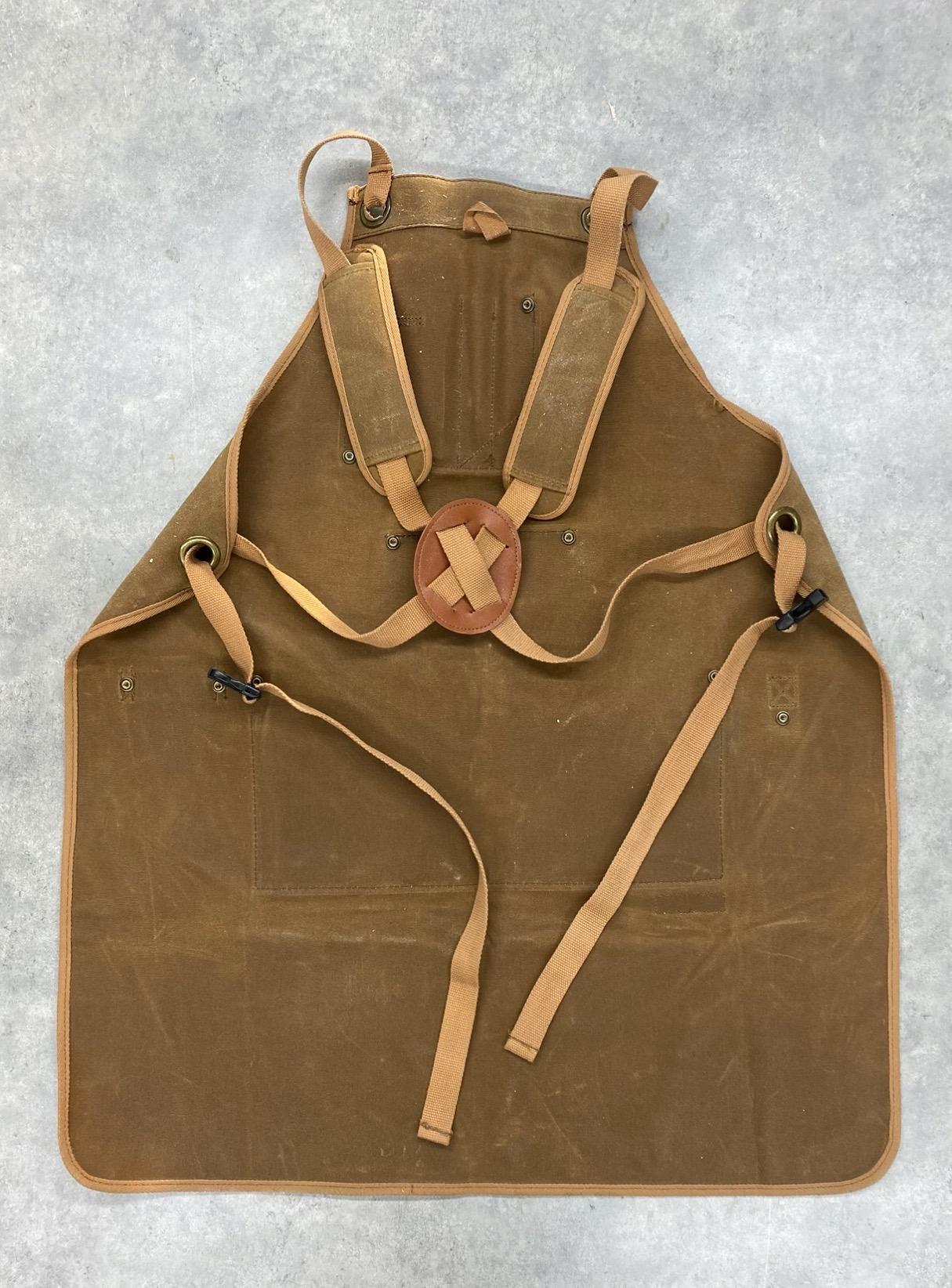
The cross-back straps are webbing rather than the same canvas as the body, which is the right call. Canvas straps stretch and fray at the buckle over time; webbing straps hold their shape and resist fraying at friction points. The center chest strap has a metal slide adjuster rather than a plastic clip, which is a small detail but one that matters if you’re rough on gear — plastic clips are the single most common failure point on budget aprons.
For a deeper dive into how full-grain and split-leather aprons handle the same wear points, our best leather woodworking apron guide breaks down where leather still wins, and where it’s genuinely overkill for a hobbyist shop.
Zoom in on the pocket edges specifically and you can see where a manufacturer decided to spend a little extra time at the sewing machine. Rather than a single pass of stitching along the top of each pocket — the spot that takes the most stress every time a tool is pulled out or pushed back in — Briteree runs a second parallel line of stitching about a quarter inch below the first. That second line does two things: it distributes the pulling force across two seams instead of one, and it acts as a stop if the outer seam ever does start to give, buying time before a pocket actually tears open in daily use.
The bib panel itself is a single piece of canvas rather than a patchwork of smaller panels sewn together, which matters for long-term durability because every seam is a potential weak point. Fewer seams across the load-bearing chest area means fewer places for stress cracks to start after repeated bending and reaching. The lower storage pocket, by contrast, is built from layered panels stitched onto the base — a sensible tradeoff, since that’s the area meant to flex and hold shape around tools rather than stay rigid.
Hardware finish is a small detail that’s easy to overlook until it fails. The D-rings and slide buckles here have a matte nickel-style finish rather than raw unfinished steel, which resists the kind of surface rust that shows up quickly on cheaper stamped hardware left in a humid garage. It’s not marine-grade stainless, so it’s not entirely immune to corrosion over years of exposure, but it’s a clear step above the unfinished hardware found on the very cheapest aprons in this category.
Pocket Layout & Storage: The Part Most People Actually Buy This For
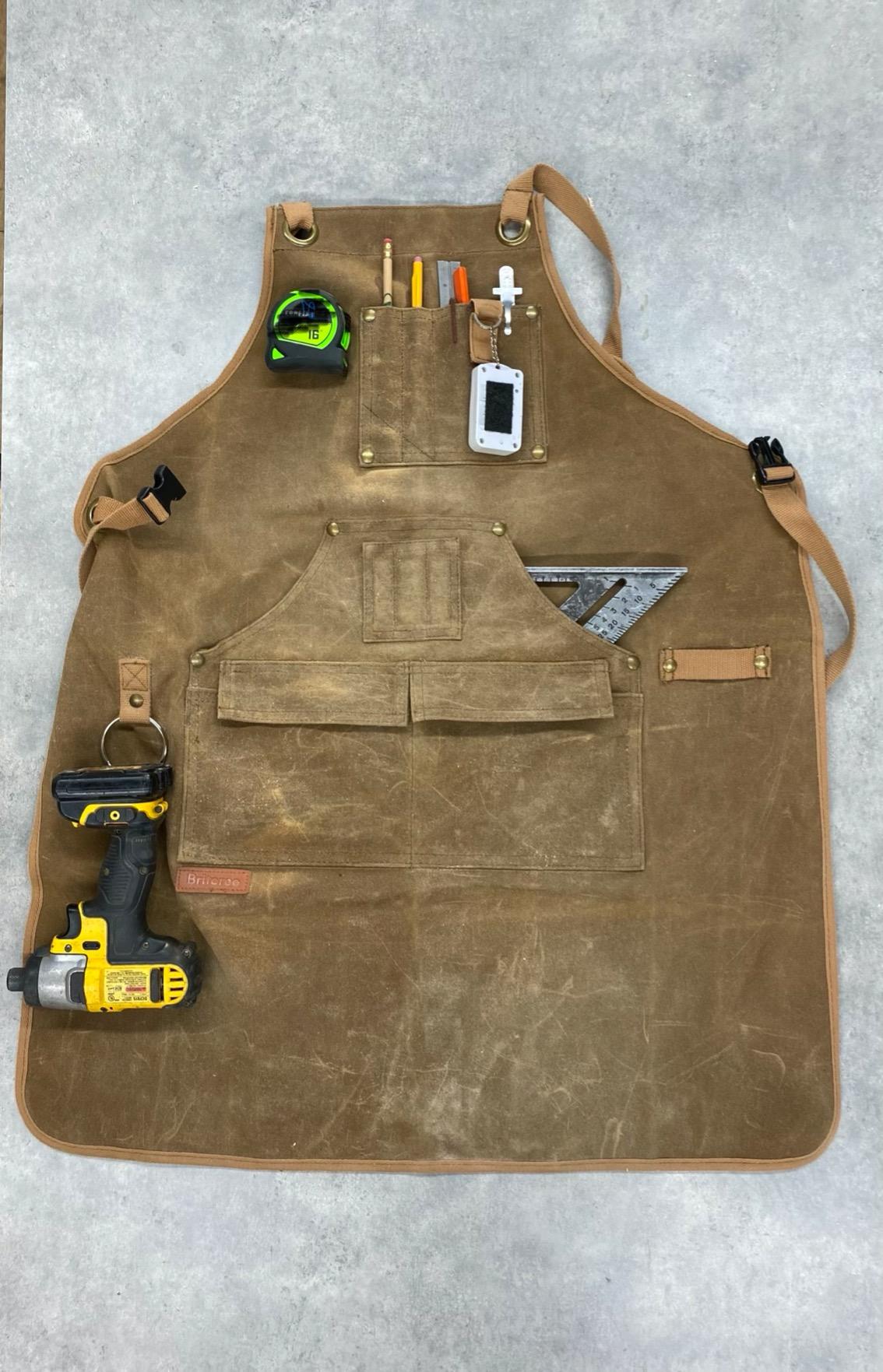
Most people shopping for a woodworking apron aren’t really shopping for an apron — they’re shopping for a mobile tool tray they can wear. The Briteree apron’s layout reflects that. There’s a large lower pocket split into two or three compartments wide enough for a folding rule, a small square, or a cordless driver, plus a row of narrower slots sized for pencils, a marking knife, or a utility blade.
A reinforced loop near the hip is sized for a hammer or a mallet handle, which is a detail that separates purpose-built shop aprons from generic craft or barista-style aprons that just add a front pocket and call it a woodworking apron. There’s also a small zippered or snap-closed pocket higher up the chest panel, useful for a phone or a small notebook you don’t want sliding out when you bend over the bench.


The tradeoff with any pocket-dense apron is weight distribution. Load every pocket at once and you’ll feel it pulling on the neck strap rather than the waist, which is a common complaint across this entire category of apron — not unique to Briteree. If you’re someone who likes to carry six tools at once rather than making trips back to the bench, pay close attention to the strap and fit section below, because that’s where this apron either earns its keep or starts to feel like a chore by hour three.
Counting compartments precisely depends on how you define a “pocket,” since a couple of the slots are really sub-divisions stitched into a larger pouch, but a fair count lands somewhere around eight to ten distinct storage spaces once you include the pencil slots. That’s on the generous end for an apron in this price range — plenty of competitors settle for a single large pouch and call it done, which sounds simpler but actually makes tools harder to find by feel, since everything ends up jumbled together at the bottom.
One layout choice worth calling out: the pencil slots sit close enough together that a standard carpenter’s pencil and a mechanical pencil can share the same row without one falling out when you bend over. That’s a small thing that a lot of apron designs get wrong, either spacing slots too wide so a pencil rattles loose, or too narrow so it’s a fight to get the pencil back in one-handed while you’re still holding a workpiece.
The main lower pocket is deep enough to swallow a full-size folding rule without the top edge poking out awkwardly, which matters more than it sounds — a rule that sticks up out of a shallow pocket has a way of catching on the underside of a workbench or a cabinet edge exactly when you don’t want it to. The depth here keeps tools low and secure rather than proud of the pocket opening.
If your workflow leans toward layout and measuring work rather than heavy cutting, the pocket arrangement favors you specifically: there’s dedicated space for a square, a marking gauge, and a pencil all within reach without needing to dig past a driver or a chisel to get to them. For someone who mostly needs to carry a driver and a few fasteners, the layout is slightly less optimized, though it still does the job without complaint.
Fit, Straps & Adjustability
The apron uses a cross-back strap design rather than a single loop around the neck. This is worth calling out specifically, because a huge share of complaints about cheap shop aprons trace back to single-strap necklines that dig into the trapezius muscles after long stretches of leaning over a bench. Cross-back straps spread that load across both shoulders and the upper back, which is a meaningfully more comfortable design for anyone spending more than an hour at a time in the apron.
Waist straps use a standard buckle-and-slide system with enough tail length to fit most body types comfortably, and there’s enough adjustment range to wear the apron over a heavy flannel in winter or a t-shirt in summer without needing to buy a different size.
The cross-back straps also cross at a slightly lower point between the shoulder blades than some competing designs, which changes how the bib sits at the front. A lower crossing point tends to pull the neckline down a touch, reducing the choking sensation some cross-back aprons create when the crossing point sits too high and too tight. It’s a subtle geometry decision, but it’s one of the reasons this apron feels comfortable straight out of the box rather than needing weeks of strap fiddling to dial in.
The waist buckle sits at a standard front-center position rather than off to one side, which keeps the apron balanced when you’re reaching across a bench rather than twisting slightly to compensate for uneven weight. For anyone who’s worn a poorly balanced apron before, this kind of centered hardware placement is easy to take for granted until you compare it directly against a design that gets it wrong.
Adjustment is a two-hand job the first time, since both the cross-back straps and the waist strap need setting to match your torso length and waist size, but once it’s dialed in, day-to-day putting on and taking off the apron is a single motion — loop it over your head, clip the waist buckle, and you’re working. That one-motion simplicity matters more than it sounds for anyone who takes the apron on and off multiple times a day between shop tasks and errands.

See the full strap and buckle detail plus current sizing options on the Amazon listing.
View on AmazonComfort Over A Full Shop Day
An apron that’s comfortable for twenty minutes of light sanding and one that’s comfortable for a full Saturday of glue-ups, layout work, and finishing are two different tests. The Briteree apron’s cross-back design and the softness of its canvas after the first wash both help here — new canvas aprons often feel stiff and board-like for the first few sessions, and this one softens up faster than most without losing structure in the pocket panels.
One small note: because the fabric has a light wax-style finish, it can feel slightly warm against the body in a shop without good airflow. That’s a fair tradeoff for the dust and moisture resistance the finish provides, but it’s worth knowing if you work in a garage shop in a hot climate.
The length falls at a practical mid-thigh for most average heights, long enough to protect pants from glue and finish drips without dragging on the floor or catching on a table saw fence when you bend to adjust a featherboard.
Repetitive motion is where a lot of aprons quietly fail even when they feel fine standing still. Reaching overhead to a shelf, crouching to check a glue-up clamped low on a bench, or twisting to grab a tool from a pegboard behind you all put different stress on an apron’s straps and seams than simply standing at attention. The Briteree apron’s cross-back design holds its position through all of these movements without needing constant readjustment, which is a meaningfully better experience than single-strap aprons that slide off-center every time you bend or twist.
Breathability is a fair point of comparison against leather specifically. Leather aprons trap heat against the body more than canvas does, simply because leather doesn’t breathe the way woven cotton fabric does. The Briteree apron’s canvas construction, even with its wax-style finish, still breathes noticeably better than leather, which is worth factoring in if your shop runs warm or you’re working through a hot summer without air conditioning.
Noise is a small but real comfort factor too. Metal D-rings and buckles can clink against a bench edge or a tool when you lean forward, and while no fabric apron eliminates this entirely, the snug fit of the Briteree design keeps hardware close to the body rather than swinging loose, which cuts down on that distracting rattle during focused work like fine layout or finish sanding.
Temperature aside, humidity is the other environmental factor worth mentioning for comfort over a long session. In a damp basement shop, any canvas fabric will feel slightly heavier and cooler against the skin than it does in a dry garage, simply because canvas absorbs some ambient moisture from the air. This isn’t unique to the Briteree apron, but it’s worth knowing if your shop runs on the humid side — a quick check that the apron is fully dry before each use will keep it feeling comfortable rather than clammy.
Durability & Dust Resistance
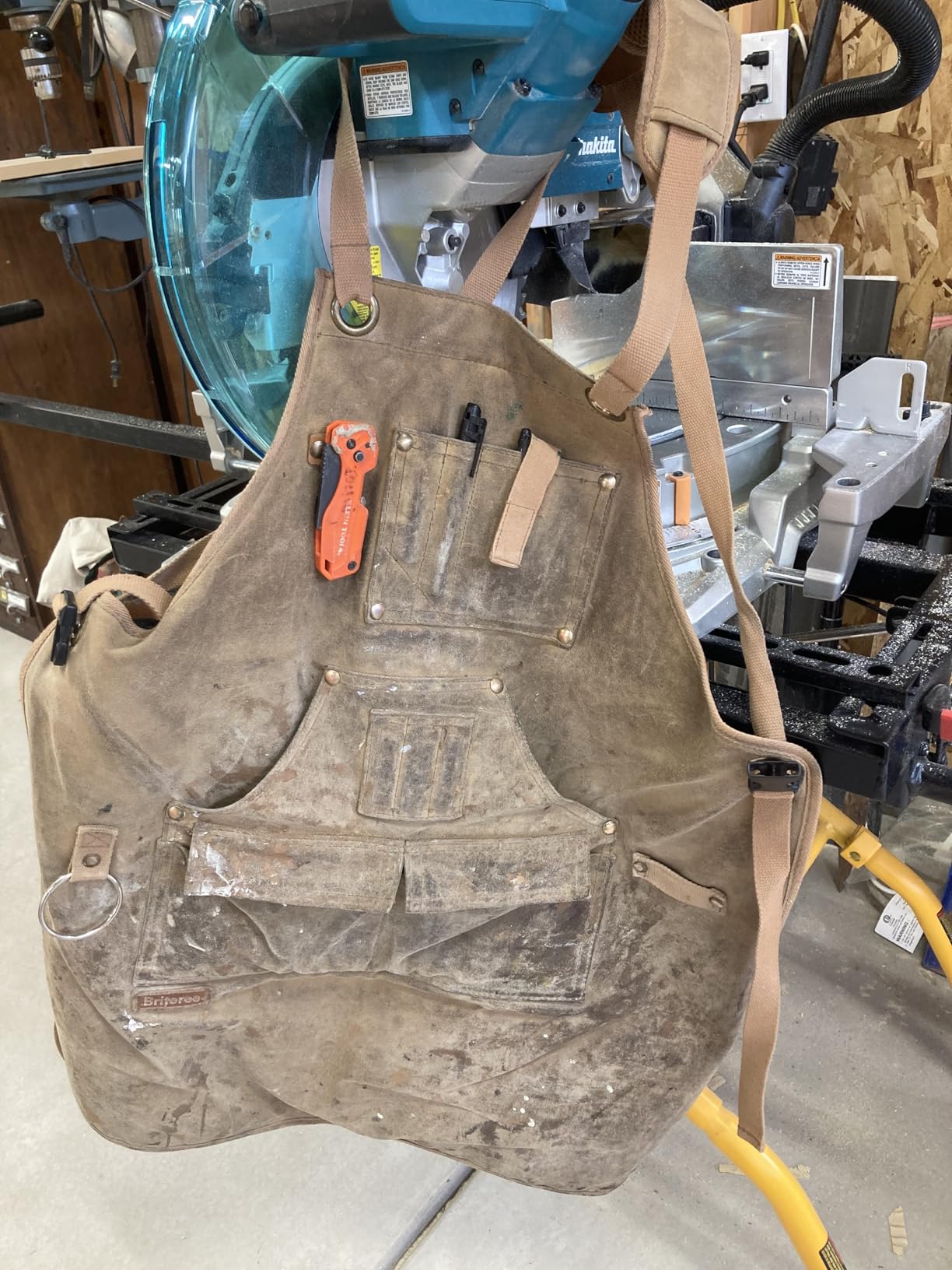
Sawdust is the real enemy of any fabric apron — not because it damages the material outright, but because fine dust works into loose weaves and becomes almost impossible to fully clean out, eventually making the apron look permanently gray no matter how it’s washed. The lightly waxed canvas on the Briteree apron resists this better than untreated cotton canvas, though it doesn’t match the dust-shedding performance of a true waxed canvas apron.
Glue and finish drips wipe off the surface reasonably well when caught quickly, though dried polyurethane or epoxy will need to be picked off rather than washed out, which is true of essentially every fabric apron on the market regardless of price. Sharp tool edges — chisels, marking knives, utility blades — can nick the canvas if you’re careless about how you sheath them in the pockets, so a little care in how tools are stored in the apron goes a long way toward extending its life.
For shops that see heavy daily use — production furniture makers, cabinet shop employees, or anyone using the apron five-plus days a week — a heavier waxed canvas or leather apron will simply outlast this one. For weekend and evening hobbyist use, the Briteree apron’s durability is proportionate to its price and should hold up for several years of normal use.
It’s worth putting this in context against the realistic lifespan expectations across the whole apron category. A cheap unbranded canvas apron sold as a bundled accessory often starts showing seam failure within months of regular use. A mid-weight blended canvas apron like this one, maintained reasonably well, typically holds up for two to four years of consistent hobbyist use before the pocket seams or strap stitching need attention. A genuine waxed canvas or leather apron can stretch that lifespan to a decade or more, but at a proportionally higher upfront cost. Viewed through that lens, the Briteree apron’s expected lifespan lines up honestly with its price bracket rather than overpromising and underdelivering.
Abrasion at high-contact points is another useful way to judge long-term durability. The lower edge of the main pocket, where a hand slides in and out dozens of times a session, is the first place wear typically shows on any canvas apron. On the Briteree apron, that edge is bound rather than left as a raw folded seam, which slows the fraying that eventually turns into a small hole. It’s a modest detail, but it’s exactly the kind of thing that separates an apron built by someone who’s actually used one from a generic template product.
Color retention is worth a mention too, since canvas aprons in lighter tones show dust, dirt, and stains faster than darker colorways. If long-term appearance matters to you — say, the apron doubles as something you wear in front of clients or students — a darker colorway if available will hide gradual staining considerably better than a light tan or natural canvas tone over a year or two of regular use.
None of this changes the core conclusion: this apron is built to last through years of hobbyist use, not decades of daily production work. That’s a completely reasonable target for its price point, and it’s worth judging the durability story against that expectation rather than against a leather apron built for an entirely different use case and price bracket.
Sizing Notes
The apron is built as an adjustable one-size-fits-most design, and the strap range comfortably covers a wide span of body types. Taller users should expect the bib to sit slightly higher on the chest, while shorter users will have more strap tail to tuck away — neither is a functional problem, but it’s worth knowing before you buy so you’re not surprised by the fit.
If you’re buying for someone with a narrower or broader frame than average, it’s worth reading current buyer photos on the listing itself, since strap and buckle placement is one of the few things that’s genuinely easier to judge from real-world photos than from a written description.
| Body Type | Fit Notes | Recommended Adjustment |
|---|---|---|
| Average build | Fits as designed, minimal adjustment needed | Factory default strap length |
| Tall / long torso | Bib sits slightly higher on chest | Lengthen cross-back straps fully |
| Broad / larger frame | Waist strap tail shortens noticeably | Check max waist strap length before buying |
| Smaller / narrow frame | Extra strap tail to tuck or trim | Tuck tail through a keeper loop |
It’s worth distinguishing between two different fit problems that get lumped together in casual reviews: overall apron length, and strap adjustment range. Length is fixed at the factory and can’t be altered without sewing, while strap range is genuinely adjustable and covers the vast majority of buyers without issue. If length rather than strap fit is your concern — for example, if you’re notably shorter or taller than average — that’s the detail most worth checking against buyer photos before purchase, since it’s the one aspect of fit this apron can’t adjust around.
Layering is another sizing consideration people overlook. An apron that fits well over a t-shirt in summer needs enough strap range left to still work over a heavier jacket or flannel in a cold garage shop in winter. The Briteree apron’s adjustment range comfortably covers both ends of that seasonal range for most builds, which isn’t true of every budget apron — some are sized tightly enough around one season’s clothing that they feel constricting the rest of the year.
Cleaning & Maintenance
Spot cleaning with a damp cloth handles most day-to-day dust and light glue residue. For a deeper clean, a gentle hand wash in cool water preserves the wax-style finish far better than a machine wash, which can strip some of that dust resistance over repeated cycles and cause the canvas to stiffen unevenly as it dries.
Air drying flat or on a wide hanger is the safer choice over a dryer, both for the fabric finish and for the metal hardware, which can rattle and scratch other items in a dryer drum. Keeping sharp tools sheathed or pointed downward in their pockets between uses also meaningfully extends the working life of the pocket seams.
Storage between shop sessions matters more than most people expect. Balling the apron up and tossing it in a drawer creates permanent creases along the wax-finished canvas over time, which can eventually crack the finish at those fold lines. Hanging it flat on a hook — many shop owners simply add a dedicated peg near the workbench — keeps the canvas lying naturally and avoids that kind of stress cracking entirely.
Stains from finishes like oil-based stains or dark walnut-toned products are the hardest to fully remove, since they’re designed to penetrate porous material rather than sit on the surface. A quick wipe-down immediately after exposure is far more effective than trying to treat a dried stain days later. Keeping a rag in one of the pockets specifically for this purpose is a habit worth building early with any canvas apron.
For anyone who wants to extend the wax-style finish’s dust resistance over time, a light reapplication of a fabric wax or beeswax-based canvas treatment — the same kind used to refresh waxed canvas jackets — can restore some of that dust-shedding performance after a year or two of regular washing. This isn’t required, but it’s a low-cost way to keep the apron performing closer to new for longer.
Who This Apron Is Actually For
The Briteree woodworking apron makes the most sense for hobbyist and weekend woodworkers who want genuinely useful pocket storage and a comfortable cross-back fit without spending leather-apron money. It’s also a sensible choice for a first apron — someone still figuring out how much pocket storage they actually use in practice, rather than committing to a premium leather apron before they know their own workflow.
It’s less suited to daily production use in a commercial shop, where the higher abrasion resistance of leather or heavy waxed canvas earns back its higher price over years of constant wear. It’s also not the right pick for someone specifically wanting a leather apron’s stiffer structure for heat and spark resistance near welding or torch work — that’s a different tool for a different job, and our leather apron guide covers that use case directly.
It’s also a strong pick for teaching environments — a woodshop class, a maker space, or a parent introducing a teenager to basic hand tool work. The adjustable straps mean one apron can reasonably fit several different students or family members across a session rather than needing a size-specific purchase for each person, and the moderate price makes it easier to justify buying two or three for shared use without a large upfront investment.
On the other end of the spectrum, dedicated turners and carvers who spend most of their bench time seated rather than standing may find the cross-back design less necessary, since a seated posture doesn’t load the neck and shoulders the same way standing bench work does. For that specific use case, a simpler waist-apron style with large pockets might actually serve better, though it’s a narrower use case than the standing bench work this apron is designed around.
If you’re weighing this apron against simply not wearing one at all — which plenty of hobbyists do for years before finally giving in — the case for buying one comes down to how much time you currently lose walking back to a tool tray for a pencil, a rule, or a driver. For anyone who’s tracked that lost time across a single project, the value of a well-organized apron becomes obvious quickly.
How The Briteree Apron Compares To Other Popular Options
Shop aprons cluster into a few clear categories: budget canvas aprons like this one, mid-range branded canvas aprons from tool retailers, waxed canvas aprons built for heavier daily use, and leather aprons at the top of the price and durability range. Here’s how Briteree stacks up against two aprons we’ve reviewed separately.
| Apron | Material | Best For | Relative Price |
|---|---|---|---|
| Briteree Woodworking Apron | Cotton-canvas / poly blend, light wax finish | Hobbyists wanting pocket storage on a budget | $ |
| Rockler Woodworking Apron | Heavier branded canvas | Regular hobbyists wanting retailer support and warranty | $$ |
| Waxed Canvas Apron | True waxed canvas | Frequent shop use, better dust and moisture resistance | $$ |
| Leather Woodworking Apron | Full-grain or split leather | Daily/production use, spark and abrasion resistance | $$$ |
If you’re still comparing categories rather than specific products, our full best woodworking apron guide lays out how to think about that decision based on how often you’re actually in the shop.
Against the Rockler apron specifically, the difference comes down mostly to brand support and fabric weight rather than a dramatic gap in features — both aprons cover similar ground on pocket layout and strap comfort, and the choice often comes down to whether retailer warranty and in-store exchange matters enough to justify the price step up. Against waxed canvas, the gap is more about long-term dust and moisture performance than day-one comfort, since a fresh waxed canvas apron and the Briteree apron feel fairly similar to wear before repeated exposure starts to separate them. Against leather, the comparison isn’t really close on durability, but it’s also not really a fair fight — leather aprons routinely cost several times as much, and comparing them price-for-price rather than feature-for-feature tells a more useful story for most hobbyist budgets.
One more distinction worth making: some buyers assume “more expensive” automatically means “better for me,” but that’s only true if the extra durability of a pricier apron actually gets used. A leather apron bought by someone who works in the shop twice a month will likely outlive its owner’s interest in woodworking before it ever shows meaningful wear, while the same money spent on the Briteree apron plus a few other tool upgrades might serve that same hobbyist better overall.
Ready to see current pricing and colors for the Briteree apron?
Check Latest PricePros And Cons
What Works
- Cross-back straps distribute weight better than single-neck-strap designs
- Double-stitched pocket seams hold up to daily use
- Pocket layout genuinely covers common hand tools, not just a single catch-all pouch
- Light wax-style finish sheds dust better than untreated canvas
- Comfortable price point for a first or backup apron
What To Know Before Buying
- Not as abrasion-resistant as true waxed canvas or leather over years of daily use
- Fully loaded pockets can pull noticeably on the neck strap
- Wax finish can feel slightly warm in poorly ventilated shops
- Machine washing degrades the finish faster than hand washing
Final Verdict
The Briteree woodworking apron does what a budget shop apron is supposed to do: it keeps your most-used hand tools within reach, spreads the load across both shoulders instead of your neck, and resists the dust and light glue exposure of normal hobbyist use. It isn’t trying to compete with leather or heavy waxed canvas on raw durability, and it shouldn’t be judged against that bar. Judged against other aprons in its own price range, it’s a genuinely solid, well-stitched option that’s easy to recommend for anyone building out a home shop kit without overspending on their first apron.
Weighing everything covered above — pocket count and layout, strap comfort over long sessions, stitching quality at the points that actually fail first, and a fair price relative to what’s included — this lands as one of the more sensible budget apron picks currently available rather than a compromise buyers will regret. It earns a recommendation specifically for hobbyists, weekend woodworkers, and anyone setting up a first home shop, while pointing production shops and daily users toward the heavier waxed canvas or leather options covered in our other apron reviews.
If your priority is simply having somewhere reliable to keep a pencil, a rule, and a driver within arm’s reach instead of hunting across the bench for them, this apron solves that problem cleanly, comfortably, and without asking you to pay for durability you may never actually need.
Frequently Asked Questions
Is the Briteree woodworking apron machine washable?
It can be machine washed on a gentle cool cycle, but hand washing preserves the wax-style finish and hardware longer. Air drying is recommended over a dryer.
Does the Briteree apron fit larger or plus-size body types?
The cross-back straps and waist buckle have a wide adjustment range that fits most average to larger frames comfortably. Very broad frames should check the maximum waist strap length on the current listing before buying.
How many pockets does the Briteree woodworking apron have?
It includes a large compartmentalized lower pocket, narrow pencil and marking-tool slots, a reinforced hammer loop, and a smaller chest pocket suited to a phone or notebook.
Is this apron good for resin, epoxy, or finishing work?
Light drips wipe off reasonably well if caught quickly, but dried epoxy or polyurethane needs to be picked off rather than washed out, which is true of nearly all fabric aprons.
Is the Briteree apron better than a leather woodworking apron?
Not in terms of raw durability or spark resistance, but it’s more affordable and more comfortable for long stretches thanks to its cross-back strap design. Our leather apron guide covers where leather pulls ahead.
Can this apron hold a full set of hand tools?
Yes, the pocket layout comfortably holds a folding rule, small square, pencils, marking knife, and a cordless driver, plus a hammer in the hip loop. Loading every pocket at once will add noticeable weight on the neck strap.
Does the fabric resist sawdust buildup?
The light wax-style finish sheds fine dust better than untreated cotton canvas, though true waxed canvas aprons still perform better for heavy daily dust exposure.
Is the Briteree apron adjustable for kids or teens learning woodworking?
The strap range can be shortened enough to fit most teens comfortably, though it’s designed primarily as an adult one-size-fits-most apron rather than a youth-specific product.
How does it compare to the Rockler woodworking apron?
Rockler’s apron sits a step up in price with heavier branded canvas and retailer warranty support. Our Rockler apron review breaks down that comparison in detail.
Will the metal hardware rust over time?
The buckles and D-rings are standard metal hardware and can develop light surface corrosion if left damp for extended periods. Air drying after any wash prevents most of this.
Is this apron suitable for use around a table saw or router table?
The mid-thigh length and snug waist fit keep loose fabric away from moving parts better than a longer bib-style apron, though as with any shop apron, loose strap tails should always be tucked away near running machinery.
What’s the best overall pick if I’m not sure this is the right apron?
Our best woodworking apron guide compares this and several other options side by side based on how often you’re actually working in the shop.