How to Choose a Table Saw: The Complete Buying Guide for Every Skill Level
From portable jobsite saws to full cabinet saws — everything you need to pick the right table saw for your shop, budget, and cutting needs.
Why the Right Table Saw Matters
Of every stationary machine you will ever bolt to a shop floor or roll out of a garage corner, the table saw is the one that determines almost everything else about how you work. It is the tool that breaks down full sheets of plywood into usable parts, the tool that rips rough lumber into square stock, and the tool that, when set up correctly, delivers glue-ready joints without a single pass through a jointer. Choosing the wrong one doesn’t just mean living with an inconvenience — it means fighting your equipment on every project, chasing accuracy that should have been built in from the factory, and in the worst cases, working with a machine that isn’t safe for the way you actually use it.
Unlike a router or a drill, a table saw is a long-term relationship. Most woodworkers keep the same saw for a decade or more, upgrading blades and fences long before they replace the machine itself. That makes the buying decision worth slowing down for. This guide walks through every factor that actually affects day-to-day use — motor power, fence quality, safety systems, table size, dust collection, and budget — so that by the end you’ll know exactly which category of table saw fits your shop, your projects, and your experience level.
If you’re also outfitting the rest of your shop at the same time, it’s worth reviewing our broader roundup of best woodworking tools before committing your budget entirely to the saw, since a balanced toolkit often outperforms a single expensive machine.
It also helps to think about the table saw as the tool that sets the tolerance for every downstream step in a project. A slightly out-of-square rip cut doesn’t just look wrong at the table saw — it compounds through every glue-up, every joint, and every finished edge that follows. Cabinetmakers often say that a project is only as accurate as its first cut, and in most shops that first cut happens at the table saw. That’s a strong argument for spending more time than feels necessary comparing fences and trunnion quality before ever looking at accessories or blade selection, because no amount of downstream fine-tuning fully compensates for a saw that can’t hold a straight line.
There’s also a psychological dimension worth naming honestly: a table saw that fights you — drifting out of alignment, bogging down mid-cut, or rattling loose hardware — erodes confidence in ways that quietly shrink the scope of what you attempt. Woodworkers with unreliable saws tend to avoid larger sheet-good projects, shy away from precise joinery, and generally under-use their own skills because the tool underneath them can’t be trusted. Choosing well at the outset isn’t just about specs on a page; it’s about removing a source of friction between your plans and your finished work.
Step 1: Understand the Types of Table Saws
Before comparing specs, you need to know which category of saw you’re even shopping in. Table saws generally fall into four families, and each one is built around a different trade-off between portability, power, and precision.
Jobsite Table Saws
Jobsite saws are the lightest and most portable category, typically built around a folding stand with wheels so a single person can move one in and out of a truck bed. They run on standard 15-amp household circuits and use a universal or direct-drive motor rather than the heavier induction motors found in stationary saws. What you gain in portability, you trade in vibration control and long-term precision — the tables are thinner, the trunnions lighter, and the fences, while often surprisingly good on premium models, are not as rock-solid as a cabinet saw’s.
Benchtop Table Saws
Benchtop saws sit at the entry-level end of the market. They’re compact, inexpensive, and designed to sit on a workbench or stand rather than the floor. They’re a reasonable choice for hobbyists doing small projects, model making, or occasional home repairs, but they generally lack the rip capacity and motor torque needed for cabinetry, furniture, or repeated sheet-good breakdown.
Contractor Table Saws
Contractor saws bridge the gap between portable and professional. They typically have a belt-drive motor mounted on the rear of the saw, a heavier cast table (often with cast-iron wings or sturdy stamped-steel extensions), and enough rip capacity to handle full sheets of plywood with an extended fence rail. This category is the sweet spot for many serious hobbyists and small shop owners.
Cabinet Table Saws
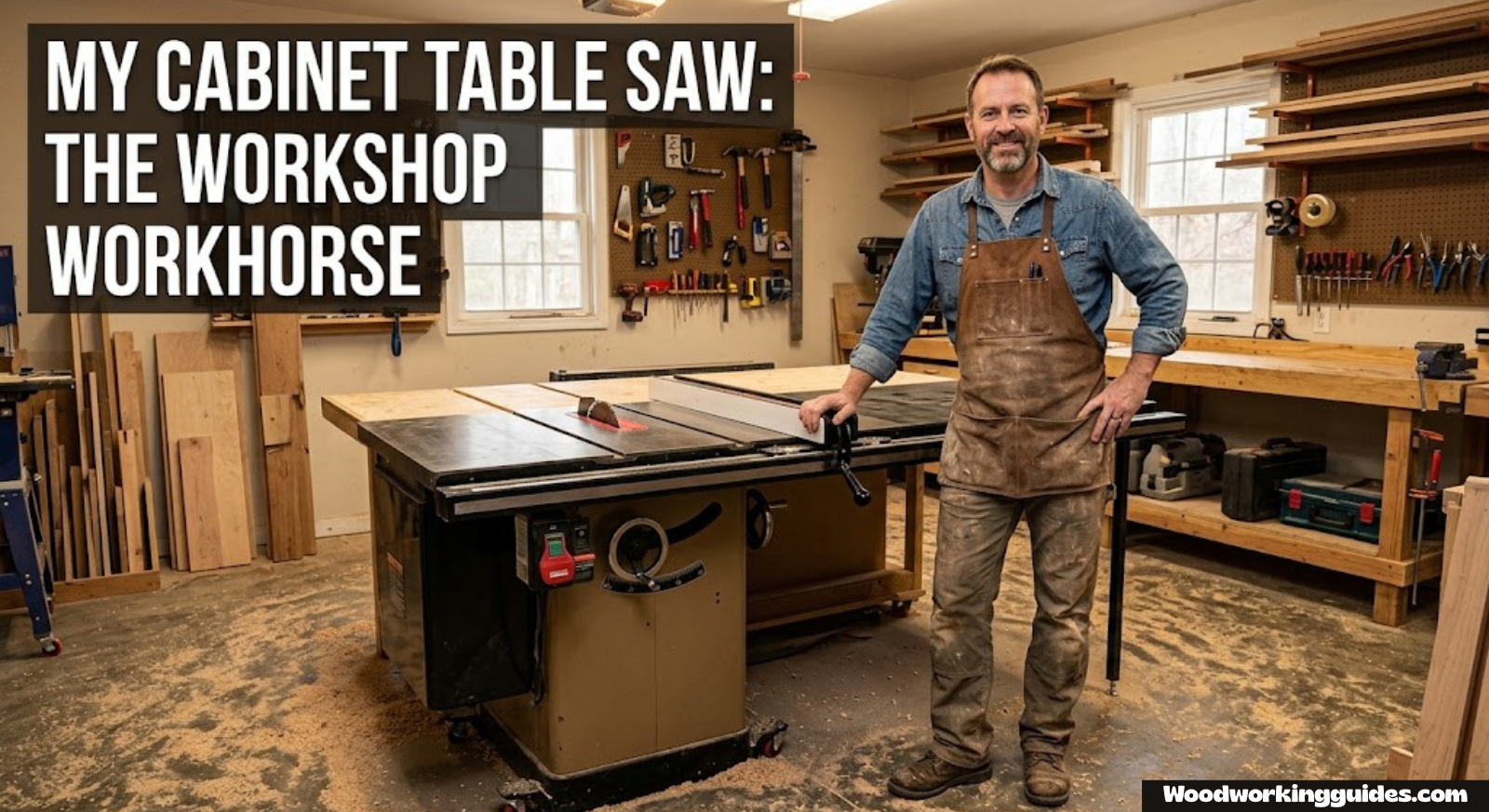
Cabinet saws are the professional standard. Fully enclosed bases, heavy induction motors (often 3 to 5 horsepower on 220V circuits), precision-machined trunnions, and dead-flat cast-iron tables define this category. They’re expensive and heavy — often 400 to 600 pounds — but they deliver the flattest cuts, the least vibration, and the longest service life of any table saw type. If your shop has the space and 220V power, and you’re producing furniture-grade work regularly, this is where you eventually land.

Check Price on Amazon
Step 2: Assess Your Shop Space and Power
Before you fall in love with a specific model, walk your shop with a tape measure. A cabinet saw with a 52-inch rip fence and outfeed table needs real floor real estate — often an 8-by-10-foot footprint once you account for infeed, outfeed, and side clearance for ripping full sheets. A one-car garage shop, by contrast, is usually better served by a contractor saw on a mobile base or a well-built jobsite saw that folds away when not in use.
Power supply is the second constraint people forget until it’s too late. Most benchtop, jobsite, and many contractor saws run on standard 120V circuits, drawing 13 to 15 amps. Larger contractor saws and virtually all cabinet saws are built for 220–240V circuits, which deliver more consistent torque under load and reduce the risk of tripping breakers during heavy rip cuts. If your shop only has 120V outlets and running new wiring isn’t in the budget, that alone may rule out the cabinet saw category regardless of how much you’d like one.
If your shop is still in the planning stages, our guide to setting up a beginner woodshop walks through layout planning in more depth, including how much clearance to leave around every major machine.
Step 3: Evaluate Motor Power and Drive Type
Motor specs are where marketing language gets murkiest. “Peak horsepower” numbers printed on budget saws are often inflated well beyond what the motor can sustain under a real cut. What actually matters for cutting performance is continuous (or “running”) horsepower, amperage draw, and drive type.
Direct-Drive vs. Belt-Drive Motors
Direct-drive motors are mounted straight to the arbor, which keeps the saw compact and light — ideal for jobsite saws that need to be portable. The trade-off is more vibration and a higher-pitched, louder motor noise, along with less torque under heavy load. Belt-drive motors sit apart from the blade arbor and transfer power through a drive belt, which dampens vibration, runs quieter, and allows for a heavier flywheel effect that keeps the blade spinning smoothly through dense hardwood. Nearly every contractor and cabinet saw uses belt drive for this reason.
| Motor Type | Typical HP | Best For | Noise/Vibration |
|---|---|---|---|
| Universal (direct-drive) | 1.5–2 HP | Jobsite, occasional use | High |
| Induction (belt-drive, 120V) | 1.5–2 HP | Contractor saws | Moderate |
| Induction (belt-drive, 220V) | 3–5 HP | Cabinet saws | Low |
As a rule of thumb, anything under 1.5 continuous horsepower will bog down when ripping thick hardwood like hard maple or white oak. If your projects regularly involve resawing or ripping 8/4 stock, prioritize motor torque over almost every other spec on this list.
Step 4: Check the Rip Fence and Rip Capacity
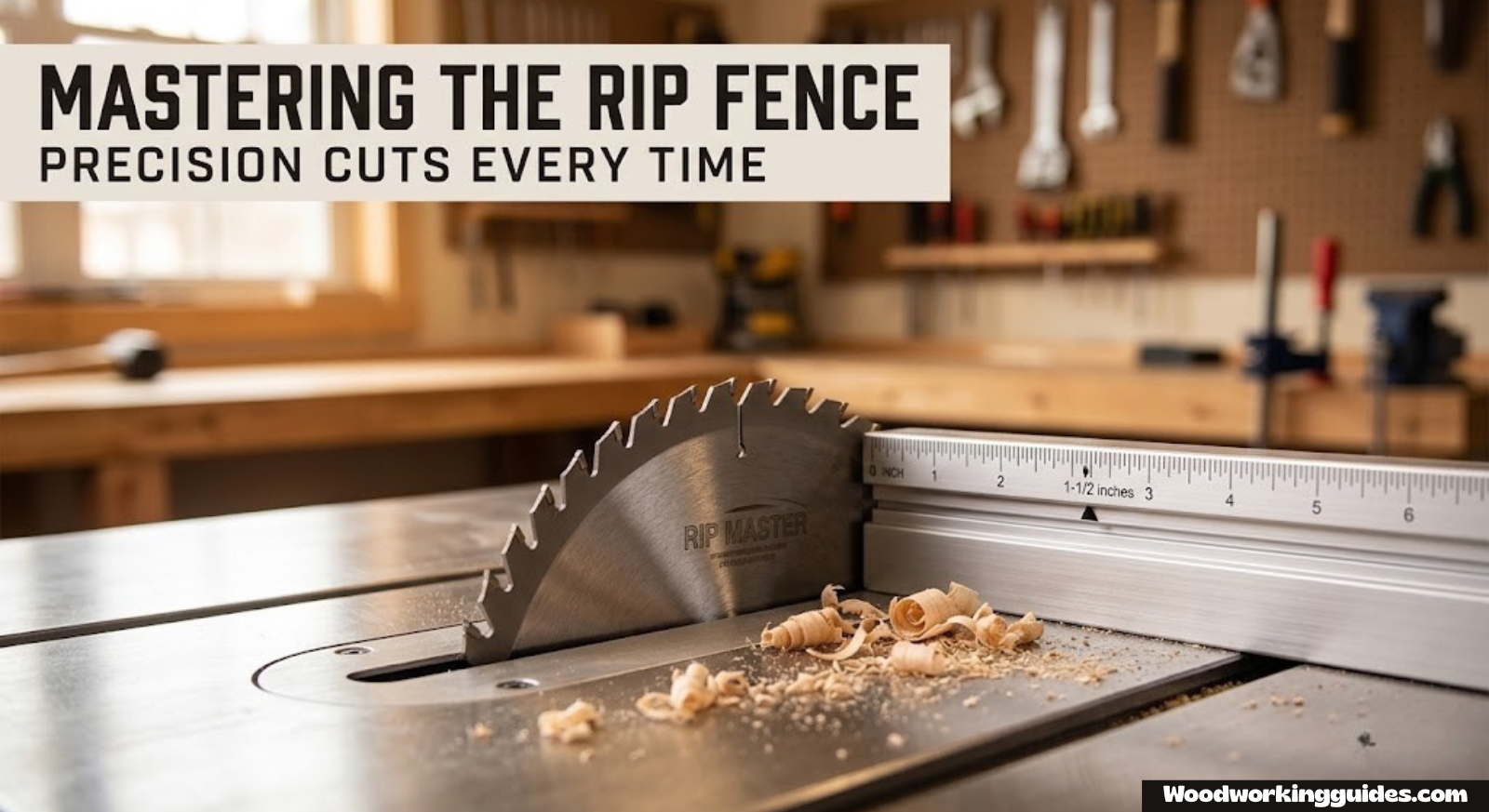
If the motor is the heart of a table saw, the fence is its spine. A fence that isn’t perfectly parallel to the blade — even by a fraction of a degree — will cause burning, kickback risk, and inaccurate cuts no matter how good the motor is. This is the single most common reason woodworkers upgrade or replace a saw entirely.
When comparing fences, look for T-square style fence systems that lock at both the front and back rail — this dual-point lock is what keeps the fence from drifting out of parallel under pressure. Cheaper saws use a single-point lock at the front rail only, which can allow the back of the fence to creep even when the front reads accurately on the scale.
Rip capacity — the maximum distance between the blade and the fence at full extension — determines whether you can break down a full 4-by-8 sheet of plywood in one pass. A rip capacity of at least 24 inches to the right of the blade is the practical minimum for sheet goods; 30 to 52 inches is standard on contractor and cabinet saws built for cabinetry work.
Look For
- T-square fence design
- Dual front/rear locking
- Laser-etched or high-contrast scale
- Micro-adjust knob for fine tuning
Avoid
- Single-point front-only lock
- Flimsy stamped-steel fence rails
- No published rip capacity spec
- Plastic fence sliders on heavy-use saws
Step 5: Consider Blade Size, Arbor, and Bevel Range
Nearly every consumer table saw uses a 10-inch blade, which has become the industry standard because it balances cut depth with motor load. A 10-inch blade at 90 degrees typically cuts 3 to 3.5 inches deep, enough for the vast majority of dimensional lumber and sheet goods. Some cabinet saws and a handful of contractor models accept 12-inch blades for deeper cuts, but replacement blades cost more and the added mass demands a stronger motor.
Arbor size (the shaft the blade mounts on) is almost universally 5/8 inch on 10-inch saws, which keeps blade compatibility simple across brands. Bevel range matters more than people expect: most saws tilt from 0 to 45 degrees, but the direction of tilt varies. Left-tilting saws (blade tilts away from the fence) are generally considered safer for bevel rip cuts because the workpiece isn’t pinched between a tilting blade and the fence — worth checking if you do a lot of angled work.
Step 6: Prioritize Safety Features
Table saws cause more woodshop injuries than any other stationary tool, which is exactly why safety hardware should factor into your decision as heavily as horsepower does. At minimum, confirm the saw includes a riving knife (a curved blade-height metal piece that follows the blade and prevents wood from pinching and kicking back), a blade guard that’s easy to install and remove without tools, and anti-kickback pawls on the guard assembly.
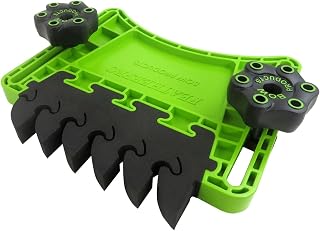
Beyond the mechanical guard system, a growing number of premium saws include flesh-detection technology that stops and retracts the blade within milliseconds of contact with skin. These systems add meaningfully to the price but are worth strong consideration for shared shops, teaching environments, or anyone working solo without another person nearby in case of an emergency. Even without that technology, a saw with a properly functioning riving knife and guard, paired with good technique — push sticks, featherboards, and never standing directly behind the blade line — accounts for the overwhelming majority of safe table saw use.
Check Price on Amazon
Table Surface, Extensions, and Mobility
A larger table surface gives more support to big panels as they pass through the blade, reducing the chance of a workpiece tipping or binding mid-cut. Cast-iron tables hold the most value long-term because they resist warping and dampen vibration, but they’re heavy — a real consideration if the saw needs to move. Many contractor and cabinet saws offset this with folding or removable side extension wings, letting you shrink the footprint when it’s not in active use.
For shops where the saw must move — garages doubling as parking space, shared community shops, or anyone who trailers a saw to job sites — a quality mobile base with locking casters is close to mandatory. Look for a base rated to support the full weight of the saw with wheels that lock independently front and back, not just a single center brake.
| Table Material | Weight | Vibration Damping | Rust Risk |
|---|---|---|---|
| Cast iron | Heavy | Excellent | Moderate (needs waxing) |
| Stamped steel | Light | Fair | Low |
| Aluminum | Light | Fair | Very low |
Dust Collection and Cut Quality
A table saw generates more fine dust than nearly any other shop tool, and where that dust goes affects both air quality and how clean your finished cuts look. Look for a fully enclosed cabinet base with a bottom dust port sized for at least a 4-inch dust collection hose, plus a secondary port on the blade guard to catch dust thrown upward during the cut. Open-base contractor and jobsite saws without a shroud around the blade will spread far more dust into the room, which matters both for lung health and for how much cleanup follows every project.
Cut quality itself comes down to a combination of blade sharpness, fence alignment, and feed rate — but a saw with a flat table and a well-tuned trunnion assembly will consistently produce smoother, more consistent cuts than one with even a slight table twist, regardless of how good the blade is.
Table Saw Types Compared
Here’s a side-by-side snapshot of how the four main categories stack up across the factors that matter most in daily use.
| Type | Typical Price Range | Rip Capacity | Best For |
|---|---|---|---|
| Benchtop | $ | Under 20″ | Hobbyists, small projects |
| Jobsite | $$ | 20–24″ | Mobile use, remodeling |
| Contractor | $$$ | 24–30″ | Home shops, furniture |
| Cabinet | $$$$ | 30–52″ | Pro shops, cabinetry |
For most home woodworkers building furniture and cabinetry, a contractor saw represents the best balance of price, capacity, and precision. If you’re deciding between a table saw and other core power tools for a first shop build, our comparison of hand tools vs. power tools is a useful companion read before you finalize a budget.
Budget Tiers and What to Expect
Table saw pricing spans an enormous range, and understanding what each tier actually buys helps avoid both overspending and under-buying for your needs.
Entry Level
At the low end, expect benchtop and basic jobsite saws with direct-drive motors, single-lock fences, and stamped-steel tables. These are fine for occasional cuts and small projects but will show their limits quickly under repeated heavy use.
Mid-Range
Mid-range jobsite and contractor saws add better fences, larger tables, improved dust collection, and often a riving knife with a quick-release guard. This tier is where most serious hobbyists find their long-term saw.
Premium
Premium contractor saws and entry-level cabinet saws bring true belt-drive induction motors, cast-iron extension wings, and significantly tighter manufacturing tolerances. This is where flesh-detection safety technology starts to appear as an option.
Professional
Full cabinet saws with 3+ horsepower motors, 220V power requirements, and the largest rip capacities live at the top of the market. These are built for daily, all-day use in production shops and hold their value exceptionally well on the used market.

Check Price on Amazon
Reputable Brands and What They’re Known For
Brand reputation in table saws is built on decades of trunnion design, fence engineering, and parts availability rather than marketing alone. Look for manufacturers with a long track record of stocking replacement parts — belts, trunnions, fence components — since a table saw is a machine you’ll likely own and maintain for many years. Established woodworking brands typically differentiate themselves through fence system design, motor reliability, and how consistently their published specs match real-world performance, so cross-checking independent reviews against the manufacturer’s claims is always worth the extra ten minutes before you buy.
It’s also worth distinguishing between brands built primarily for the contractor and remodeling trade versus brands built around the furniture and cabinetry market, since their engineering priorities diverge in subtle but meaningful ways. Trade-focused brands tend to emphasize portability, ruggedness against jobsite abuse, and fast setup and breakdown, sometimes at the expense of the ultra-fine fence tolerances that furniture builders care about. Furniture and cabinetry-focused brands, by contrast, often prioritize table flatness, fence repeatability down to a few thousandths of an inch, and quieter, smoother-running motors, since their target buyer is spending hours at a time at the saw rather than making occasional cuts between other tasks. Neither approach is objectively better — the right choice depends entirely on which category of work will make up the bulk of your time at the saw.
Finally, don’t discount community reputation over the manufacturer’s own marketing. Woodworking forums, long-running YouTube channels run by working furniture makers, and local woodworking guild members who’ve owned a given saw for five or more years tend to surface the failure patterns — worn arbor bearings, fence rails that warp under humidity swings, plastic components that crack over time — long before those issues show up in professionally produced review content. A few extra days of research at this stage routinely saves woodworkers from years of frustration with a saw that looked great in a five-minute unboxing video but didn’t hold up to sustained use.
Essential Accessories
A table saw rarely does its best work straight out of the box. A handful of accessories dramatically expand what the saw can safely and accurately do.
Worth Buying Immediately
- Quality push sticks and push blocks
- Featherboards for consistent pressure
- A dedicated crosscut sled
- A stable outfeed or roller support
Can Wait
- Dado stack (unless doing joinery immediately)
- Zero-clearance inserts for every blade angle
- Mobile base upgrade (if saw stays put)
- Digital angle gauge
If your projects lean toward joinery — box joints, dados, tenons — a dado stack becomes essential fairly quickly, and it’s worth checking that your saw’s arbor length and motor can actually handle one before buying. Pairing your saw setup with the right supporting tools, such as those covered in our wood joinery tools explained guide, rounds out a shop capable of far more than straight rips.
Common Buying Mistakes to Avoid
- Buying on price alone. The cheapest saw in a category almost always cuts corners on the fence or safety system first — the two areas you should never compromise on.
- Ignoring amperage/voltage requirements. Bringing home a 220V cabinet saw without confirming your shop’s electrical service leads to expensive rewiring surprises.
- Underestimating rip capacity needs. If you’ll ever break down full plywood sheets, a saw with less than 24 inches of rip capacity will fight you on every panel.
- Skipping the mobile base question. A heavy saw with no easy way to move it becomes a permanent fixture — decide on placement before purchase, not after.
- Overlooking used and refurbished cabinet saws. Older cast-iron cabinet saws often outperform brand-new benchtop models and can be found at a fraction of new pricing.
- Not budgeting for accessories separately. Push sticks, a crosscut sled, a mobile base, and a proper blade often add up to a meaningful percentage of the saw’s own price — leaving zero room for them in the budget forces compromises later that undercut the saw’s actual performance.
- Choosing based on a single feature. A larger table or a flashier fence can distract from a weak motor or poor dust collection; evaluate the saw as a complete system rather than falling for one standout spec.
- Assuming all 10-inch blades are interchangeable in performance. Blade quality varies enormously even at a fixed size and arbor, and a mediocre stock blade can make a genuinely good saw feel underwhelming until it’s replaced.
Avoiding these mistakes generally comes down to slowing the decision down by even a single week — enough time to read independent reviews, measure your actual shop space, and confirm your electrical service, rather than making the purchase in the excitement of a sale price alone. Table saws hold their value well when properly maintained, but the cost of buying the wrong category of saw is rarely recovered by reselling it; it’s recovered by simply not making that purchase in the first place.
Setup, Calibration, and Maintenance
Every table saw, regardless of price, needs to be calibrated after assembly and periodically afterward. The core checks are: blade parallel to the miter slot, fence parallel to the blade, and blade set to true 90 degrees at the stop. Skipping this step is the single most common reason new owners blame a saw for poor cuts that are actually a setup issue.
Routine maintenance is simple but easy to neglect: keep the cast-iron table waxed to prevent rust and reduce friction on sliding stock, blow out sawdust from the trunnion and motor housing regularly, and check belt tension on belt-drive models every few months. A well-maintained contractor or cabinet saw will run accurately for decades; a neglected one drifts out of alignment within a single season of heavy use.
Noise Levels, Warranty, and Long-Term Ownership Costs
Noise rarely makes it onto a spec sheet, but it shapes how much you actually enjoy using a saw over years of ownership. Direct-drive motors on benchtop and many jobsite saws tend to run at a higher pitch that carries further and feels more fatiguing over a long cutting session, while belt-drive induction motors on contractor and cabinet saws produce a lower, steadier hum that’s easier on the ears and less disruptive in a shared garage, basement, or neighborhood setting. If you plan to work evenings or in a space attached to living areas, factor noise into the decision as seriously as you would motor power, because a saw you’re reluctant to run at certain hours is a saw that slows down every project.
Warranty coverage is another area where the budget and premium tiers diverge sharply. Entry-level benchtop and jobsite saws commonly ship with one to two year limited warranties covering manufacturing defects only, while many contractor and cabinet saw manufacturers extend coverage to three, five, or in some cases a limited lifetime warranty on the motor and major cast components. Beyond the paperwork, warranty length is often a reasonably reliable proxy for how confident a manufacturer is in their own tolerances — a company willing to back a motor for five years has usually tested it harder before it ever reached a showroom floor.
Long-term ownership costs extend well past the sticker price. Replacement blades, drive belts, brushes on universal motors, and fence hardware all add up over a decade of use. Cast-iron cabinet saws tend to have the lowest long-term cost per year of ownership despite the higher upfront price, simply because the core mechanical components rarely wear out and replacement parts stay available for decades thanks to how widely those platforms are used in professional shops. Budget saws, by contrast, sometimes get discontinued within a few product cycles, which can make sourcing replacement parts difficult once something does eventually fail.
How to Test a Table Saw Before You Buy
Whenever possible, see a saw in person before committing, whether at a home center, a dedicated woodworking retailer, or a fellow woodworker’s shop. A few minutes of hands-on testing reveals things no spec sheet can. Start by sliding the fence along its rails — it should move smoothly without excessive play, and it should lock down firmly at both the front and rear points without requiring excessive force. Next, check the miter gauge in its slot; a loose, sloppy fit here will translate directly into inaccurate crosscuts no matter how good the blade is.
With the saw powered on, listen and feel for vibration through the table and through the floor. Excessive vibration at idle, before the blade even contacts wood, is a strong signal of an unbalanced motor, a bent arbor, or loose trunnion bolts — any of which will only get worse with age. If the retailer allows it, make a test cut in a piece of scrap and check the cut edge for burning or wandering, both of which point to fence misalignment or a dull demo blade rather than a fundamental flaw, but are still worth noting.
If buying online without the option to test in person, lean heavily on verified owner reviews rather than marketing copy, and pay particular attention to any recurring complaints about fence drift, motor reliability after the first year, or difficulty sourcing replacement parts — patterns across multiple independent reviewers are far more trustworthy than any single glowing or negative review in isolation.
Beyond Rip Cuts: Dados, Tenons, and Joinery Work
While most buying guides focus heavily on straight rip and crosscut performance, a table saw’s versatility for joinery work is worth factoring in early, especially if furniture or cabinetry is part of your long-term plan. Cutting dados and grooves requires either a stacked dado blade set or repeated passes with a standard blade, and not every saw’s arbor is long enough to accommodate a full dado stack — a detail easy to overlook until you’re standing in the shop with a set of blades that won’t fit. Saws marketed toward furniture builders typically specify dado capacity directly in the spec sheet; if it isn’t listed, it’s worth confirming with the manufacturer before assuming compatibility.
Tenon cutting, whether freehand against the fence or with a dedicated tenoning jig, benefits enormously from a fence that holds dead-parallel alignment under sideways pressure, since even a slight taper in the fence will produce tenons that don’t sit flush in their mortises. A miter gauge with an aftermarket extension fence, or an aftermarket crosscut sled, dramatically improves the safety and accuracy of these cuts compared to the stock miter gauge that ships with most saws, which tends to be short and prone to minor slop.
If joinery is central to your work, it’s worth reading through our dedicated breakdown of wood joinery tools explained alongside this guide, since the table saw is only one piece of a joinery workflow that often also involves chisels, routers, and marking tools working in sequence.
Matching a Saw to Your Use Case
| If you mostly… | Best-fit saw type |
|---|---|
| Do occasional home repairs | Benchtop or basic jobsite |
| Work on remodeling/job sites | Jobsite saw with folding stand |
| Build furniture at home regularly | Contractor saw |
| Run a small production shop | Cabinet saw |
| Cut sheet goods for cabinetry often | Contractor or cabinet saw with 30″+ rip capacity |
Once your saw is dialed in, most shops build outward from there — a router table, a dedicated sanding station, and a proper workbench round things out. If a bench upgrade is next on your list, our guide to the best woodworking workbench and matching wood for a workbench build are natural next reads.

Check Price on Amazon
Frequently Asked Questions
What size table saw is best for a beginner?
A jobsite or entry contractor saw with at least a 1.5 HP motor and a 24-inch rip capacity gives beginners enough power and accuracy to grow into more advanced projects without immediately outgrowing the machine.
Is a 10-inch or 12-inch table saw better?
A 10-inch blade is the standard for nearly all home and hobby use, offering plenty of cut depth for typical lumber and sheet goods. A 12-inch saw offers deeper cuts but costs more, requires more powerful motors, and uses pricier blades — usually only worth it for specialized deep-cut work.
Do I need a 220V outlet for a table saw?
Most jobsite, benchtop, and many contractor saws run fine on a standard 120V circuit. Larger contractor saws and virtually all cabinet saws require 220–240V power for their induction motors, so check your shop’s electrical service before choosing a saw in that category.
What’s the difference between a contractor saw and a cabinet saw?
A contractor saw uses a lighter frame with the motor mounted externally at the rear, while a cabinet saw is fully enclosed with a heavier, internally mounted motor. Cabinet saws deliver more power, less vibration, and tighter tolerances, but weigh significantly more and cost more.
How important is a riving knife?
Very. A riving knife rises and falls with the blade and prevents the wood from pinching closed behind the cut, which is the leading cause of dangerous kickback. Any saw you consider should include one as standard equipment.
Can a table saw cut sheet goods like plywood?
Yes, as long as the saw’s rip capacity is at least 24 inches and the table has adequate support, either through extension wings or an outfeed table, to keep a full sheet from tipping mid-cut.
How much should I budget for a good table saw?
A solid mid-range contractor or premium jobsite saw with a quality fence and safety system typically falls in the mid three-figure to low four-figure range, while dedicated cabinet saws run considerably higher. Balance your budget against how often and how heavily you’ll actually use the saw.
Is a used table saw a good idea?
Older cast-iron contractor and cabinet saws are often excellent used purchases, since cast iron doesn’t wear out the way motors or electronics do. Inspect the table for flatness, check the trunnion for smooth movement, and confirm the fence still locks parallel before buying.
What’s the safest type of table saw for a home shop?
Any saw with a properly functioning riving knife, a quick-release blade guard, and anti-kickback pawls provides a strong safety baseline. Saws with flesh-detection technology add an additional layer of protection worth considering for solo or shared shop use.
Do I need a mobile base for my table saw?
If the saw needs to move for storage or shared-space reasons, yes — a locking mobile base makes repositioning a heavy saw manageable for one person. If the saw has a permanent spot, a mobile base is optional.
How often should I check my table saw’s alignment?
Check fence-to-blade and blade-to-miter-slot alignment after any time the saw is moved, and do a quick verification every few months of regular use, since vibration and normal wear can shift settings gradually over time.
What blade should I start with?
A quality 40 to 50-tooth combination blade handles both rip and crosscuts well for general use, and is the best starting point before investing in specialized rip or crosscut-only blades.
Final Verdict: Choosing With Confidence
The right table saw isn’t the most expensive one on the shelf — it’s the one whose motor, fence, capacity, and safety system actually match how and where you work. Start by being honest about your shop’s space and power supply, then prioritize the fence and safety features over horsepower bragging rights, and you’ll end up with a saw that serves you accurately for years rather than one you outgrow in a season.
Browse Top-Rated Table Saws on Amazon