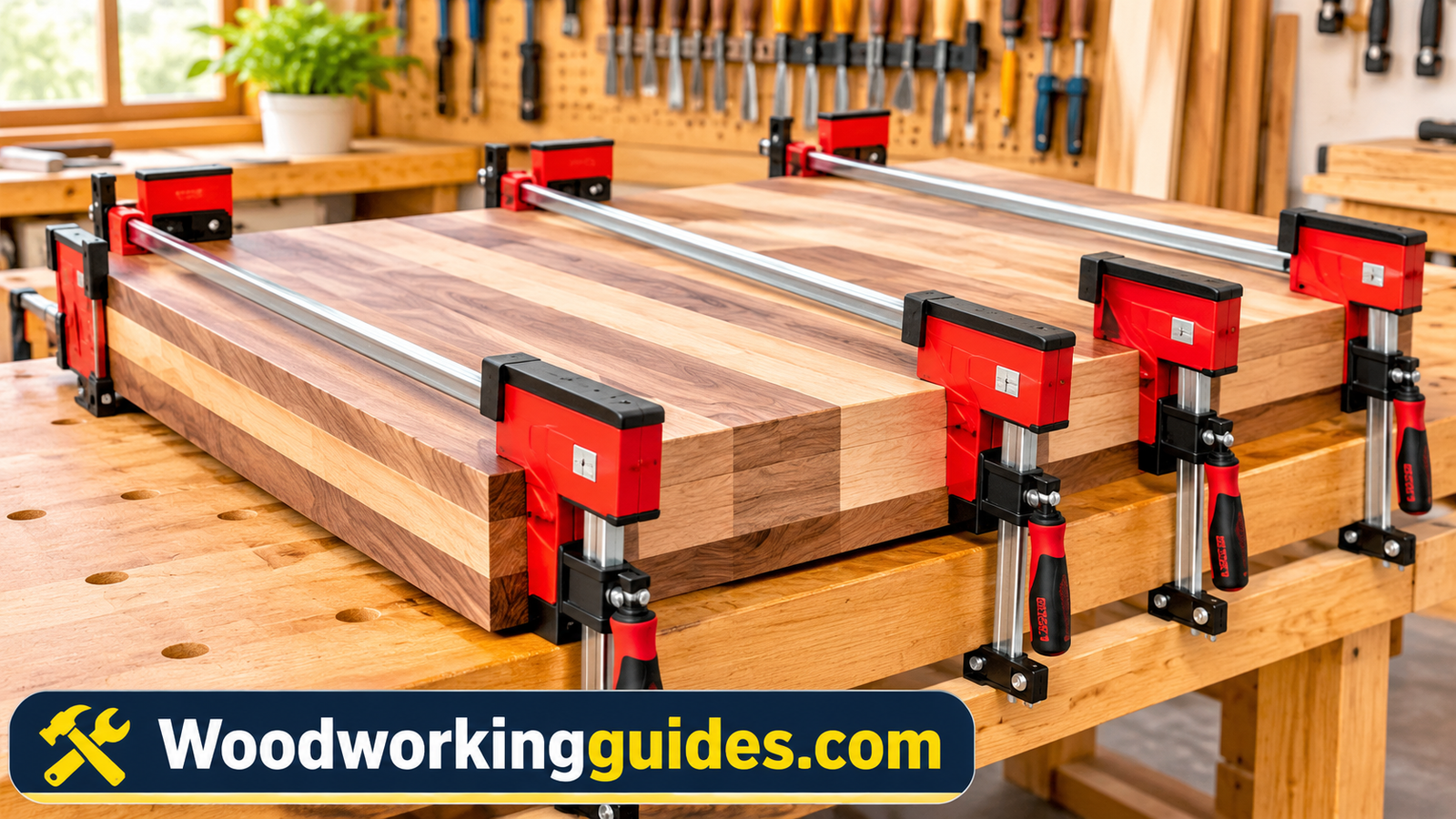
Workholding · Clamps
Best Clamps for Woodworking: 11 Sets Compared for Glue-Ups, Assembly and Everyday Shop Work
From parallel clamps that pull a panel perfectly flat to one-handed trigger clamps you can deploy in a heartbeat, here is how the most popular woodworking clamps compare — and which ones belong on your rack first.
The Complete Buyer’s Guide
The Unseen Tool Behind Every Clean Glue Line
Ask an experienced woodworker what separates a tidy project from a frustrating one and you will rarely hear “the saw” or “the router.” You will hear about glue-ups — and glue-ups are a clamping problem. A cabinet with gaps at every joint, a panel that cupped as it dried, a face frame racked out of square: these are almost always failures of clamping strategy rather than failures of cutting.
Clamps are also the tool category that catches new woodworkers off guard. A saw cuts wood; a clamp looks like it has one job. In practice, different clamps solve completely different problems. Parallel clamps keep large panels flat and square under pressure. Bar and F-clamps reach across wide assemblies. One-handed trigger clamps hold things while you position them. Face clamps pull joints flush. Right-angle clamps square up frames. Spring clamps handle light, fast work. Owning only one type is like owning only one screwdriver.
This guide compares eleven widely available clamp sets across the categories that matter most to woodworkers, explains what each type is genuinely good at, and gives you a practical framework for building a kit that covers real projects rather than a random pile. If you are just getting started, our introduction to what woodworking is and our roundup of essential woodworking tools will help you see where clamping fits in the bigger picture.
Start Comparing Clamps
See current clamp sets and pricing in one place.
Browse Woodworking Clamps on Amazon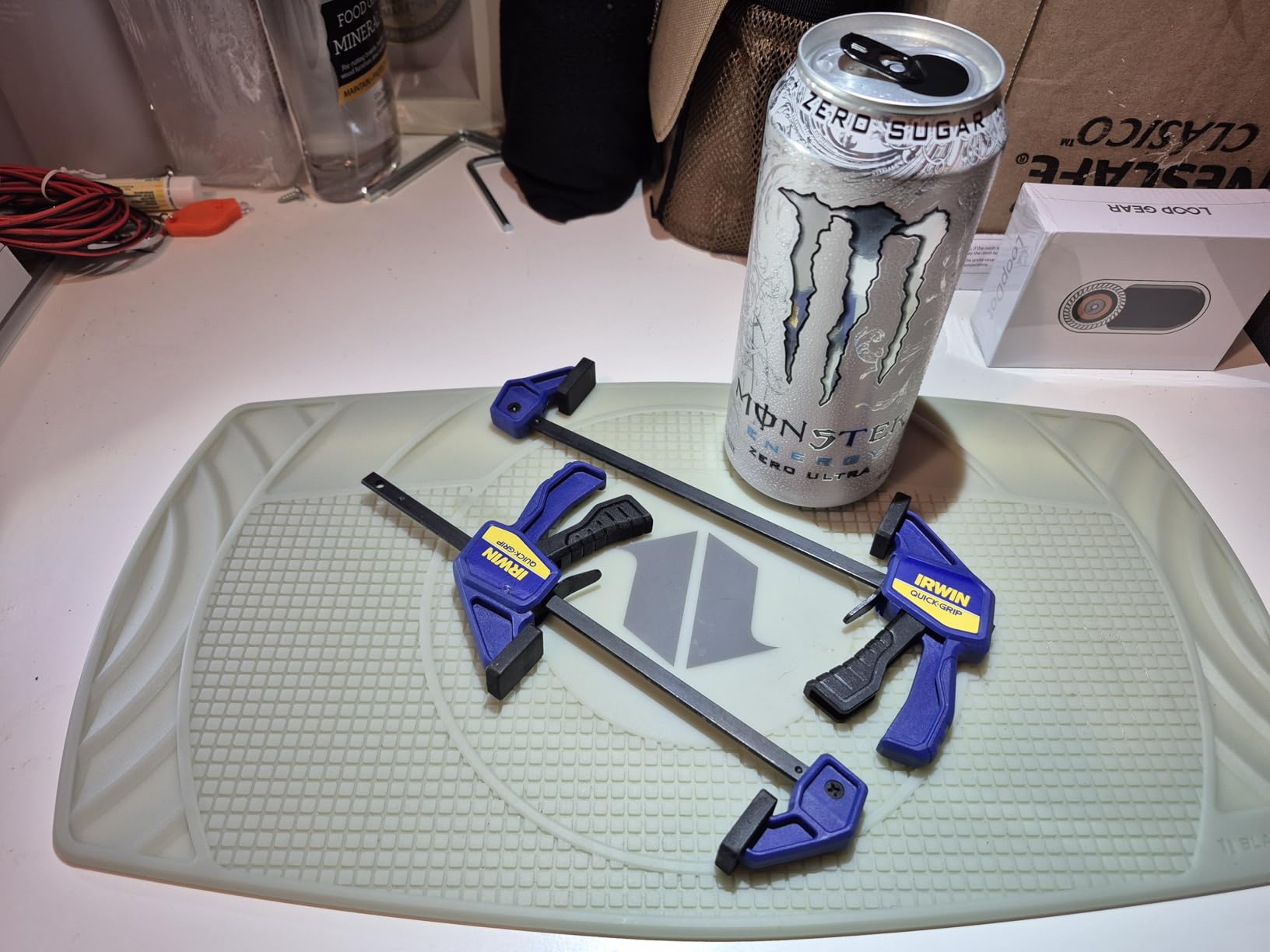
At a Glance
Quick Comparison: Our Top Picks
All eleven clamp sets in this guide are listed below with their category and a short verdict. Use the “Best For” label to jump straight to the type of work you do most, then follow the review sections further down for the full breakdown of each set.
| # | Image | Product | Key Specs | Verdict | Check Price |
|---|---|---|---|---|---|
| Top Pick 1 |
 |
Bessey K Body REVO Parallel ClampBest Overall Parallel Clamp |
|
Square, flat pressure for serious panel glue-ups. | Check Price on Amazon |
| 2 |  |
BORA 4-Pack Parallel ClampsBest Value Parallel Set |
|
A full working set without buying singles. | Check Price on Amazon |
| 3 |  |
Jorgensen 36″ Parallel Bar ClampBest Heavy-Duty Parallel Clamp |
|
Long reach and rigidity for wide work. | Check Price on Amazon |
| 4 |  |
WEN 10236F2 Quick-Adjust 36″ Steel Bar ClampsBest Budget Bar Clamps |
|
Long reach and fast setup for modest cost. | Check Price on Amazon |
| 5 |  |
IRWIN QUICK-GRIP Bar Clamp 4-PackBest One-Handed Clamp Set |
|
Deploy instantly while positioning parts. | Check Price on Amazon |
| 6 |  |
Amazon Basics 6-Piece One-Handed Trigger Clamp SetBest Budget One-Handed Set |
|
Plenty of clamps for light everyday work. | Check Price on Amazon |
| 7 |  |
Yost F124 24″ F-ClampBest F-Clamp |
|
Deep reach and solid pressure where it counts. | Check Price on Amazon |
| 8 |  |
Kreg KHC Premium Face ClampBest Face Clamp |
|
Pulls faces flush without shifting parts. | Check Price on Amazon |
| 9 |  |
Housolution Single Handle Right Angle ClampBest Right Angle Clamp |
|
Squares up corners while you fasten them. | Check Price on Amazon |
| 10 |  |
ProGrip Straight Edge ClampsBest for Guided Cutting |
|
Turns a handheld saw into a track-like setup. | Check Price on Amazon |
| 11 |  |
WORKPRO 16-Piece Nylon Spring Clamp SetBest Light-Duty Spring Clamps |
|
Grab-and-go holding for quick, light jobs. | Check Price on Amazon |
Section 01
Why Clamps Decide the Quality of Your Woodworking
Woodworking is mostly about two things: cutting parts accurately and assembling them accurately. The first half gets all the attention, but the second half is where projects are won or lost — and assembly is fundamentally a clamping problem. Clamps hold parts in alignment while glue cures, apply the pressure that makes a joint strong, and keep assemblies square while you fasten them.
Glue joints need even pressure
A glue line works best when it is thin, continuous, and evenly compressed. Too little pressure and the joint starves or gaps; too much in one spot and the assembly bows or the glue squeezes out unevenly. Good clamps distribute force predictably across the joint, which is why woodworkers become very particular about which clamps they reach for during a critical glue-up.
Square assemblies start with the right clamp
Clamps do not just press parts together — they position them. A parallel clamp with flat, square jaws holds a case square while you check diagonals. A right-angle clamp locks a corner at 90 degrees while you drive screws. Choose the wrong clamp and you will spend the glue’s open time fighting the tool instead of building the project.
Hands are needed elsewhere
As with a bench vise, the point of clamping is to free your hands for the work. During glue-ups in particular, you need both hands for spreading adhesive, positioning parts, wiping squeeze-out, and checking alignment. Trying to do that while holding parts together by hand is a losing battle. Our guide to hand tools versus power tools touches on this balance, and good workholding is what makes both approaches perform.
Jigs and fixtures are clamping in disguise
A huge amount of woodworking accuracy comes from jigs — shooting boards, assembly fixtures, sanding blocks, edge guides — and nearly every jig either is a clamping device or depends on one. Understanding this connection is genuinely useful; our explainer on what a jig is in woodworking shows how these simple aids multiply your accuracy.
You never have quite enough
There is an old joke that woodworkers can never have too many clamps, and like most shop jokes it is based on experience. A single cabinet glue-up can consume a dozen clamps or more. That is why most serious woodworkers accumulate clamps gradually and strategically rather than buying one perfect set. Starting with a plan — see our advice on setting up a beginner woodshop — saves money and avoids duplicates.
Section 02
How We Evaluated These Clamps
Clamp reviews often lean on one number — clamping force — which tells you surprisingly little about how a clamp behaves in a real glue-up. Plenty of clamps generate enormous pressure and still leave a panel bowed or a case racked. We evaluated each set on the characteristics that show up in actual shop work.
Jaw behavior under pressure
The best woodworking clamps keep their jaws parallel and flat as they close, so pressure spreads across the workpiece instead of concentrating at one point. This is the defining advantage of parallel clamps and the reason they are the default choice for panel glue-ups. We favor clamps whose jaws stay square and whose pads contact the work evenly.
Speed and ease of use
Glue has an open time, and clamps that are slow to position cost you during the one moment you cannot spare. Quick-adjust mechanisms, one-handed triggers, and smooth sliding heads all matter more than raw specifications. We weight speed heavily for clamps intended for assembly and light work.
Capacity and reach
Clamping capacity determines how large a workpiece you can handle, and throat depth determines how far into a panel you can reach. A versatile kit mixes long-reach clamps with shorter, faster ones. We assess each clamp against the work its design is clearly aimed at.
Build quality and durability
Clamps take abuse: they get dropped, over-tightened, covered in glue, and stored in piles. Steel bars, quality threads, robust handles, and well-made mechanisms show their worth over years. We look for construction that suggests the tool will still work cleanly well into the future.
Value and intended role
A spring clamp is not a failed parallel clamp — it is a different tool for different work. We judge each set against its purpose and its price, and we describe performance in plain language rather than quoting specifications we cannot confirm. If you are assembling a complete shop, our comparison of bench vises for woodworking covers the other half of your workholding setup, and our tips on improving your woodworking skills explain how good habits compound over time.
An honest note: we have not invented prices, clamping force figures, ratings, or review counts. Where a specification could not be verified, we describe the capability in general terms instead of guessing. Always confirm current details on the product page before buying.
Section 03
Best Parallel Clamps for Panel Glue-Ups
If you build anything with panels — tabletops, cabinet sides, doors, shelves — parallel clamps are the tool that makes glue-ups predictable. Their jaws stay perfectly parallel as they close and present large, flat faces that press evenly across the workpiece. The result is a flat panel and a square assembly, which is exactly why experienced woodworkers treat parallel clamps as a core investment rather than an accessory.
| # | Image | Product | Key Specs | Check Price |
|---|---|---|---|---|
| Top Pick 1 |
|
Bessey K Body REVO Parallel ClampBest Overall Parallel Clamp |
|
Check Price on Amazon |
| 2 | |
BORA 4-Pack Parallel ClampsBest Value Parallel Set |
|
Check Price on Amazon |
| 3 | |
Jorgensen 36″ Parallel Bar ClampBest Heavy-Duty Parallel Clamp |
|
Check Price on Amazon |
Bessey K Body REVO Parallel Clamp
Bessey’s K Body line has been the benchmark for parallel clamps for a long time, and the REVO continues that reputation. The defining characteristic is simple to describe and hard to achieve: the jaws stay parallel and flat through the entire clamping range, so pressure lands across the full face of the workpiece instead of at a corner. That is what keeps panels flat and cases square.
The large, flat jaw faces are equally important. They distribute force over a wide area, resist tilting into the work, and give you a stable surface to register parts against. When a glue-up matters — and in fine woodworking most of them do — this is the clamp woodworkers reach for first.
Key Features
- Parallel jaw movement for even, square pressure across the workpiece
- Large flat jaw faces that distribute clamping force without marring
- Suitable for panel glue-ups, case assembly, and bench work
- Smooth adjustment that speeds up setup during glue’s open time
- Built for repeated, long-term use in active shops
What We Like
- Keeps panels flat and assemblies square under pressure
- Wide jaw faces protect surfaces and resist tilting
- Predictable behavior glue-up after glue-up
- The clamp most woodworkers build a kit around
Keep in Mind
- Premium positioning compared with basic bar clamps
- Sold individually — a full panel set is a real investment
BORA 4-Pack Parallel Clamps
Parallel clamps are the one category where buying singles quickly becomes painful, because panel glue-ups consume them in multiples. The BORA four-pack solves that problem directly: you get a working set that can hold a real assembly from the start, rather than two clamps and a growing shopping list.
The parallel jaw design brings the same core benefit as the premium options — even pressure across the workpiece and square assemblies — in a package aimed at woodworkers who want capability without outfitting an entire shop at once. For someone building out a first serious clamp collection, buying a matched set like this is the efficient route.
Key Features
- Four-clamp set sized for real panel and case work
- Parallel jaw design for even pressure and square assemblies
- Matched clamps that work together across a single glue-up
- Practical capacity for common furniture and cabinet components
- Fast to position and tighten during glue’s open time
What We Like
- A complete working set rather than a single clamp
- Parallel jaw performance for flat, square glue-ups
- Sensible route for building out a first serious kit
- Matched clamps keep setups consistent
Keep in Mind
- Very large assemblies may still need additional clamps
- Storage space required for a four-clamp set
Jorgensen 36″ Parallel Bar Clamp
When the assembly is wide — a tabletop, a large case side, a bench top — reach becomes the limiting factor, and that is where a long parallel bar clamp earns its place. The Jorgensen 36-inch gives you the span to work across substantial pieces while keeping the parallel jaw action that keeps assemblies flat.
Jorgensen is a name with deep roots in woodworking tools, and that heritage shows in the way this clamp is built to handle force. Long clamps have to resist flexing along their bars as pressure builds; a rigid bar and solid hardware are what keep the work square instead of bowed. For large-scale work, that stiffness matters more than anything else.
Key Features
- 36-inch reach for wide panels, tabletops, and large assemblies
- Parallel jaw action for even pressure across the workpiece
- Rigid bar construction that resists flexing under load
- Suited to heavy glue-ups and substantial furniture work
- Works alongside shorter clamps in a mixed clamping strategy
What We Like
- Handles wide assemblies shorter clamps cannot reach
- Rigid under pressure, keeping work flat and square
- Build quality aimed at serious, repeated use
- Ideal anchor clamp for large glue-ups
Keep in Mind
- Long clamps need real storage space
- More clamp than small projects require
Check the Jorgensen 36″ Parallel Clamp
Long-reach parallel clamping for wide work.
Check Price on AmazonSection 04
Best Bar Clamps and F-Clamps
Bar clamps and F-clamps are the workhorses of the clamp world: versatile, affordable, and available in lengths that handle everything from drawer boxes to wide assemblies. They lack the perfect parallel action of a dedicated panel clamp, but they make up for it with reach, value, and the kind of toughness that lets them handle rough everyday work without complaint.
| # | Image | Product | Key Specs | Check Price |
|---|---|---|---|---|
| Top Pick 1 |
|
WEN 10236F2 Quick-Adjust 36″ Steel Bar ClampsBest Budget Bar Clamps |
|
Check Price on Amazon |
| 2 | |
Yost F124 24″ F-ClampBest F-Clamp |
|
Check Price on Amazon |
WEN 10236F2 Quick-Adjust 36″ Steel Bar Clamps
Long bar clamps are one of those purchases where the cost can escalate quickly — and then you realize you need eight of them. The WEN 10236F2 set addresses that reality head on, offering substantial reach with a quick-adjust jaw that lets you set up for a glue-up in seconds rather than winding a screw through inches of empty space.
The quick-adjust mechanism is the feature that makes these clamps pleasant to live with. Slide the jaw to roughly the right position, apply pressure, and you are clamped. For wide assemblies, shelving, and casework where you need multiple long clamps working together, that speed adds up across every project.
Key Features
- 36-inch bars for wide assemblies and large workpieces
- Quick-adjust jaw for fast setup during glue’s open time
- Steel construction for everyday shop durability
- Multiple clamps per set for building out coverage quickly
- Versatile for assembly, glue-ups, and general clamping work
What We Like
- Long reach at an accessible cost
- Quick-adjust jaws save real time in glue-ups
- Practical way to add several long clamps at once
- Handles the general-purpose work most shops need
Keep in Mind
- Not a substitute for parallel clamps in precision panel work
- Long bars need proper storage to stay straight
Yost F124 24″ F-Clamp
The F-clamp is one of the oldest and most versatile clamping designs, and Yost — a manufacturer with a long history in vises and clamping tools — builds the F124 in that traditional spirit. The F-frame gives you deep throat reach and generous capacity, which is exactly what you need for holding work away from an edge, clamping wide boards, or reaching into an assembly.
What makes a good F-clamp worth owning is stiffness and smooth screw action. The frame has to resist twisting under pressure and the screw has to drive cleanly without wobble. For general shop clamping, edge gluing, and holding pieces for fastening, a well-made F-clamp is one of the most-used tools on the rack.
Key Features
- 24-inch capacity for wide boards and substantial assemblies
- F-style frame with deep throat reach for clamping away from edges
- Smooth screw action for controlled, precise pressure
- Versatile across glue-ups, assembly, and general shop work
- Traditional design suited to everyday, heavy use
What We Like
- Deep reach handles work other clamps cannot access
- Generous capacity for wide boards and assemblies
- Timeless, versatile design for general clamping
- Dependable screw-driven pressure control
Keep in Mind
- Screw tightening is slower than quick-adjust or trigger designs
- Jaws can mark soft surfaces without protective pads
Need General-Purpose Clamps?
Compare bar clamps and F-clamps in popular sizes.
Shop Bar and F-ClampsSection 05
Best One-Handed and Quick-Grip Clamps
Some clamping tasks happen too fast for screw-driven tools. Positioning parts before fastening, holding a piece while you mark a line, securing a template while you rout, grabbing a workpiece mid-assembly — these call for clamps that close with one hand while the other keeps the work in place. One-handed trigger clamps are built for exactly this rhythm, and they have become one of the most-reached-for tools in modern shops.
| # | Image | Product | Key Specs | Check Price |
|---|---|---|---|---|
| Top Pick 1 |
|
IRWIN QUICK-GRIP Bar Clamp 4-PackBest One-Handed Clamp Set |
|
Check Price on Amazon |
| 2 | |
Amazon Basics 6-Piece One-Handed Trigger Clamp SetBest Budget One-Handed Set |
|
Check Price on Amazon |
IRWIN QUICK-GRIP Bar Clamp 4-Pack
IRWIN’s QUICK-GRIP line is arguably the clamp design that made one-handed clamping mainstream, and the four-pack format is the sensible way to buy them. The trigger mechanism lets you close the clamp with one hand while the other positions the work — a small detail that completely changes how you handle assembly and setup tasks.
Four clamps is the right number to feel the benefit. Two clamps hold a workpiece; four let you secure a small assembly or keep parts aligned from both ends. For light glue-ups, template work, holding pieces for drilling and routing, and the dozens of quick jobs that fill a workshop session, this set covers the ground.
Key Features
- Four-clamp set for covering small assemblies and multiple hold points
- One-handed trigger operation for fast, controlled clamping
- Quick release for repositioning without wasted motion
- Light and maneuverable for setup, assembly, and template work
- Widely used format with a proven design
What We Like
- One-handed operation keeps your other hand on the work
- Four clamps handle most quick clamping situations
- Fast repositioning keeps assembly moving
- Extremely versatile for everyday shop tasks
Keep in Mind
- Not intended for heavy glue-up pressure on large panels
- Plastic bodies prefer light to moderate duty
Amazon Basics 6-Piece One-Handed Trigger Clamp Set
One of the practical realities of clamping is that you always want a few more than you have, especially for quick jobs where walking across the shop to fetch one clamp is more effort than the job itself. A six-piece trigger clamp set solves that by putting enough clamps within arm’s reach for nearly any small task.
These are the clamps that live on the bench rather than the rack: holding parts while glue tacks, securing a guide while you cut, keeping a workpiece steady for sanding, or clamping a repair while adhesive sets. For general light-duty work — including plenty of tasks around the house — a set like this is remarkably useful.
Key Features
- Six-piece set offering plenty of clamps for quick, light work
- One-handed trigger operation for speed and convenience
- Quick release for rapid repositioning between tasks
- Suited to light assembly, holding, and general-purpose clamping
- Easy to keep within reach at the bench
What We Like
- Six clamps means you always have one within reach
- One-handed operation is ideal for quick holds
- Great value for light-duty everyday clamping
- Handy across woodworking and general household tasks
Keep in Mind
- Built for light to moderate duty rather than heavy glue-ups
- Not a replacement for bar or parallel clamps
Section 06
Best Specialty and Assembly Clamps
General-purpose clamps cover most work, but certain jobs demand a purpose-built solution. Pulling a joint flush, holding a corner square, guiding a saw along a straight line, or gripping a small part quickly — each of these is faster, more accurate, and less frustrating with the right specialty clamp. This section covers the four that fill those roles most often.
| # | Image | Product | Key Specs | Check Price |
|---|---|---|---|---|
| Top Pick 1 |
|
Kreg KHC Premium Face ClampBest Face Clamp |
|
Check Price on Amazon |
| 2 | |
Housolution Single Handle Right Angle ClampBest Right Angle Clamp |
|
Check Price on Amazon |
| 3 | |
ProGrip Straight Edge ClampsBest for Guided Cutting |
|
Check Price on Amazon |
| 4 | |
WORKPRO 16-Piece Nylon Spring Clamp SetBest Light-Duty Spring Clamps |
|
Check Price on Amazon |
Kreg KHC Premium Face Clamp
A face clamp solves a specific and very common problem: two parts that need to be pulled flush across their surfaces while the joint is secured. Standard clamps tend to press and pivot; a face clamp uses wide, flat jaws to pull the faces together evenly and hold them there. If you work with pocket holes, dowels, or any joint where flush alignment matters, this tool pays for itself immediately.
Kreg built its reputation on joinery systems that depend on exactly this kind of alignment, and the KHC reflects that focus. It is precise, easy to control, and does one job extremely well — which is the highest praise you can give a specialty clamp.
Key Features
- Wide, flat jaws that pull adjoining faces flush and hold them there
- Designed for pocket hole joinery and flush joint assembly
- Controlled clamping pressure that resists part shifting
- Compact and precise for detailed assembly work
- Excellent for dry-fitting before final fastening
What We Like
- Pulls joints flush with far less fuss than improvised clamping
- Wide jaws resist marking and distribute pressure
- Ideal companion for pocket hole and dowel joinery
- Precise control for careful assembly work
Keep in Mind
- Purpose-built — not a general-purpose clamp
- Capacity suits smaller joints and assemblies
Housolution Single Handle Right Angle Clamp
Nothing derails a frame or box assembly faster than a corner that is not square. A right-angle clamp solves this by holding two pieces at 90 degrees while you fasten them — no measuring, no bracing, no asking someone to hold the parts while you reach for a screwdriver. The single-handle design makes it quick to position and release, which matters when you are working through multiple corners.
Frames, boxes, cabinets, shelving units, and drawer cases all depend on square corners. Having a dedicated corner clamp in the kit removes one of the most common sources of assembly error, and it turns a task that used to require three hands into a one-person job.
Key Features
- Single-handle operation for quick clamping and release
- Holds two workpieces at a true right angle during fastening
- Ideal for frames, boxes, cabinets, and drawer assembly
- Frees both hands for driving fasteners and checking alignment
- Compact design that stores easily on a rack or shelf
What We Like
- Keeps corners square without extra hands or bracing
- Fast single-handle operation across multiple corners
- Removes a common source of assembly error
- Useful for woodworking and general shop assembly
Keep in Mind
- Designed for corner joints, not general clamping
- Capacity suits typical frame and box stock
ProGrip Straight Edge Clamps
Breaking down sheet goods accurately is one of the trickiest parts of woodworking without a track saw or a large panel saw. A straight-edge clamp turns a handheld circular saw or router into a guided tool: clamp it down, run your saw against it, and you get a clean straight cut that would otherwise require a much more expensive setup.
What makes this design work is that the clamping and guiding functions happen in one tool. There is no separate straightedge to align and then clamp down with a second set of clamps — the guide is the clamp, registered directly against the cut line. For anyone working with sheet material, it is one of the highest-value specialty tools available.
Key Features
- Combines clamping and straight-edge guiding in a single tool
- Designed for breaking down sheet goods and making long straight cuts
- Provides a solid fence for handheld saws and routers
- Quick to set up and adjust along the cut line
- Useful across cutting, routing, and trimming operations
What We Like
- Straight, guided cuts without a track saw
- Clamp and guide in one tool — faster setup
- Excellent for sheet goods and large panels
- Useful for sawing, routing, and trimming alike
Keep in Mind
- Specialized for guiding rather than assembly clamping
- Long guides need sensible storage space
Check the ProGrip Straight Edge Clamp
Guided straight cuts with clamping built in.
Check Price on Amazon
WORKPRO 16-Piece Nylon Spring Clamp Set
Spring clamps are the simplest clamping tool there is: squeeze to open, release to grip. They are not built for heavy glue-ups, and they are not supposed to be. Their value lies in the speed and quantity — a sixteen-piece set means you can hold a dozen small parts, secure a template edge, or keep a glued trim piece in place without thinking twice about it.
Around the shop, spring clamps are constantly in use for tasks too light or too quick to justify a bar clamp. Nylon bodies keep them light and gentle on surfaces, and having a generous set means you never have to choose which job deserves them.
Key Features
- 16-piece set covering plenty of light holding tasks at once
- Spring-loaded action for instant, one-handed use
- Nylon construction that is light and gentle on workpiece surfaces
- Ideal for trim, templates, tacking, and quick holds
- Compact and easy to store within reach of the bench
What We Like
- Sixteen clamps covers nearly any light holding situation
- Instant one-handed operation with no setup
- Nylon jaws are gentle on finished and delicate surfaces
- Incredibly handy for quick tasks and tacking
Keep in Mind
- Light clamping pressure only — not for structural glue-ups
- Spring tension can fade with heavy, long-term use
Section 07
Clamp Types Explained: What Each One Is Really For
Walk into a well-stocked shop and you will see half a dozen different clamp shapes on the rack. Each exists because it solves a specific problem better than the others. Understanding the family tree makes buying decisions much easier and helps you spot the tool for the job before you start improvising.
Parallel clamps
The premium choice for panel glue-ups and case assembly. Their jaws stay parallel and flat, distributing pressure evenly and keeping work square. If you build furniture or cabinets, this is the category to invest in first.
Bar clamps and F-clamps
The versatile generalists: long reach, generous capacity, and affordable enough to own in multiples. Bar clamps have a deep throat and solid frame; F-clamps offer similar reach in a lighter, traditional design. Both handle edge glue-ups, wide assemblies, and general shop clamping beautifully.
One-handed and trigger clamps
Built for speed rather than maximum pressure. They close with one hand and release instantly, making them ideal for positioning, holding during fastening, and quick tasks. Nearly every shop uses them constantly once they are within reach.
Face clamps and corner clamps
Specialists for alignment. Face clamps pull adjoining surfaces flush; corner clamps hold parts at 90 degrees. Small tools that eliminate large headaches during assembly. These pair well with the joinery methods covered in our guide to wood joinery tools, including dadoes and rabbets, where flat registration matters.
Spring clamps and hold-downs
For light, quick work where setup time would exceed the job itself. Trim, templates, tacking, and holding small parts during light operations. Cheap, fast, and indispensable.
Where machines fit in
Good clamping supports machine work too. Holding parts for routing, sanding, and guided cutting improves accuracy across the board — tools like the ones in our band saw picks and router guide produce better results on properly secured work, and understanding what a jointer does helps you prepare the edges that those clamps will hold.
Section 08
The Specs That Actually Matter When You Buy Clamps
Clamp specifications are a mix of the genuinely useful and the largely decorative. Here is how to read the important ones, and which numbers tell you the least about real-world performance.
Clamping capacity and bar length
Capacity is the maximum opening between jaws; bar length determines how far the clamp can reach across an assembly. Buy for the largest work you realistically build, then cover smaller work with shorter clamps. Having a mix of lengths is more useful than owning many identical clamps.
Throat depth
Throat depth is how far the clamp can reach from the edge of the workpiece toward the center. Deep throats matter for wide panels and boards held away from an edge; shallow throats are fine for edge work and small assemblies. This is often the deciding factor between clamp types.
Jaw size and pad quality
Large, flat jaw faces distribute pressure and resist marring. Many woodworkers add soft pads or use scraps as cauls to protect finished surfaces — a habit that costs nothing and prevents a lot of damage. Clamps with replaceable or coverable pads are especially practical.
One-handed versus two-handed operation
Trigger clamps close fast and release instantly but generate less pressure. Screw-driven clamps deliver more force and finer control but take longer to adjust. Most shops need both: screw-driven for glue-ups, trigger clamps for everything else.
Build quality and bar rigidity
Long clamps flex if their bars are not stiff enough, which bows the assembly instead of pressing it. Steel bars, solid hardware, and well-made threads are the marks of a clamp that will hold true. The bench you clamp against matters too — see our recommendations for woodworking workbenches and the best wood for a bench if yours needs work.
How many you actually need
More than you think. A typical panel glue-up uses several clamps; a cabinet glue-up can use a dozen. Buying in sets and adding over time is the realistic approach, and it spreads the cost across many projects.
Section 09
Glue-Up Strategy and Panel Work
Owning the right clamps is half the equation; using them well is the other half. Glue-ups reward preparation and punish improvisation, and the difference between a flat panel and a bowed one usually comes down to a handful of decisions made before the glue bottle opens.
Dry-fit everything first
Always assemble the project dry before applying glue. Confirm every joint seats fully, that the clamps fit, and that you have enough of them within reach. Once glue is spread you are working against the clock, and surprises become problems.
Alternate clamps above and below
When gluing a panel, place clamps alternately above and below the workpiece. This balances the pressure and counters the natural tendency of clamping force to bow the panel. It is the single most effective technique for keeping glued panels flat.
Use cauls to keep panels flat
Cauls — straight, stiff bars clamped across the panel — distribute pressure and hold the boards in one plane while the glue sets. Combined with alternating clamps, they virtually guarantee a flat result. Choosing stiff, straight material for your workholding surfaces is worth doing; see our notes on plywood for workbench tops and our workbench plans for building a flat, reliable assembly surface.
Match the adhesive to the work
Open time, gap-filling ability, and strength vary across adhesives, and those characteristics influence how quickly you must clamp. Our guide to the best wood glues covers what to choose for different joints and situations.
Apply pressure evenly, not maximally
The goal is a thin, even glue line — not maximum force. Over-tightening squeezes out too much adhesive, starves the joint, and can distort the assembly. Tighten until the joint closes and squeeze-out appears along the full length, then stop.
Plan the work before the glue comes out
Good glue-ups start long before assembly day. Understanding the project’s sequence, joints, and tolerance stack is what makes the clamping plan obvious. Our guide on how to plan a woodworking project walks through this thinking in detail.
Section 10
Maintenance and Clamp Care
Clamps are tough, but they are not maintenance-free. Glue, rust, bent bars, and worn threads are the usual culprits behind clamps that stop performing, and almost all of that is preventable with a little routine attention.
Keep glue off the moving parts
Wet glue is the enemy of clamp threads and sliding jaws. Wipe squeeze-out as it appears, and clean any residue before it cures. A clamp with gummed-up threads is slow, imprecise, and unpleasant to use — and dried glue is much harder to remove than fresh glue.
Protect against rust
Steel bars and screws rust in humid shops. A light coat of protective wax or tool oil keeps surfaces clean and moving freely, especially on clamps stored for long periods. Wipe down clamps after use with damp or resinous material.
Store clamps properly
Long bars should be hung or stored horizontally on a rack rather than leaned against a wall where they can bend. Bent bars ruin accuracy and are difficult to correct. A simple wall rack keeps clamps organized, accessible, and straight.
Replace worn pads and jaws
Clamp pads wear, crack, and pick up glue. Replacing them restores grip and protects your workpieces. Many woodworkers keep protective pads or leather scraps on hand for delicate surfaces — a habit that pairs well with the shop gear discussed in our woodworking apron guide.
Care for the tools your clamps support
Clamps hold the work, but sharp tools make the cut. Keeping edges sharp reduces the force you need to apply and improves accuracy across the board — our guide to sharpening woodworking tools covers the essentials. If you work in a portable or shared space, our picks for portable workbenches cover clamping-friendly setups you can pack away.
Keep Your Clamps in Shape
Protective wax, replacement pads, and rack hardware.
Shop Tool Care SuppliesSection 11
Safety and Common Clamping Mistakes
Clamps are generally safe tools, but the mistakes around them create real hazards — slipping assemblies, parts that shoot out under pressure, and glued joints that fail without warning. A few habits keep glue-ups safe and predictable.
Watch for parts that can slip
Smooth, finished surfaces are slippery under clamping pressure, especially with wet glue acting as a lubricant. Use pads, cauls, or textured coverings to increase grip, and apply pressure gradually while watching for movement. Never assume a joint is held until you have seen it hold.
Do not over-tighten
Excessive pressure distorts assemblies, crushes wood fibers, starves joints of glue, and can cause parts to fracture unexpectedly. Tighten until the joint closes and squeeze-out is even — then stop. More force does not mean a stronger joint.
Secure your work area
Clamping on an unstable surface invites accidents. Make sure your bench is solid and that clamps have something rigid to press against. If your bench needs attention, our guides to workbench construction and bench materials cover what makes a bench capable.
Keep hands clear of clamping zones
As pressure builds, parts can shift and pinch. Position your hands away from joints and jaw contact points while tightening, and keep bystanders clear of a clamped assembly that is under load.
Wear appropriate shop gear
Eye protection is essential during assembly and fastening. A good shop apron keeps clothing away from clamps and protects against sharp edges and glue drips. We have reviewed the best woodworking aprons, the best leather woodworking aprons, and specific models including waxed canvas aprons, the Rockler apron, and the Briteree apron.
Before every glue-up: dry-fit the assembly, lay out all clamps within reach, confirm you have enough of them, put on eye protection, and plan the sequence. Thirty minutes of preparation prevents the vast majority of clamping problems.
Work Safer in the Shop
Eye protection, aprons, and workholding accessories.
Shop Safety Gear on AmazonSection 12
Building a Complete Clamping Kit Without Wasting Money
Clamps are the tool category most prone to impulse buying — you need one for a project, you buy one, and eventually you own a rack of overlapping, partially used clamps. A little strategy produces better coverage for less money and a shop where every clamp has a job.
Start with your most common work
Panel glue-ups justify parallel clamps. Boxes and frames call for corner clamps. Quick assembly work needs one-handed clamps. Let the projects you actually build determine the first purchases, then expand from there.
Buy in sets, add in singles
Sets are the efficient way to build coverage, and singles are how you fill specific gaps later. A matched set of parallel clamps plus a four-pack of trigger clamps covers a remarkable amount of real work, and from there you can target exactly what you lack.
Keep the bench and jigs in the equation
Clamps work far better on a solid, flat bench with proper dogs and stops. Simple jigs and fixtures extend what your clamps can do — shooting boards, assembly squares, and sanding blocks are all clamping-dependent. If jigs are new territory, our explainer on jigs in woodworking is worth a read.
Build skills alongside the kit
Confident glue-ups come from practice as much as equipment. Starting with approachable projects is the fastest route; our list of easy woodworking projects for beginners gives you plenty of assembly practice, and our tips on improving your skills cover the habits that compound over time.
From hobby bench to a business
Repeatable, efficient assembly is what makes production work profitable, and clamping strategy is central to that. If you are heading toward selling your work, we cover starting a woodworking business, pricing your projects, where to sell woodworking projects, and selling woodworking plans online.
Build Your Clamp Kit Strategically
Start with sets, then fill the gaps as projects demand.
Shop Clamp Sets on AmazonCommon Questions
Frequently Asked Questions About Woodworking Clamps
How many clamps do I need to start woodworking?
More than most beginners expect. A practical starting point is a matched set of parallel clamps for panel and case work plus a multi-pack of one-handed clamps for quick tasks. From there, add clamps as specific projects reveal gaps. Buying in sets is far more efficient than collecting singles.
What is the difference between parallel clamps and bar clamps?
Parallel clamps keep their jaws perfectly parallel as they close, distributing pressure evenly and keeping assemblies flat and square. Bar clamps apply force at a slight angle as they tighten and are better suited to general work. For panel glue-ups and fine assembly, parallel clamps are worth the difference; for everyday clamping, bar clamps are hard to beat.
Do I really need specialty clamps?
Not immediately, but they solve specific problems exceptionally well. Face clamps pull joints flush, corner clamps hold frames square, and straight-edge clamps guide cuts accurately. Most woodworkers add these gradually as projects demand them rather than buying everything at once.
Can one-handed trigger clamps be used for glue-ups?
For light, small assemblies — yes. For panel glue-ups and structural joints where even, substantial pressure matters — no. Trigger clamps generate less force and are built for speed and positioning rather than heavy clamping. Most shops use both types.
How tight should I tighten clamps during a glue-up?
Tight enough to close the joint fully with even squeeze-out along the entire glue line, and no tighter. Over-tightening starves the joint of adhesive, crushes wood fibers, and can distort the assembly. Even pressure matters far more than maximum pressure.
Why did my glued panel come out bowed?
Usually because clamping force was applied from one side only. Place clamps alternately above and below the panel and use cauls across the surface to keep everything in one plane. This simple technique solves most panel bowing problems.
How do I keep clamps from marking my workpiece?
Use protective pads, leather scraps, or thin wooden cauls between the jaws and the workpiece. These spread the pressure, improve grip, and take the wear instead of your project. Replace them when they become damaged or glazed.
Are expensive clamps worth the money?
For work where accuracy matters — panel glue-ups, cabinet assembly, fine furniture — yes, premium parallel clamps deliver noticeably better results and last for decades. For general and light-duty work, well-made mid-range clamps perform perfectly well. Match the investment to the work.
How do I stop my clamps from rusting?
Keep threads and bars clean and lightly lubricated, wipe down clamps after use, and apply a protective wax or oil to exposed metal, especially before long storage. Managing humidity in the shop helps considerably as well.
Can I use clamps as a substitute for a workbench vise?
For some holding tasks, yes — clamps can secure work to a bench or fixture. But a vise offers faster, more repeatable workholding for hand-tool work. Our comparison of bench vises for woodworking covers why most shops want both.
What clamps are best for pocket hole joinery?
Face clamps are the classic choice, because they pull adjoining faces flush and hold them there while you drive screws. A right-angle clamp is equally useful for keeping assemblies square during fastening.
How should I store my clamps?
Hang long clamps on a wall rack or store them horizontally so the bars stay straight. Keep frequently used clamps within arm’s reach of the bench, and group clamps by type so you can grab what you need without sorting through the pile.
Final Thoughts
Conclusion: Buy Clamps for the Work You Actually Do
There is no single best clamp — only the best clamp for a given job. The woodworkers who struggle with glue-ups are almost always the ones trying to make one clamp type cover every situation. The ones who build easily are the ones with a small, deliberate mix that covers panels, assemblies, quick holds, and alignment work.
For panel glue-ups and fine assembly, the Bessey K Body REVO remains our top pick, with the BORA 4-Pack Parallel Clamps offering the fastest route to a working set and the Jorgensen 36″ Parallel Bar Clamp handling wide work with authority. For everyday clamping, the WEN 10236F2 Quick-Adjust Bar Clamps and the Yost F124 F-Clamp cover the ground affordably. Quick work is where the IRWIN QUICK-GRIP 4-Pack and the Amazon Basics 6-Piece Trigger Set earn their keep, and the specialists — the Kreg KHC Face Clamp, the Housolution Right Angle Clamp, the ProGrip Straight Edge Clamps, and the WORKPRO Spring Clamp Set — solve specific problems better than anything else on the rack.
Start with the type your projects demand most, buy sets where you can, and grow the collection deliberately. Then practice: dry-fit every assembly, alternate your clamps, and use cauls. Good clamps in the hands of a prepared woodworker produce joints that need no repair.
Ready to Choose Your Clamps?
Check current prices and availability before deciding.
Check Price on Amazon