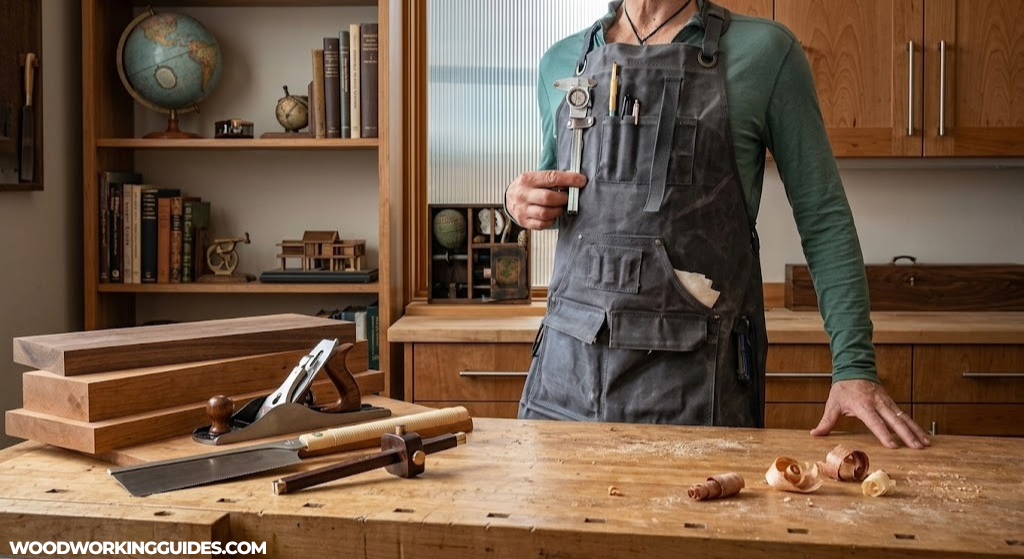
Best Woodworking Apron: A Complete Buyer’s Guide for Every Shop
From magnetic pocket panels to waterproof canvas builds, here’s everything you need to choose an apron that actually earns its place on your workbench hook.
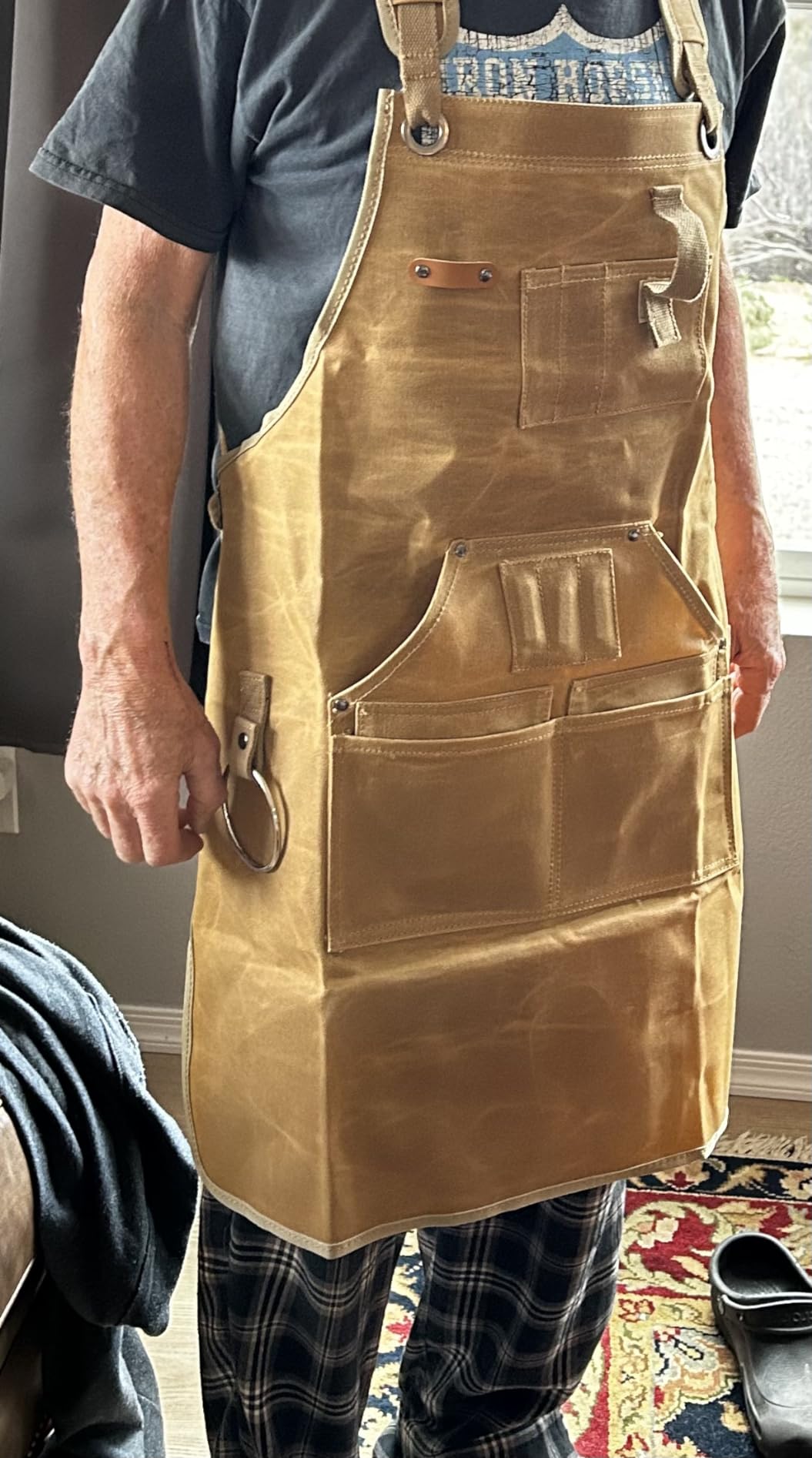
Why a Good Woodworking Apron Matters More Than You Think
Ask any woodworker who has been at the bench for a few years and they will tell you the same thing: the apron is not an accessory, it is a tool. It is the one piece of gear that touches every single project you build, from the first pencil mark on a rough board to the final coat of finish. A cheap, thin, or poorly designed apron will slow you down in ways you don’t notice until you switch to a better one. Suddenly your chisels aren’t rolling off the bench, your pencil isn’t buried under a pile of shavings, and your shirt isn’t collecting a season’s worth of sawdust and glue.
Woodworking is a hands-on craft that generates a surprising amount of mess and risk. Wood chips fly, glue drips, stain splashes, and sharp edges are never far away. A well-built apron protects your clothing, shields your torso from debris, and gives you instant access to the small tools you reach for constantly: pencils, tape measures, utility knives, chisels, and marking gauges. Without dedicated pockets, most woodworkers end up walking back and forth to a tool chest dozens of times per project, which adds up to wasted hours over a year of shop time.
This guide breaks down the best woodworking aprons currently available, compares their materials and pocket layouts, and explains exactly who each one is built for. Whether you are a weekend hobbyist building your first cutting board or a professional cabinetmaker spending eight hours a day at the bench, there is an apron on this list that fits your workflow.
Think about the last time you were mid-project and realized your pencil had rolled off the bench and disappeared into a pile of shavings. Or the time you set a chisel down on the edge of the table to grab something else, only to have it clatter to the floor and chip the edge on the concrete. These small frustrations are exactly what a well-designed apron solves. It becomes an extension of your workflow rather than something you have to think about, and once you’ve used a genuinely good one, going back to bare clothing or a flimsy dollar-store apron feels like a step backward.
There’s also a safety dimension that doesn’t get talked about enough. Loose shirt fabric, dangling drawstrings, and exposed clothing are all real hazards around spinning blades and rotating stock. A properly fitted apron with secure straps actually reduces the amount of loose fabric near your machinery, which is a small but meaningful safety upgrade that most woodworkers never consider until someone points it out.
Comfort matters just as much as protection. If an apron pinches your neck, rides up when you bend over, or traps heat against your body, you’ll find yourself avoiding it entirely after a few uses, which defeats the purpose of buying one in the first place. That’s why this guide pays close attention not just to pocket count and material toughness, but to strap design, breathability, and how each apron actually feels after two or three hours of continuous shop work.
We also considered value across different budgets. Not every woodworker needs, or wants, a premium leather apron with a lifetime price tag attached. Plenty of hobbyists are perfectly served by an affordable canvas option that covers the basics well. The picks below span that entire range, from budget-friendly essentials to pro-grade builds designed for daily professional use.
If you are specifically drawn to the classic look and durability of hide, our dedicated review of the best leather woodworking apron options goes deeper into that category alone. And if you want a rugged, low-maintenance alternative, our waxed canvas woodworking apron review covers everything you need to know about that material as well.
What to Look For in a Woodworking Apron
Not every apron on the market is designed with woodworking in mind. Many are repurposed from barbecue grilling, painting, or general utility work, and while they can technically function in a shop, they usually fall short in a few critical areas. Here is what actually matters when you’re shopping.
Material and Durability
Woodworking is abrasive. Splinters, dust, glue, and finish chemicals all take a toll on fabric over time. Heavy cotton canvas, waxed canvas, split leather, and full-grain leather are the most common materials you’ll see, each with a different balance of durability, breathability, and cost. Canvas is lighter and more affordable, while leather resists punctures and wears in beautifully but comes at a higher price point and requires occasional conditioning.
Pocket Layout and Tool Capacity
This is the single biggest differentiator between a mediocre apron and a great one. Look for a mix of pocket sizes: small slots for pencils and marking tools, medium pockets for tape measures and small squares, and larger pouches for chisels or a hand plane. Reinforced stitching around pocket openings prevents tearing when you’re constantly shoving tools in and out.
Adjustability
An apron that doesn’t fit properly will ride up, slide around, or dig into your neck during long shop sessions. Look for adjustable neck straps, adjustable waist ties or buckles, and ideally a cross-back strap design that distributes weight evenly across your shoulders rather than pulling on your neck.
Coverage Area
Full-length aprons that extend from chest to knee offer the most protection, which matters when you’re working with a router, table saw, or anything that throws debris upward. Shorter waist aprons trade coverage for mobility and are popular with woodworkers who prioritize freedom of movement over full-body protection.
Comfort for Long Sessions
Padded neck straps, breathable fabric, and a design that doesn’t trap heat against your body all matter if you’re spending hours at the bench. A stiff, heavy apron might look rugged in photos but become genuinely uncomfortable after an hour of continuous use.
Magnetic and Quick-Access Features
Several modern aprons now include magnetic strips or panels for holding nails, screws, and small metal tools without needing to fumble for a pocket. This small feature saves an enormous amount of time once you get used to it.
Stitching Quality and Reinforcement
Look closely at the stitching around pocket openings and strap attachment points, since these are the areas that fail first on cheaper aprons. Double-stitched seams, bar-tacked stress points, and riveted pocket corners are all signs that a manufacturer built the apron to handle real, repeated use rather than just looking rugged in product photography. If you can, check customer reviews specifically for mentions of pockets tearing or straps fraying after a few months, since that’s the most reliable signal of long-term durability.
Weight and Breathability
A fully loaded apron with a dozen tools in its pockets can add several pounds to what you’re carrying for hours at a time. Heavier fabrics like leather and 16-ounce canvas offer superior protection but also add noticeable weight, while lighter cotton and denim blends are easier on your shoulders during long sessions but sacrifice some durability. If your shop tends to run warm, especially in summer months or in a garage without climate control, breathability becomes a real comfort factor, and a lighter-weight canvas or a design with some open-weave paneling can make a meaningful difference.
Color and Visibility
This might seem like a minor consideration, but darker aprons hide stains and sawdust better over time, while lighter tan or natural canvas colors show wear more visibly but also make it easier to spot metal shavings or debris before they end up somewhere they shouldn’t. Neither is objectively better, it’s simply a matter of personal preference and how much you care about the apron’s appearance after a year of regular use.
Price Versus Longevity
It’s tempting to grab the cheapest option available, and for occasional hobbyists that can be a perfectly reasonable choice. But if you’re spending real time at the bench every week, a slightly higher upfront cost on a durable, well-stitched apron usually works out cheaper in the long run than replacing a flimsy one every few months. Think of it the same way you would think about a quality chisel versus a bargain-bin set: the better tool costs more initially but saves money and frustration over its lifespan.
Best Overall: Magnetic Adjustable Woodworking Apron

Magnetic Adjustable Carpenters & Woodworkers Apron
This apron earns the top spot because it strikes the best balance between pocket organization, durability, and everyday comfort. The heavy-duty canvas construction stands up to daily shop abuse, while the built-in magnetic strip lets you park loose screws, nails, and small fasteners without hunting for a pocket every time. The adjustable cross-back straps distribute weight evenly, which makes a noticeable difference during long build sessions.
The pocket layout here is thoughtfully designed rather than just crammed with slots for the sake of a spec sheet. You get dedicated slim pockets for pencils and a utility knife, a wider pouch for a tape measure, and a deep pocket that comfortably holds a small hand plane or a set of chisels. The waist strap is fully adjustable, so it fits a wide range of body types without the apron sagging or riding up.
Pros
- Built-in magnetic strip for fasteners
- Well-padded, adjustable cross-back straps
- Balanced mix of pocket sizes
- Heavy canvas resists tearing
Cons
- Runs slightly long for shorter users
- Magnetic strip can attract stray metal dust
Check current price and availability on Amazon.
View on AmazonBest Budget Pick: Waterproof Adjustable Shop Apron

Waterproof Adjustable Shop Apron, Comfortable Fit
If you’re looking for solid everyday protection without spending a lot, this waterproof shop apron delivers. The coated fabric shrugs off glue drips, finish splashes, and water-based stains, which makes it a smart choice for anyone who works with epoxy, polyurethane, or wet finishing products regularly.
Comfort is where this apron really shines for the price. The strap system is padded and adjustable, and the overall cut is generous enough to move freely while bending over a workbench or reaching into a cabinet carcass. It won’t have the premium feel of a leather apron, but for the price, it punches well above its weight class.
Pros
- Genuinely water and glue resistant
- Affordable entry point
- Comfortable adjustable straps
- Easy to wipe clean
Cons
- Fewer pockets than premium options
- Coating can feel stiff when brand new
See pricing and reviews on Amazon.
View on AmazonBest for Storage: Multi-Functional Multi-Pocket Woodworking Apron

Rtcimoic Multi-Functional Multi-Pocket Apron
For woodworkers who like to carry an entire mobile toolkit on their body, this apron is built around pocket count first. It offers a generous spread of compartments sized for everything from pencils and screws to a full tape measure and a compact drill.
This is the apron to reach for when you’re doing installation work, on-site carpentry, or any task that keeps you away from your main tool chest for extended stretches. Because it’s carrying more weight, the straps are reinforced and slightly wider than a typical minimalist apron, which helps prevent shoulder fatigue even when the pockets are fully loaded.
Pros
- Exceptional pocket variety and count
- Reinforced straps handle heavier loads
- Great for mobile or on-site work
Cons
- Bulkier profile than minimalist aprons
- Can feel heavy when every pocket is full
Check current stock on Amazon.
View on AmazonBest Heavy-Duty Option: 16-Pocket Tool Apron

Welkinland 16-Pocket Fully Adjustable Tool Apron
Built with the professional tradesperson in mind, this apron packs sixteen individual pockets into a rugged, fully adjustable frame. It’s designed for people who need instant access to a large tool loadout without breaking stride between tasks.
The stitching and fabric weight on this model are noticeably heavier than entry-level aprons, which is exactly what you want if you’re using it daily rather than occasionally. The fully adjustable waist and neck strap system means it can be dialed in precisely, which matters more than people expect once you’re wearing it for a full workday.
Pros
- 16 dedicated pockets for serious organization
- Fully adjustable for a precise fit
- Heavy-duty stitching built for daily use
Cons
- Overkill for occasional hobbyists
- Higher price point than basic aprons
See the full pocket layout on Amazon.
View on AmazonBest for Multiple Trades: Woodworkers, Blacksmiths & Gardeners Apron

Fightech Adjustable Apron for Woodworkers, Blacksmiths & Gardeners
Not everyone’s shop time is limited to woodworking alone. This apron is built to cross over between woodworking, metalwork, and yard projects, making it a smart pick for makers with a varied workflow.
The fabric is heavier than a typical woodworking-only apron, which gives it better resistance to sparks and abrasion when it’s pulling double duty near a grinder or forge. It still carries enough dedicated pockets to function well at a woodworking bench, though the layout is slightly more general-purpose than the specialist picks above.
Pros
- Handles woodworking, metalwork, and yard tasks
- Heavier fabric resists sparks and abrasion
- Fully adjustable fit
Cons
- Pocket layout is more general than specialized
- Heavier weight can feel warm in summer shops
Check today’s price on Amazon.
View on AmazonBest Gift Option: Woodworking Apron Gift Set

WEARXI Woodworking Apron Gift Set
If you’re shopping for the woodworker in your life rather than yourself, presentation matters as much as function. This apron comes packaged in a gift-ready format and includes a solid pocket layout that makes it genuinely useful, not just a novelty item that ends up in a closet.
What sets this apart from a purely decorative gift apron is that the build quality is legitimately usable at the bench. Adjustable straps, a comfortable neckline, and a practical pocket arrangement mean the recipient will actually reach for it during real shop time, not just unwrap it and set it aside.
Pros
- Attractive, gift-ready presentation
- Genuinely functional, not just decorative
- Comfortable adjustable fit
Cons
- Pocket count is modest compared to pro-grade options
- Best suited to hobbyists rather than daily professionals
See gift set details on Amazon.
View on AmazonFull Comparison Table
Here’s a side-by-side look at how these six aprons stack up across the factors that matter most in a real shop environment.
| Apron | Best For | Material | Pocket Count | Adjustability |
|---|---|---|---|---|
| Magnetic Adjustable Apron | Overall daily use | Heavy canvas + magnetic strip | Moderate, balanced sizes | Fully adjustable cross-back |
| Waterproof Shop Apron | Budget shoppers | Coated waterproof fabric | Basic layout | Adjustable straps |
| Multi-Pocket Apron | Tool-heavy workflows | Reinforced canvas | High, varied sizes | Reinforced adjustable straps |
| 16-Pocket Tool Apron | Professional daily use | Heavy-duty canvas | 16 dedicated pockets | Fully adjustable |
| Multi-Trade Apron | Cross-discipline makers | Heavy abrasion-resistant fabric | General-purpose layout | Fully adjustable |
| Gift Set Apron | Gifting / hobbyists | Standard canvas | Moderate | Adjustable straps |
For a deeper look at how leather compares against these canvas options, our best leather woodworking apron guide walks through fit, break-in time, and long-term durability in detail.
Leather vs Waxed Canvas vs Denim: Which Material Is Right for You?
Material choice affects everything from comfort to lifespan, and each option has a genuinely different feel once it’s been broken in.
Leather
Full-grain and split leather aprons are the gold standard for durability. They resist punctures, shrug off hot debris, and develop a patina over years of use that many woodworkers actually prefer over a pristine look. The tradeoff is weight, price, and the need for occasional conditioning to keep the material supple. If this sounds like your style, our full best leather woodworking apron breakdown compares the top options in that category specifically.
Waxed Canvas
Waxed canvas sits in a comfortable middle ground: it’s more water and stain resistant than raw cotton canvas, lighter than leather, and softens nicely with use rather than staying stiff. It’s a favorite among woodworkers who want durability without the maintenance routine that leather demands. Our detailed waxed canvas woodworking apron review covers specific models worth considering.
Denim and Standard Cotton
Denim and heavy cotton aprons are the most affordable and widely available option. They’re breathable, easy to wash, and perfectly adequate for light to moderate shop use, though they wear out faster under heavy daily abuse compared to leather or waxed canvas.
| Material | Durability | Comfort | Maintenance | Price Range |
|---|---|---|---|---|
| Leather | Excellent | Moderate (stiff at first) | Occasional conditioning | Higher |
| Waxed Canvas | Very Good | Good | Low | Mid-range |
| Denim / Cotton | Fair to Good | Very Good | Machine washable | Budget-friendly |
How to Decide Between Them
If you’re just starting out and unsure how often you’ll actually wear an apron consistently, a denim or cotton option is a low-risk way to build the habit without a big investment. Once you know you’ll be using it regularly, upgrading to waxed canvas gives you a meaningful jump in durability and weather resistance without the premium price tag of leather. Leather makes the most sense for woodworkers who want a piece of gear that will genuinely last a decade or more and who don’t mind the small maintenance routine that comes with it.
Some woodworkers also mix materials intentionally, choosing a leather apron for fine furniture work where a polished appearance matters, and switching to a tougher canvas option for rough construction, framing, or messier finishing work. There’s no rule that says you need to own just one apron, and many serious woodworkers eventually build a small rotation suited to different types of projects.
Getting the Sizing and Fit Right
An apron that fits poorly will undo all the benefits of good pockets and durable fabric. Before buying, measure the distance from the base of your neck to roughly knee height if you want full-length coverage, or to waist height for a shorter cut. Compare that measurement against the listed apron length, keeping in mind that most adjustable models have a workable range rather than a single fixed size.
Pay close attention to the strap system as well. A single neck loop without cross-back support tends to concentrate weight on the back of your neck, which becomes uncomfortable during long sessions. Cross-back or H-back designs distribute that weight across both shoulders and are noticeably more comfortable once the pockets are loaded with tools.
Waist ties should be long enough to wrap comfortably and tie off without excess dangling fabric that could snag on machinery. If you frequently work near a table saw, router table, or lathe, prioritize a snug fit over a loose one, since loose fabric near rotating equipment is a genuine safety concern.
Pocket placement should also factor into your sizing decision, especially if you’re on the shorter or taller end of average height. An apron sized for an average build might place the main pocket panel too low for a shorter person, forcing an awkward reach every time you go for a tool, or too high for a taller person, which can feel cramped and restrict how far you can bend forward. Reading customer photos and reviews before buying, rather than relying solely on the listed dimensions, often gives a more realistic sense of how the fit translates to different body types.
Finally, consider how the apron layers with what you already wear in the shop. If you tend to work in a heavier flannel or a jacket during colder months, make sure the strap adjustment range accounts for that extra bulk. An apron that fits perfectly over a t-shirt in summer might feel uncomfortably tight over a sweatshirt in winter, so err toward a slightly more generous adjustment range if your shop temperature varies seasonally.
Apron Care and Maintenance Tips
A well-maintained apron will easily outlast a neglected one by years, and the care routine differs depending on material.
- Canvas and denim aprons can typically be spot cleaned or machine washed on a gentle cycle. Shake out sawdust and debris after every session to prevent buildup in the seams.
- Waxed canvas should be spot cleaned only, since machine washing strips the wax coating. Reapply a wax treatment every so often to maintain water resistance.
- Leather aprons benefit from an occasional leather conditioner to prevent cracking, especially in dry climates or heated shops during winter months. Avoid soaking leather in water.
- Magnetic strips should be wiped down periodically to remove accumulated metal dust and shavings, which can otherwise interfere with how well they hold fasteners.
- Straps and buckles should be inspected regularly for fraying or weakening stitching, since these are the components most likely to fail under repeated adjustment.
Storage matters more than most people realize. Hanging your apron on a hook rather than balling it up on a shelf prevents deep creasing in the fabric and keeps pockets from getting crushed out of shape. If your shop is unheated or exposed to humidity, avoid storing a leather apron in a damp corner, since prolonged moisture exposure is one of the fastest ways to encourage mildew and material breakdown. A simple wall hook near your bench, workbench end, or shop entrance keeps the apron accessible and gives it a chance to air out between uses rather than staying folded and compressed.
It’s also worth doing a quick pocket check every few weeks, especially if you tend to toss small screws or fasteners into pockets rather than a dedicated slot. Loose hardware sitting in a pocket for months can wear tiny holes in the fabric lining from friction, and catching that early with an occasional inventory and empty-out prevents a small annoyance from turning into a real repair.
Common Mistakes to Avoid When Choosing an Apron
After reviewing dozens of options and talking to woodworkers about what actually works long-term, a few recurring mistakes stand out.
Buying Based on Pocket Count Alone
More pockets sound better on paper, but if they’re poorly sized or awkwardly placed, you’ll end up with a cluttered apron that’s harder to use than a simpler design with a few well-placed pockets.
Ignoring Strap Comfort
It’s easy to focus entirely on fabric and pockets while overlooking the strap system, but an uncomfortable strap will make even the best-organized apron unpleasant to wear for more than twenty minutes.
Choosing Style Over Function
A rugged, distressed-leather look might photograph well, but if the pocket layout doesn’t match your actual tool habits, you’ll find yourself reaching for a different apron within a few weeks anyway.
Overlooking Coverage Needs
Woodworkers who spend a lot of time at a router table or table saw benefit from more coverage than someone doing light hand-tool work. Match the apron’s length and coverage to the type of work you do most often.
Not Accounting for Layered Clothing
As mentioned in the sizing section above, an apron that fits well over a t-shirt in warmer months can feel restrictive over a jacket or flannel in winter. Buying an apron with a generous adjustment range avoids the frustration of having a perfectly good apron that only works part of the year.
Skipping the Reviews Section
Product photos rarely tell the whole story. Reading through recent customer reviews, particularly ones that include photos after a few months of use, is one of the best ways to catch issues like premature stitching failure, straps that stretch out of adjustment, or pockets that tear under normal use. A handful of critical reviews mentioning the same specific problem is a far more reliable signal than the overall star rating alone.
If you want to see how a well-known retail option stacks up against these picks, check out our dedicated Rockler woodworking apron review, and for another budget-friendly alternative, our Briteree woodworking apron review is worth a look as well.
Apron Accessories and Add-Ons Worth Considering
Once you’ve settled on an apron, a few small accessories can round out the setup and make it even more useful at the bench.
Detachable Tool Pouches
Some aprons support clip-on or snap-on pouches that let you add extra capacity for a specific project without permanently bulking up the main apron. This is especially handy if you occasionally need to carry a few extra items, like a set of drill bits or a small level, without committing to a bigger apron overall.
Suspender Attachments
If you find that even a well-padded neck strap starts to bother you after long sessions, some woodworkers add aftermarket suspender clips to shift more of the weight onto the shoulders and hips rather than the neck. This is a simple modification that can meaningfully extend how long you can comfortably wear a heavily loaded apron.
Wipe Cloths and Small Rags
Keeping a small rag clipped to a side loop or tucked into an outer pocket means you always have something on hand to wipe glue squeeze-out, clean a blade, or handle a small spill without walking across the shop. It’s a tiny habit that saves a surprising number of trips.
Replacement Straps
For leather and heavy canvas aprons that otherwise hold up well for years, a worn strap is often the first component to fail. Many manufacturers or third-party sellers offer replacement straps, which can extend the usable life of an otherwise solid apron by several more years rather than replacing the whole piece.
Woodworking Aprons for Different Disciplines
Woodworking is not a single monolithic craft. The person building a Windsor chair in a quiet hand-tool shop has almost nothing in common, workflow-wise, with someone running production cabinetry through a bank of power tools, and neither of them works the same way a woodturner or a luthier does. Because of this, the ideal apron for one discipline can be a poor fit for another. Understanding how your primary type of woodworking shapes your apron needs will save you from buying something that looks right on paper but falls short in practice.
Furniture Making and Fine Woodworking
Furniture makers who work primarily with hand tools tend to reach for a smaller, more focused set of implements throughout any given session. A marking knife, a small combination square, two or three chisels, a block plane, a pencil, and a marking gauge might be everything you need within arm’s reach for an entire dovetail layout and cutout sequence. For this kind of work, an apron with fewer but more precisely sized pockets outperforms one crammed with a dozen generic slots. You want thin, snug pockets that hold individual tools securely so they don’t clatter against each other when you lean forward, and you want the pocket mouths to be stiff enough that a chisel doesn’t slide out when you bend over to inspect a joint fit. Leather and waxed canvas are both excellent material choices here because they resist the glue drips and finish splashes that are inevitable in furniture work, and they look right at home in a traditional shop setting.
Coverage matters somewhat less for furniture makers who spend most of their time at a workbench rather than standing in front of a spinning blade. A waist-length or mid-chest apron often provides enough protection while giving you more freedom to move your arms and torso without restriction. If you do cross over to the table saw or router table frequently, a full-length apron is still the safer choice, but it is worth knowing that many experienced furniture makers deliberately prefer a shorter cut for the added mobility it provides during the long hours of hand work that dominate their bench time.
Cabinetmaking and Built-In Work
Cabinetmakers face a different set of demands. The work involves more repetitive power tool use, more sheet goods handling, and frequently more on-site installation work where you’re bending, kneeling, reaching overhead, and moving around a room rather than standing in front of a fixed bench. For this kind of work, durability and a secure fit matter more than refined pocket layouts because you’re constantly in motion. An apron that shifts around or rides up every time you kneel to install a base cabinet is more of a distraction than a help. Look for cross-back straps with a secure waist closure, and prioritize fabrics that can handle abrasion from rough plywood edges and contact with unfinished walls and framing.
Pocket organization for cabinetmakers leans toward slightly larger compartments that can hold a tape measure, a torpedo level, a pencil, a handful of screws or confirmat bolts, and a driver bit or two. You don’t need slots for ten different chisels because your chisels live on a rack at the bench. What you need is fast, reliable access to the small set of layout and fastening tools you carry during installation. Several of the multi-pocket and heavy-duty picks reviewed earlier in this guide serve this workflow particularly well.
Woodturning
Turning is one of the most debris-intensive branches of woodworking. Shavings fly in every direction, and the turner stands directly in the path of the discharge for hours at a time. A full-length apron is essentially mandatory for anyone who spends serious time at the lathe, and the material needs to be tough enough to withstand a constant barrage of wood chips without tearing or pilling. Leather is widely considered the best material for turners because it handles the impact of flying debris without degrading and can be brushed or wiped clean in seconds. Heavy waxed canvas is a reasonable alternative if leather feels too warm or too stiff for your preference.
Pocket needs for turning are relatively minimal compared to bench woodworking. You typically need a place for a pencil, a small caliper or two, and maybe a knockout bar. Excessive pockets can actually be a disadvantage at the lathe because they collect shavings inside the compartments, which then spill out onto the floor or into the mechanisms when you reach in for a tool. A turning-specific apron ideally has just a few shallow, open-top pockets and a smooth front surface that shavings slide off of easily rather than catching on seams and folds.
One often overlooked consideration for turners is how the apron handles dust at the neckline. Because the lathe throws material in all directions and the turner leans directly over the work, fine shavings and dust inevitably find their way down the front of the apron and onto clothing underneath. A high-cut neckline or a collar feature that sits flush against the base of the throat helps minimize this infiltration significantly. If your current apron lets a blizzard of shavings sneak down your front every time you lean over the lathe, that single design detail alone is worth upgrading for.
Carving
Carvers, whether they work in relief, chip carving, or sculptural forms, tend to use a smaller physical workspace than most other woodworkers and rely heavily on hand tools with fine, sharp edges. A mallet, a set of carving gouges, a V-tool or two, and various marking implements make up the core toolkit. For carving work, a lightweight, flexible apron that does not restrict fine arm and wrist movements is preferable to a stiff, heavy one. You are making precise, controlled motions for extended periods, and anything that adds bulk or rigidity to your torso can subtly alter your posture and the range of motion in your shoulders, which in turn affects the quality of your cuts.
Cotton or light denim aprons work well for carving because they breathe better during the kind of sustained, focused work that carving demands. Leather and heavy canvas are fine if you already own one, but if you are buying an apron specifically for carving, the lighter the better within reason. Pocket layout for carving should emphasize slim, tight slots for gouges and a pencil, since those are the tools you reach for most often. Wide, floppy pockets tend to let carving tools shift around and bang into each other, which can dull the cutting edges you spent twenty minutes honing.
Luthiery and Instrument Making
Building guitars, violins, ukuleles, or other stringed instruments is a woodworking discipline that combines extreme precision with a surprising amount of finishing chemistry. The wood shavings are finer, the joints are tighter, and the finish requirements are more exacting than almost any other branch of the craft. An apron for luthiery work should prioritize cleanliness and chemical resistance alongside the standard pocket utility. You are constantly handling shellac, lacquer, varnish, and various adhesives, many of which are solvent-based and will permanently stain or degrade certain fabrics on contact.
A waxed canvas or coated waterproof apron is often the best choice for instrument makers because it provides meaningful chemical resistance while remaining soft and flexible enough to not interfere with the kind of fine detail work that luthiery demands. Leather works too, but solvents can dry it out prematurely if you don’t clean up spills quickly. For pocket organization, instrument makers benefit from ultra-slim tool holders designed for small precision instruments: thin scrapers, binding chisels, nut files, and radius gauges rather than the larger carpentry tools that fill the pockets of a typical woodworking apron.
Outdoor and Green Woodworking
Green woodworking, which involves working freshly felled or freshly split wood using drawknives, spokeshaves, shaving horses, and pole lathes, takes place outdoors more often than in. This means your apron needs to handle weather exposure, moisture, and ground contact in addition to the usual shavings and sharp edges. Waxed canvas is the natural choice here because its water-shedding properties are exactly what you need when a passing drizzle interrupts your shaving horse session. The wax treatment also helps the fabric resist the damp bark and sap residue that are constant companions in green woodworking.
Pockets should be minimal and secure. Outdoor working conditions mean you’re often bending, crouching, and moving around more than you would at an indoor bench, and loose items in open pockets are more likely to fall out unnoticed on the ground or grass. A few deep, secure pockets for a pencil, a small axe, and a hook knife are all you really need. The rest of your tools are typically on the shaving horse or on a nearby stump rather than carried on your body.
Related reading for your shop setup:
- Best Woodworking Workbench — pair your apron with the right bench
- Best Woodworking Tools — the tools that belong in those pockets
Beginner’s Guide to Your First Woodworking Apron
If you are new to woodworking, the question of whether you even need an apron might seem premature when you are still figuring out which saw to buy first. But an apron is one of those pieces of gear that quietly improves your experience from day one, and it costs a fraction of what a decent hand plane or router costs. For beginners, the apron is less about professional-grade durability and more about building good habits early: keeping your tools organized on your body, protecting your clothes from the inevitable glue and stain accidents that every newcomer encounters, and establishing the kind of workspace discipline that separates frustrating, chaotic shop sessions from focused, productive ones.
What a Beginner Should Prioritize
As a new woodworker, you do not yet know exactly what your workflow will look like in six months or a year, which means buying a highly specialized apron right away is risky. Instead, choose a versatile, mid-range option with a reasonable pocket count and adjustable straps, something that can grow with you as your skills and tool collection expand. The magnetic adjustable apron featured as our top pick earlier in this guide is an excellent choice for beginners precisely because it offers enough organization for a growing toolkit without being so specialized that it only works for one type of project.
You should also prioritize comfort over features at this stage. If the apron is uncomfortable, you simply will not wear it consistently, and an apron sitting on a hook does you no good. Try to choose something with padded cross-back straps rather than a single neck loop, and make sure the weight is manageable when the pockets are empty, since you won’t be filling every slot right away. As you accumulate more tools and develop your personal workflow, you’ll naturally learn which pocket features matter most to you, and that knowledge will guide a smarter second purchase down the road if you ever decide to upgrade.
Common Beginner Concerns Addressed
Many beginners worry about looking overly invested or pretentious by wearing an apron in what they consider a casual hobby shop. The reality is that experienced woodworkers almost universally view an apron as basic shop equipment, no different from safety glasses or hearing protection. Nobody will think you are overdoing it by wearing one. If anything, it signals that you take the craft seriously enough to protect yourself and keep your tools accessible, which is exactly the kind of mindset that leads to steady skill development.
Another common concern is the fear of ruining a nice apron with early-career mistakes like spilled stain, glue drips, or accidental cuts. This is a valid thought, and it is actually one more reason to start with an affordable canvas or waterproof option rather than a premium leather one. Let your first apron absorb all the learning-curve mess, and save the upgrade to leather or waxed canvas for when your technique with finishes and adhesives has matured enough to keep the mess contained. If you want a dedicated overview of the kinds of tools you’ll eventually be filling those apron pockets with, our guide to the best chisel sets for beginners is a solid starting point for one of the most essential hand tool categories.
Your First Month with an Apron
During the first few weeks of wearing an apron in the shop, pay attention to which pockets you actually use and which ones sit empty. This real-world data is worth more than any product spec sheet because it reveals your personal tool-access pattern. Maybe you reach for your pencil and tape measure constantly but never use the small side pocket designed for a utility knife. Maybe you find yourself wishing for a loop to hold a small square. These observations will guide how you set up your apron pockets going forward and, if you ever shop for a second or replacement apron, which features to prioritize and which to ignore. Keep a mental note, or even a quick written list, of what works and what does not, and you will make a far more informed purchasing decision the next time around.
Great beginner resources on this site:
How Wood Species and Project Types Affect Your Apron Needs
This is a consideration that almost no apron buying guide mentions, but anyone who has worked with a range of different wood species knows that the type of wood on your bench changes the nature of the mess you produce, the tools you reach for, and the kind of protection you need. Thinking about your dominant wood species and project types when choosing an apron is a subtle but genuinely useful way to narrow down the best option.
Softwoods: Pine, Cedar, Spruce, and Fir
Softwoods generate large, fluffy shavings and a lot of fine dust that clings to fabric, especially cotton and denim. They also tend to be resinous, meaning sap and pitch can transfer to your apron and become sticky or difficult to remove. If you work primarily with softwoods, a waxed canvas or coated fabric apron is easier to keep clean than a raw cotton one because the surface treatment prevents sap from soaking in and bonding with the fibers. You can wipe it off with a rag and a mild solvent rather than needing to launder the entire apron. Pocket size matters less here than pocket depth, since softwood shavings are bulky and tend to fill shallow pockets quickly, spilling out whenever you bend forward.
Hardwoods: Oak, Maple, Walnut, Cherry, and Ash
Hardwood dust is finer and denser than softwood shavings, and it gets into everything: seams, pocket corners, strap hardware, and zipper teeth if your apron has any. The dust from some species, particularly oak and walnut, can also cause skin irritation or allergic reactions in sensitive individuals, which adds a small but real safety dimension to apron selection. A full-coverage apron that extends from chest to knee and fits snugly at the neckline does a better job of keeping hardwood dust off your skin than a shorter, looser design. Material choice is less critical for hardwood dust specifically, since it brushes and shakes out of most fabrics reasonably well, but the finer particle size means it works its way into woven cotton more stubbornly than into the tighter surface of leather or waxed canvas.
Exotic and Tropical Woods
Exotic species like purpleheart, padauk, cocobolo, and wenge are notorious for causing allergic reactions, skin irritation, and respiratory sensitivity in woodworkers who are exposed to their dust regularly. If you work with exotic woods frequently, your apron is an important piece of barrier protection that keeps the irritating dust off your chest, arms, and clothing. Choose an apron with a tight weave or a surface treatment that resists dust penetration, and shake it out or vacuum it after every session rather than letting the dust accumulate over multiple uses. Washing a cotton or denim apron more frequently when working with exotic species also helps remove the accumulated allergens that build up in the fibers over time.
Some exotic woods also have natural oils and resins that stain fabric aggressively. Padauk, for example, can leave a persistent orange-red stain on anything it contacts when freshly cut. If you work with oily exotics regularly, a darker-colored apron hides the inevitable stains better than a light natural canvas one, and a waxed or coated surface resists the initial absorption more effectively than raw cotton or denim.
Sheet Goods and Engineered Panels
Plywood, MDF, and particleboard produce a different kind of mess than solid wood. MDF dust in particular is extremely fine, powdery, and pervasive, and it gets into every crevice and pocket of your apron with ruthless efficiency. If your work involves heavy amounts of sheet goods processing, especially MDF and particleboard, you should treat your apron as a consumable piece of protective equipment that will need more frequent cleaning and earlier replacement than it would if you only worked with solid hardwood. A waterproof or coated apron is easier to de-dust because the particles sit on the surface rather than embedding in the fibers. You can shake or blow most of it off in seconds rather than needing to wash it every time.
Turning Blanks and Wet Wood
If you turn green or freshly cut wood on a lathe, moisture is a constant factor. Wet shavings cling to fabric, and the moisture itself can promote mildew if the apron stays damp between sessions. Waxed canvas handles this better than raw cotton because the wax treatment sheds moisture rather than absorbing it. Leather also handles moisture reasonably well if you dry it properly afterward, but prolonged damp storage will ruin leather faster than almost anything else. Whatever material you choose for wet-wood turning, make sure you hang the apron to dry fully between sessions rather than wadding it up on a shelf while it is still damp from the day’s work.
The Complete Workshop Safety Ecosystem: How Your Apron Fits In
An apron does not exist in isolation. It is one piece of a broader personal protective equipment setup that every woodworker should be building, and understanding how all these pieces work together helps you make smarter choices about each one, including your apron. A well-integrated PPE system covers your eyes, ears, lungs, hands, feet, and torso, and when every piece is chosen with awareness of the others, the whole setup becomes more comfortable and effective than any single item on its own.
Eye Protection Integration
Safety glasses or goggles are non-negotiable in any shop with power tools, and your apron choice has a subtle but real interaction with eye protection. When you lean forward over a workbench or look down at a cut, your neckline and collar area is the first thing a router or table saw throws debris toward before it reaches your face. An apron with a high, snug neckline helps deflect some of that upward-angled debris before it reaches your safety glasses, effectively creating a secondary barrier. This is not a replacement for proper eye protection by any means, but it is a passive benefit that a well-fitting full-length apron provides without any extra effort on your part.
Hearing Protection
Hearing protection is often worn as over-ear muffs in the woodshop, and if you wear muffs with a headband, the strap at the back of your head can sometimes interfere with a cross-back apron strap that sits in the same zone. This is a minor but real comfort issue for some woodworkers. If you notice this interference, try adjusting the position of the cross-back strap slightly higher or lower on your back, or consider switching to in-ear plugs on days when you plan to wear the apron for extended sessions. Some woodworkers prefer in-ear plugs regardless because they eliminate this strap interaction entirely and tend to be cooler during long shop hours.
Respiratory Protection
Dust masks and respirators are essential for any power-tool woodworking, and the apron’s neckline again plays a supporting role. A snug neckline prevents shavings and larger dust particles from settling on your chest and then getting kicked up into your breathing zone every time you move. It’s a small contribution to overall respiratory hygiene, but combined with a proper dust collection system, a good mask, and sensible shop practices, it adds up. If you work with particularly hazardous species, a full respirator rather than a basic dust mask is the better choice regardless, but every layer of protection helps.
Gloves and Hand Protection
Most experienced woodworkers do not wear gloves while operating power tools because gloves near spinning blades and rotating stock are a well-documented entanglement hazard. However, gloves are common during assembly, finishing, material handling, and outdoor work. Your apron’s pocket design should accommodate the reality that you will sometimes be putting tools into pockets with gloved hands, which means wider pocket mouths and slightly deeper pockets are more practical than ultra-tight, snug slots when glove use is part of your routine. If you regularly wear nitrile gloves during finishing work, a waterproof or coated apron pairs well because both pieces of gear can be wiped clean of finish drips simultaneously.
Footwear Considerations
This might seem unrelated to apron selection, but the overall silhouette and weight distribution of your protective gear affects your posture and comfort holistically. Steel-toe boots are heavier than sneakers, and when you add the weight of a fully loaded apron on top of that, your total loadout can become fatiguing during a full-day session. If you wear heavy boots daily, you might prefer a lighter apron to keep the cumulative weight manageable, or vice versa. The point is to think about the total package rather than each piece of gear in isolation, because comfort is always a sum of all the factors together, not just one component at a time.
Creating a Cohesive Routine
The most effective PPE system is one you actually use consistently. If any single piece of gear is uncomfortable, awkward to put on, or interferes with another piece, you will find excuses to skip it. Your apron should be easy to don and doff, should not interfere with your safety glasses, hearing protection, or respirator, and should feel comfortable enough that wearing it is the default rather than the exception. If your current apron fails any of these tests, the picks and buying criteria covered throughout this guide will help you find one that integrates smoothly into the rest of your safety routine rather than working against it.
Build out your shop with these guides:
- Best Random Orbital Sander — essential for finishing work
- Best Cordless Drill for Woodworking
Woodworking Aprons for Women and Smaller or Larger Frames
The woodworking apron market has historically been designed around a fairly narrow range of body types, and women woodworkers, as well as anyone who falls outside the average male build, have often had to settle for aprons that fit poorly, gap at the sides, or place pockets in awkward locations relative to their torso. The good news is that more manufacturers are beginning to recognize this gap, and several of the adjustable designs covered in this guide do accommodate a wider range of body types than older, fixed-size models. But there are still some important considerations worth calling out specifically.
Fit Challenges for Smaller Frames
Smaller-framed woodworkers, regardless of gender, frequently run into two specific problems with standard aprons. First, the apron length is too long, which causes the bottom edge to bunch up around the knees when sitting or bending, creating a tripping hazard or at least a constant annoyance. Second, the pocket panel sits too low on the torso, which means the main pockets end up around the belly or hip area instead of the mid-chest where they are most accessible. Both of these problems are solvable if the apron has a genuinely wide adjustment range on both the neck strap and the waist ties. Before purchasing, check the listed minimum dimensions, not just the maximum, since many manufacturers only advertise the upper end of the adjustment range. If the apron can be cinched down to fit a 34-inch chest and has a listed length under 28 inches, it will likely work well for a smaller frame.
Fit Considerations for Larger Frames
Larger-framed woodworkers face the mirror image of these challenges: aprons that are too short in the body, straps that do not extend far enough, and waist ties that barely meet in the back. The neck strap is often the most limiting factor because many aprons use a fixed-length strap with a small adjustment buckle that adds only a few inches of range. If you have a broad chest or a thicker build, look for aprons that specifically list extended strap lengths or that use a continuous-loop strap design rather than a fixed-length strap with a buckle, since continuous-loop straps inherently accommodate a wider range of sizes. A cross-back design is also more comfortable for larger builds because it distributes weight across both shoulders rather than concentrating it on a single neck point, which becomes more important as the total weight of the loaded apron increases.
Chest and Hip Considerations
For women woodworkers specifically, the standard straight-front apron design can create uncomfortable pressure points or gaps where the fabric does not sit flat against the body. Some apron makers have introduced contoured or darted designs that accommodate a wider range of chest shapes more comfortably, though these are still relatively uncommon in the woodworking-specific market. In the absence of a purpose-built contoured design, an apron with very flexible, soft fabric and generous strap adjustment can often be shaped to fit more comfortably than a stiff, heavy one that resists conforming to the body. Waxed canvas and broken-in leather are both more accommodating in this regard than brand-new, untreated stiff canvas that has not yet softened with use.
Practical Tips for Finding the Right Fit
If possible, try on an apron before buying, or at minimum, purchase from a retailer with a generous return policy so you can test the fit at home before committing. When you first put on a new apron, spend at least ten minutes moving around in it: bend forward as if you are planing a board, reach overhead as if you are hanging something on a wall, squat down as if you are inspecting a lower cabinet, and twist your torso as if you are reaching for a tool behind you. Any fit problems will reveal themselves quickly during these motions. Check that no pocket opens toward the floor when you bend forward, that the neckline does not dig in when you look down, and that the waist ties stay secure when you twist. These simple movement tests catch the vast majority of fit issues before you ever take the apron into the shop for real work.
How to Build Your Own Woodworking Apron: A DIY Guide
For woodworkers who enjoy making their own gear, building a custom apron is a satisfying small project that results in a piece of equipment tailored exactly to your body, your tools, and your workflow. It does not require a sewing machine in all cases, though one certainly helps, and the material cost is a fraction of what a comparable commercial apron would cost, especially if you are working with leather or heavy waxed canvas. More importantly, a homemade apron lets you place pockets exactly where you want them, size them for the specific tools you carry, and choose every detail from strap width to seam reinforcement based on your own experience rather than a manufacturer’s assumptions about what an average woodworker needs.
Choosing Your Material
For a first DIY apron, 12- to 16-ounce cotton canvas or duck cloth is the easiest material to work with. It cuts cleanly, it is forgiving when you make mistakes, and it is affordable enough that you will not be heartbroken if your first attempt has some rough edges. Waxed canvas is a step up in both performance and difficulty because the wax coating makes the fabric stiffer and harder to sew through, especially at the thick multi-layer seam junctions where pocket panels attach to the main body. Leather is the most challenging material for a home-sewn apron because it requires heavy-duty needles, a strong machine or hand-stitching skills, and leather-specific thread that will not cut through the hide under stress. If you are new to sewing, start with cotton or duck cloth and graduate to waxed canvas or leather on your second attempt once you have refined your technique and pattern.
Basic Pattern and Dimensions
A standard full-length woodworking apron is roughly 24 to 28 inches wide and 30 to 36 inches long, depending on your height and how much coverage you want. Start by measuring your own torso: measure from the base of your neck to the point on your thighs where you want the apron to end, and measure across your chest at the widest point to determine the width. Add two to three inches to the width for overlap at the waist ties, and add an inch of hem allowance on all edges. The neck strap can be cut from the same material or from a separate piece of webbing, and it should be long enough to loop over your head with several inches of adjustment range on either side. A cross-back strap is more complex to pattern but dramatically more comfortable: instead of a single strap, you cut two separate straps that attach at the top corners of the apron, cross over your shoulder blades, and attach to a short horizontal bar or ring at the center of your back before continuing down to attach at the waist.
Pocket Layout Customization
This is where a DIY apron really shines compared to buying off the shelf. Lay out the tools you reach for most often on a flat surface and arrange them in a configuration that mimics how you would naturally grab them from a pocket. Mark the positions on your apron body with chalk or a fabric marker, then cut pocket panels to fit each tool with about a half inch of clearance on each side. For pencil slots, cut narrow strips about two inches wide and six inches deep. For a tape measure pocket, aim for roughly four inches wide and five inches deep. For a chisel roll or larger tool pouch, you may want a pocket six to eight inches wide and eight to ten inches deep. Sew each pocket panel onto the apron body with a double-stitched seam, and consider adding a strip of leather or heavy canvas across the top edge of each pocket opening to reinforce it against the constant wear of sliding tools in and out.
Hardware and Finishing Touches
Use metal or heavy-duty plastic buckles for any adjustable straps rather than relying on simple tie closures, since buckles are faster to adjust and more secure under load. If you want to add a magnetic strip, you can purchase flexible magnetic tape from most craft or hardware stores and sew it into a horizontal pocket across the chest area. Rivets at the stress points where straps attach to the apron body add significant durability and are easy to install with an inexpensive hand riveter. Finally, round or fold all sharp corners on the apron body and pocket panels because square corners tend to curl and catch on things during use, while rounded edges sit flatter and last longer under real shop conditions.
Finishing Work, Chemical Exposure, and Apron Protection
Wood finishing is where the mess factor of woodworking increases dramatically, and your apron’s ability to handle chemicals, solvents, and wet finishes is a more important selection criterion than many woodworkers initially realize. The difference between an apron that shrugs off a splash of polyurethane and one that absorbs it immediately and permanently is the difference between a piece of gear that lasts years and one that becomes stiff, stained, and uncomfortable within weeks of regular finishing work.
Water-Based Finishes
Water-based polyurethane, acrylic lacquer, and milk paint are among the most common water-based finishing products, and they are relatively benign compared to their solvent-based counterparts. They wash out of cotton and denim fabric if you catch them quickly, though dried water-based poly can be surprisingly stubborn once it cures. A waxed canvas or coated apron handles water-based finishes well because the surface treatment prevents the liquid from soaking in before you can wipe it off. For woodworkers who do a lot of water-based finishing, a dedicated finishing apron, separate from your general shop apron, is worth considering. This keeps the chemical exposure concentrated on one piece of gear that you can replace more frequently without retiring your everyday work apron prematurely.
Solvent-Based Finishes
Oil-based polyurethane, lacquer, Danish oil, tung oil, and shellac dissolved in denatured alcohol are all common solvent-based finishes that pose a greater risk to fabric than water-based products. These finishes soak into raw cotton and denim almost instantly and cannot be washed out once they cure. They also emit fumes that can be absorbed by porous fabrics and then released slowly over time, which means wearing a solvent-soaked cotton apron in your shop for hours after a finishing session is a low-level but unnecessary chemical exposure. Leather and waxed canvas resist solvent penetration better, though prolonged contact with strong solvents can dry out leather and strip the wax coating from canvas over time. If you work with solvent-based finishes regularly, wipe your apron down after every session and hang it to air out in a ventilated area rather than in a closed closet where fumes can concentrate.
Epoxy and Two-Part Adhesives
Epoxy resin is increasingly popular in woodworking for river tables, gap filling, and structural bonding, and it is also one of the most destructive substances your apron will ever contact. Uncured epoxy is sticky, penetrating, and essentially permanent once it cures on fabric. A waterproof or heavily waxed apron is your best defense because the surface tension of the coating causes epoxy to bead up rather than soak in, giving you a few seconds to wipe it off before it sets. If uncured epoxy does contact a cotton or denim apron, act immediately: scrape off the excess with a plastic scraper and dab the spot with a rag soaked in denatured alcohol or acetone, depending on the specific epoxy system. Do not rub, because rubbing drives the epoxy deeper into the fiber structure. Even with quick action, some staining is likely, which reinforces the value of a dark-colored, coated apron for epoxy-heavy work.
Chemical Resistance Comparison
As a general ranking, leather offers the best resistance to brief chemical exposure, waxed canvas is a close second and easier to clean, coated waterproof fabrics resist penetration but may degrade under prolonged solvent contact, and raw cotton and denim offer the least chemical protection of any common apron material. If your finishing work is heavy and frequent, chemical resistance should move up your priority list when selecting an apron, potentially ahead of pocket count or aesthetic considerations. A beautifully organized apron with twenty pockets is useless if every pocket is stiff with dried polyurethane after a month of use.
Expand your finishing knowledge:
- Top Wood Router Picks — clean routing means cleaner finishing surfaces
- Wood Joinery Tools Explained
Workshop Ergonomics: Movement, Posture, and Your Apron
Ergonomics in the woodshop is usually discussed in the context of workbench height, tool handle design, or standing mat selection, but your apron has a more significant effect on your posture and movement patterns than most people appreciate. An apron is worn for hours at a time, it adds weight to your torso, it restricts or enables certain ranges of motion, and it changes how you bend, reach, and twist throughout a work session. Choosing an apron with ergonomics in mind is not about preventing injury in the dramatic sense, it is about removing the small, cumulative discomforts that make a four-hour shop session feel like six and that leave you with a stiff neck or sore shoulders at the end of the day without you being able to pinpoint exactly why.
Weight Distribution and Shoulder Load
A fully loaded apron with a dozen tools, a handful of screws, and a tape measure can easily weigh five to eight pounds. That weight is concentrated on your upper body and hangs from either your neck or your shoulders, depending on the strap design. Over a four-hour session, a single neck strap carrying that load will cause noticeable neck fatigue and can contribute to tension headaches in some people. Cross-back or H-back strap designs shift the load to both shoulders and partially to the upper back, which distributes the stress across a much larger muscle group and is dramatically more comfortable over time. If you have ever finished a long shop session with a sore neck and attributed it to looking down at your work, try wearing the same apron with a cross-back strap and see how much of that discomfort was actually caused by the strap itself rather than your posture alone.
Bending and Twisting
When you bend forward at the workbench, your apron either moves with you smoothly or it fights you, depending on how it is cut and how it is secured at the waist. An apron that is loose at the waist will swing forward when you lean over, dumping tools out of the upper pockets or pulling the neckline tight against your throat. An apron that is snugly tied at the waist stays in place against your torso and moves with your body rather than against it. The difference is subtle when you bend once, but it becomes very noticeable over hundreds of bending motions across a full workday. Similarly, when you twist to reach for a tool on a side table or shelf, an apron with a stiff, unyielding body fabric resists the twist and creates a tugging sensation at the shoulder, while a softer, more supple fabric moves with the twist without resistance. This is one area where a well-worn canvas or broken-in leather apron has a genuine ergonomic advantage over a brand-new, stiff one.
Arm Mobility and Shoulder Range of Motion
Most woodworking tasks require a full range of arm motion: planing, sawing, reaching for overhead shelves, and working at a bench all demand that your arms move freely. An apron with bulky side panels or deep pockets positioned under the arms can restrict this range of motion, particularly when reaching forward or across the body. The best apron designs keep the side profile slim and position the bulk of the pocket weight on the front center panel, which does not interfere with arm swing. If you find that your current apron limits how far you can reach across your body or how high you can raise your arms, the side panel design or pocket placement is likely the culprit, and switching to a slimmer-front apron layout will often resolve the issue without sacrificing pocket utility.
Standing Fatigue and Total Body Loadout
Woodworking is largely a standing activity, and everything you add to your body is weight your legs and back must support throughout the day. Combined with steel-toe boots, a tool belt or loaded apron, and the constant forward-leaning posture of bench work, the cumulative physical load can be substantial. Being mindful of your total body weight from protective gear, not just the weight of the apron alone, helps you make smarter choices about how heavy your apron needs to be. If your boots are heavy and your work already demands a lot of forward bending, a lighter-weight apron with fewer pockets might actually improve your endurance more than a heavier, fully loaded one, even though the heavier apron carries more tools. There is always a balance between capacity and comfort, and the right balance depends on your individual physical situation and the demands of your particular type of work.
Pocket Organization Strategies: Maximizing Your Apron’s Efficiency
Owning an apron with great pockets is only half the equation. How you organize those pockets determines whether the apron speeds up your workflow or becomes a cluttered, frustrating mess where you spend more time fishing for the right tool than actually using it. Experienced woodworkers develop pocket organization habits over time, often through trial and error, but there are some proven principles that can accelerate the learning curve for anyone setting up a new apron or rethinking their current pocket layout.
The Principle of Frequency
The most fundamental rule of pocket organization is simple: your most frequently used tools go in the most accessible pockets. For nearly every woodworker, regardless of discipline, the most-reached-for item is a pencil or marking tool. It should go in the fastest, easiest pocket to reach, usually a slim slot on the upper chest or a dedicated loop right at the front edge of the apron. Your tape measure is typically the second most frequent reach, so it goes in the next most accessible pocket, usually a wider slot immediately adjacent to the pencil. Less frequently used items, like a small square, a utility knife, or a handful of screws, can go in slightly less accessible positions because you will not be reaching for them every thirty seconds. This hierarchy of frequency is the backbone of every well-organized apron, and it applies equally whether you have six pockets or sixteen.
Dedicated Slots Versus General Pockets
A dedicated slot is a pocket sized for one specific tool: a pencil loop that holds a pencil and nothing else, a tape measure pouch sized for your specific brand of tape, a chisel pocket that fits your most-used chisel snugly. General pockets are larger compartments that can hold a variety of items. Both have their place, but the ratio matters. Too many general pockets and you end up with a cluttered grab bag where everything tumbles around together and you have to dig for what you need. Too many dedicated slots and the apron becomes inflexible, unable to accommodate a slightly different tool or a few extra fasteners you were not planning to carry. The best approach for most woodworkers is a foundation of four to six dedicated slots for your core daily tools, surrounded by one or two general-purpose pockets for everything else. This gives you the speed of dedicated organization for the tools you reach for constantly and the flexibility of general storage for the variable items that change from project to project.
Weight Balancing
An often overlooked aspect of pocket organization is weight distribution across the apron front. If you load all your heavy items, tape measure, utility knife, handful of screws, on one side, the apron will pull unevenly and shift throughout the day, which is both annoying and fatiguing. Distribute heavy items as symmetrically as possible: if your tape measure is on the right, put something of similar weight on the left. This keeps the center of gravity centered over your body and prevents the gradual sideways lean that many woodworkers experience without understanding its cause. Light items like pencils, marking gauges, and small squares can go anywhere because their weight is negligible, but the heavier tools deserve conscious placement for balance.
End-of-Session Reset
The single best habit for maintaining apron organization is a two-minute reset at the end of every shop session. Before you hang the apron on its hook, empty every pocket, return the tools to their proper storage locations, and shake out any sawdust or debris that has accumulated. This ensures that the next time you put on the apron, every pocket is empty, clean, and ready to receive the exact tools you need for that day’s work. It also prevents the slow accumulation of mystery items, orphan screws, pencil stubs, and random hardware that inevitably builds up when pockets are never emptied. Two minutes at the end of each session saves ten minutes of frustrated rummaging at the start of the next one, and over weeks and months, the time savings compound significantly.
Seasonal and Project-Based Adjustments
Your pocket organization does not need to be permanent. In fact, it should change based on the project you are currently working on. If you are doing a joinery-heavy project with lots of mortise and tenon work, load your apron with marking gauges, mortise chisels, and a small square. If you are in a finishing phase, swap those out for rags, a small brush, and a can opener for your finish cans. If you are doing installation work, load up with screws, a torpedo level, a driver bit, and a pencil. Treating your apron as a modular, reconfigurable tool platform rather than a static setup lets you get maximum utility from every pocket for every phase of every project. This is also where detachable pouches and clip-on accessories shine: they let you add and remove capacity as needed without redesigning your entire pocket layout.
Essential tools to fill those pockets:
Frequently Asked Questions
What is the best material for a woodworking apron?
Leather offers the best long-term durability and puncture resistance, waxed canvas provides a good balance of durability and comfort with less maintenance, and denim or cotton is the most affordable and breathable option for lighter use.
Do I really need a specialized woodworking apron?
A general utility apron can work in a pinch, but dedicated woodworking aprons are designed with the right pocket sizes and placements for tools like pencils, tape measures, and chisels, which noticeably speeds up your workflow.
How do I clean a waxed canvas apron?
Spot clean waxed canvas with a damp cloth rather than machine washing it, since washing machines strip the protective wax coating. Reapply a wax treatment periodically to maintain water resistance.
Are magnetic pockets on an apron actually useful?
Yes, magnetic strips are genuinely useful for holding loose screws, nails, and small metal fasteners without needing to dig through a pocket, though they can attract metal shavings over time and require occasional cleaning.
How long should a full-length woodworking apron be?
Full-length aprons typically extend from chest height down to around the knee, offering maximum protection for tasks like routing or table saw work where debris can fly upward.
Can I wash a leather woodworking apron in a washing machine?
No, leather should never be machine washed. Spot clean it with a damp cloth and use a leather conditioner periodically to prevent the material from drying out or cracking.
What pocket layout works best for hand tool woodworking?
Hand tool woodworkers generally benefit from slim pockets for pencils and marking tools, a medium pocket for a tape measure or square, and a deeper pouch that can hold a chisel or small block plane.
Is a cross-back strap better than a single neck strap?
Yes, cross-back or H-back strap designs distribute the apron’s weight across both shoulders rather than concentrating it on the neck, which is significantly more comfortable during long shop sessions.
Are adjustable aprons suitable for all body types?
Most adjustable aprons cover a wide range of body types thanks to adjustable neck and waist straps, but it’s still worth checking the listed length and adjustment range against your own measurements before buying.
What’s the difference between a shop apron and a woodworking apron?
A general shop apron is often a broader utility product meant for tasks like grilling or painting, while a woodworking apron is specifically designed with pocket sizes, materials, and coverage suited to woodworking tools and debris.
How much should I expect to spend on a good woodworking apron?
Budget canvas or waterproof options are typically the most affordable, mid-range multi-pocket and magnetic designs cost more due to added features, and leather aprons sit at the top of the price range because of the material cost and durability.
Do woodworking aprons make good gifts?
Yes, a well-made apron is a practical and appreciated gift for any woodworker, especially options that combine genuine functionality with attractive presentation rather than purely decorative designs.
Can I use the same apron for woodworking and metalwork?
Yes, but you should choose a heavier, more abrasion-resistant fabric if you plan to use the apron near grinders, welders, or forges. Standard cotton canvas is not spark-resistant and can be a fire hazard in metalworking contexts.
Should I own more than one woodworking apron?
Many serious woodworkers keep two aprons: one for general bench work and one dedicated to finishing or chemical-heavy tasks. This prevents finish chemicals from contaminating the apron you wear every day and extends the lifespan of both.
What apron works best for woodturning?
Leather is the most popular choice for turners because it handles constant debris impact and wipes clean easily. A high neckline and minimal pockets are preferred since turning shavings fill open pockets quickly.
How do I prevent my apron from smelling after heavy use?
Hang the apron to air out after every session rather than folding it. For canvas and denim, periodic machine washing on a gentle cycle removes accumulated sweat and bacteria. For leather, wiping with a damp cloth and allowing full ventilation between uses prevents odor buildup.
Is a waterproof apron necessary for woodworking?
It is not strictly necessary, but a waterproof or water-resistant apron is highly beneficial if you work with water-based finishes, epoxy, or any wet adhesives regularly. It makes cleanup dramatically easier and prevents permanent staining from liquid finishes.
Final Thoughts: Choosing the Right Apron for Your Shop
There’s no single “best” woodworking apron for everyone, but there is a best apron for your specific workflow. If you want an all-around performer with smart organization, the magnetic adjustable apron is hard to beat. If you’re watching your budget, the waterproof shop apron delivers real value. Heavy tool users will appreciate the multi-pocket and 16-pocket options, while makers who split time between woodworking and other trades should lean toward the multi-trade design.
Whichever direction you go, prioritize adjustability, comfortable straps, and a pocket layout that actually matches your tool habits over flashy extras you won’t use. Consider how your primary woodworking discipline, the wood species you work with most, your body type, and your finishing routine all shape your needs. An apron is not a one-size-fits-all purchase, and the more thoughtfully you match it to your actual daily work, the more useful and comfortable it will be over the long term. Explore the full lineup above and pick the apron that will genuinely earn its spot on your shop hook.
Shop the Top-Rated Apron on Amazon